AI Data Center Crisis 2026: Half of US Projects Cancelled or Delayed
Nearly half of planned US AI data centers for 2026 have been cancelled or delayed — only 4-5 GW of the announced 12 GW is genuinely under construction as power shortages, China-supply bottlenecks, and community opposition collide.
50% cancelled$85B lost12 → 4.5 GW10 states
~50%
US 2026 projects cancelled or delayed
$85B
Cancelled investment (3-year total)
5 yrs
Transformer lead times (custom units)
$650B+
Big Tech 2026 AI capex (still planned)
Key Takeaways
Only ~4-5 GW of the 12 GW of announced 2026 US AI data center capacity is actually under construction — a 37.5% conversion rate, far below historical norms.
Q1 2026 alone saw 20+ project cancellations representing $41.7 billion in investment and 3.5+ gigawatts of power demand.
Electrical transformer lead times have ballooned from 24-30 months pre-2020 to up to 5 years for custom units — the single biggest physical bottleneck.
China supplies over 40% of US battery imports and ~30% of transformer/switchgear, exposing the AI build-out to geopolitical risk.
Despite the crisis, Alphabet, Amazon, Meta, and Microsoft still plan $650 billion+ in combined AI capex for 2026.
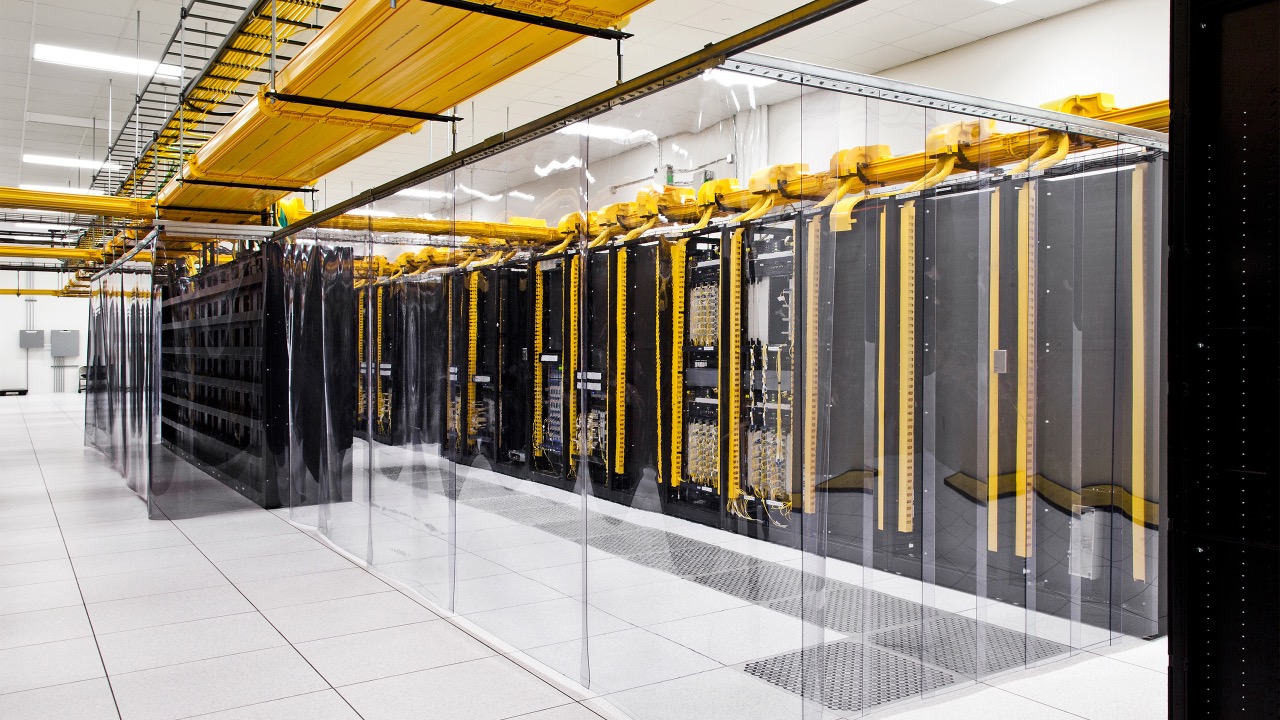
Photo: Tom's Hardware / Google
Why Half of America's AI Data Centers Are Failing
Roughly 50% of US AI data center capacity planned for 2026 has been cancelled or delayed — a structural shock driven by three converging shortages: electrical infrastructure, supply chain components, and local community consent. The damage is concentrated: only about 4-5 GW of the 12 GW announced is genuinely under active construction, with most of the remainder either stuck waiting on grid interconnections or formally withdrawn.
The immediate trigger is power. AI campuses now routinely request 500 MW to 1 GW of guaranteed capacity — more than the entire load of mid-sized cities. Utility companies in PJM, ERCOT, and MISO regions have begun rejecting or queuing new requests beyond the 2028-2029 horizon, leaving developers holding pre-leased land they cannot energize. Project Jarvis, a 1 GW, $13.5 billion campus in Port St. Lucie, Florida, was withdrawn in February 2026 after local planning boards refused to certify its water and grid impact studies — exactly the kind of mid-stage cancellation now happening across the country.
A second layer is supply chain. Power transformers — the dull, decades-old steel boxes that step voltage down to usable levels — have surged in price by 77% since 2019, and custom units now carry lead times of up to five years. China supplies more than 30% of US transformer and switchgear imports and over 40% of battery imports; every tariff escalation in 2025 directly translated into longer queues for hyperscaler procurement teams.
▸ If you hold AI infrastructure stocks (DLR, EQIX, IRM, AMZN, MSFT), expect tighter spreads between announced capex and revenue-generating capacity through 2027.
The Capacity Gap: Announced vs Under Construction
12 GW announced for 2026 — only ~4.5 GW is genuinely under active construction.
Under construction~4.5 GW
Cancelled or delayed~7.5 GW
Original announced total12 GW
ZestLab analysis: The announce-to-build conversion rate is just 37.5% — far below the 70-80% range seen in 2019-2023.
AI Infrastructure Cost Index 2026
Power transformers (since 2019)+77%
Grid support units+45%
Memory (since Q1 2025)+400%
Storage (since Q1 2025)+200%
Transformer lead time vs 2019+150%
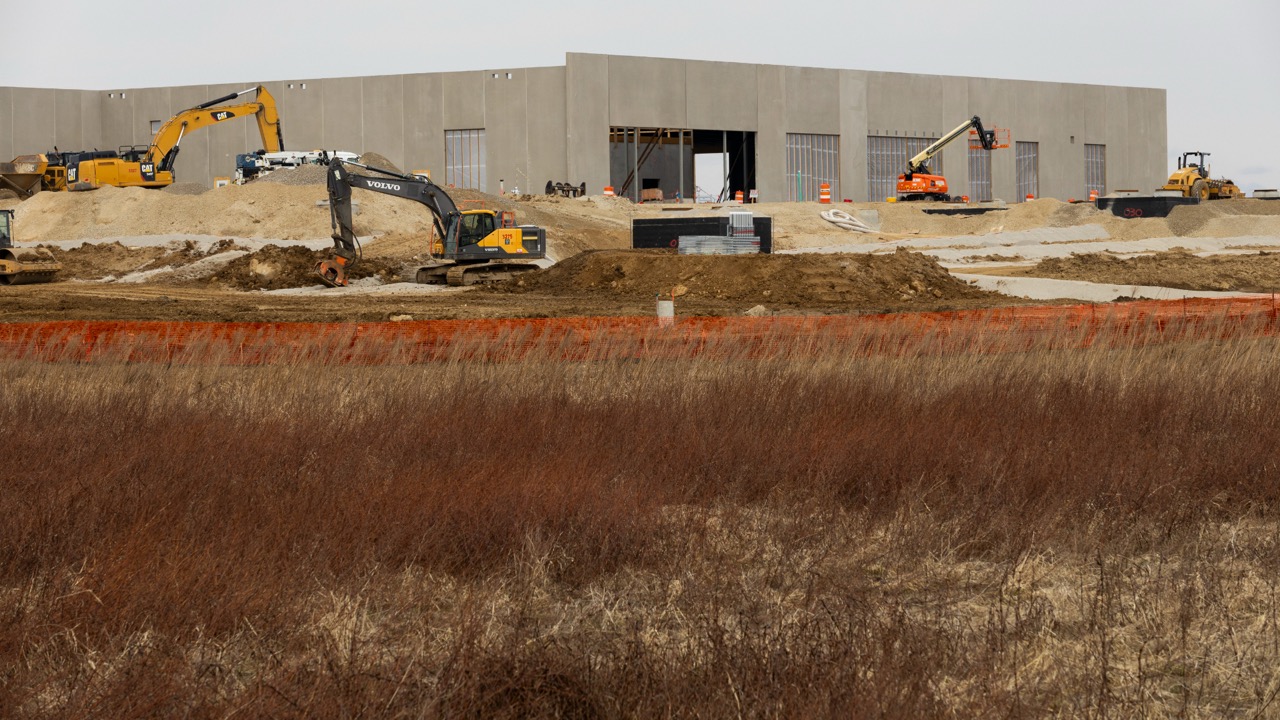
Photo: Tom's Hardware / Meta
The Transformer Bottleneck: Where the Build-Out Actually Stalls
Transformers are the most boring part of the AI revolution — and the part most likely to break it. A typical hyperscale campus needs dozens of large units, each weighing several hundred tons and requiring 18 to 60 months to manufacture. Domestic US production capacity for grain-oriented electrical steel — the specialty alloy that goes into transformer cores — has not grown since 2018, while global demand has roughly doubled.
The practical consequence is queueing. A developer that signs a power purchase agreement today, even with utility cooperation, will not see meaningful transformer delivery before 2029. Several projects originally targeting 2026 commissioning have been quietly slipped to 2028 or 2029 in earnings call footnotes. Memory and storage costs have made the problem worse: DRAM is up roughly five-fold and NVMe storage three-fold since Q1 2025, eroding the unit economics even of fully-permitted builds.
▸ Five-year transformer queues mean any new GPU buyer in 2026 is competing against 2029-era projects for the same physical hardware.
10 US States Proposing Data Center Moratoriums
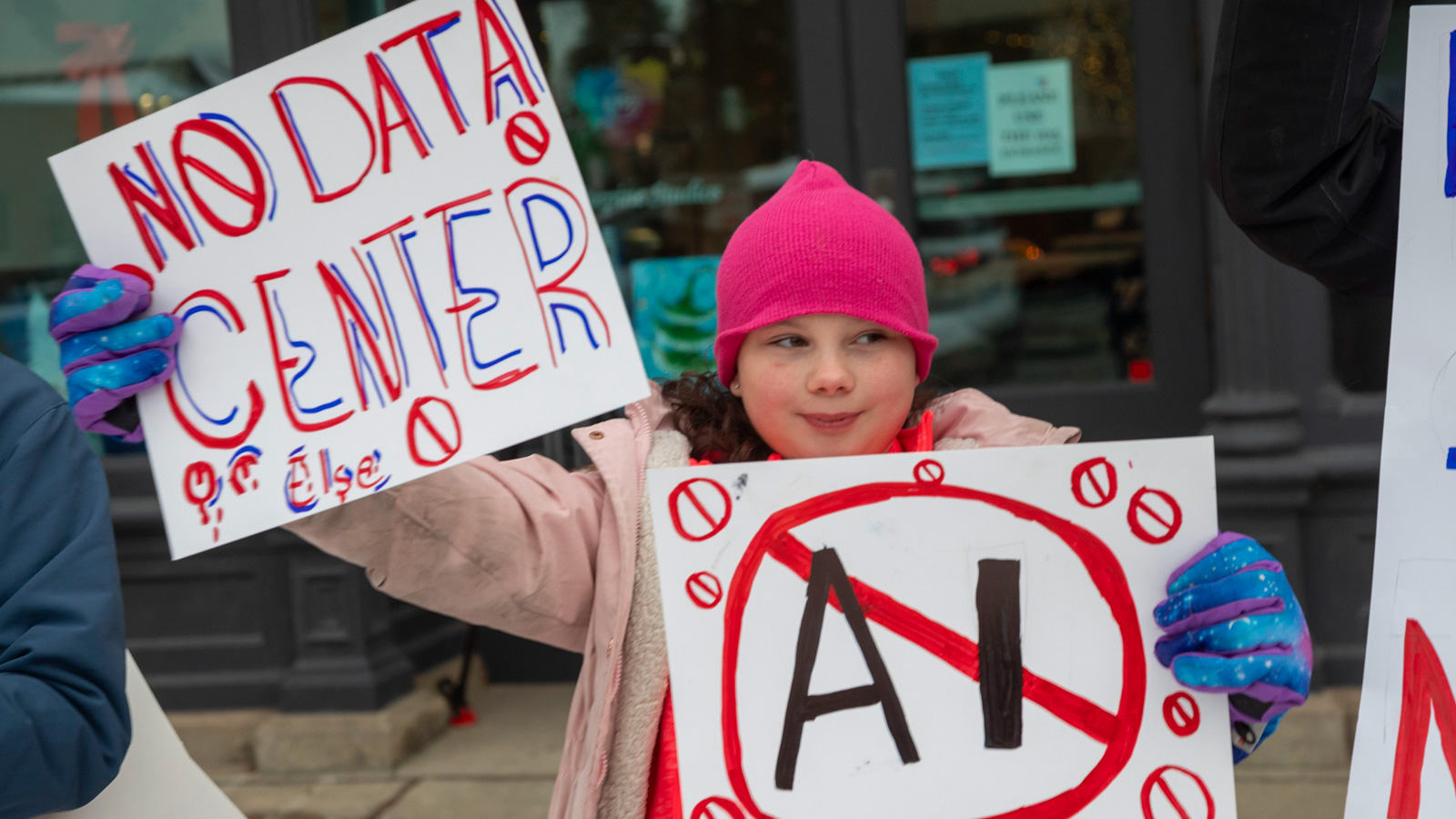
Community pressure is forcing state legislators to weigh moratoriums — Q1 2026 alone logged over 100 new local conflicts.
Louisiana
Michigan
New York
Ohio
Virginia
Georgia
Texas
Indiana
South Carolina
Tennessee
→ If the moratorium trend spreads to 15-20 states, AI infrastructure could lose tens of additional gigawatts of planned capacity.
Photo: Tom's Hardware
Local Opposition: From NIMBY to Statewide Moratoriums
Local opposition to data centers has shifted from scattered NIMBY complaints to organized, state-level political pressure. Tracking databases logged over 100 new conflicts in Q1 2026 alone, and at least 10 states — Louisiana, Michigan, New York, Ohio, Virginia, Georgia, Texas, Indiana, South Carolina, and Tennessee — have introduced moratorium bills or strict siting restrictions in the 2026 legislative session.
The complaints follow a consistent script: water consumption (a single 100 MW facility can use up to a million gallons a day for cooling), residential electricity rate hikes (utilities argue infrastructure costs get socialized), and quality-of-life concerns over light, noise, and truck traffic. The Florida-based Project Jarvis cancellation was less about Florida specifically and more about a national pattern — planning boards across the country are increasingly comfortable saying no, and the regulatory cost of saying yes has grown.
Project Jarvis: Anatomy of a $13.5B Cancellation
Location
Port St. Lucie, Florida. 1,200-acre site purchased through three shell LLCs to obscure end-user identity. Local outlets identified Meta and an undisclosed sovereign-fund partner as the buyers.
Power need
1 gigawatt — equivalent to roughly 800,000 households. Florida Power & Light could not commit to a delivery date before 2030 without major new transmission upgrades.
Why it died
Withdrawn February 2026 after the city planning board demanded a public water-impact study. The developer pulled the application rather than complete the additional review.
How 2026 Became the Cancellation Year
Oct 2022
US export controls on AI chips kick in
Initial restrictions begin redirecting global GPU demand onto US soil and accelerate hyperscaler land acquisition, setting the stage for the 2025-2026 build-out cycle.
→ Hyperscaler land banks expanded ~3x between 2022 and 2024.
Q1 2025
Memory and storage prices break out
DRAM prices roughly five-fold and NVMe storage three-fold versus pre-2025 levels, eroding the unit economics of mid-tier campuses that had penciled out at 2024 BOM costs.
→ Smaller co-location operators began re-pricing or cancelling tenant contracts.
Feb 2026
Project Jarvis withdrawn
The 1 GW, $13.5 billion Port St. Lucie campus is withdrawn after the city planning board demands additional environmental reviews — the year's first headline cancellation.
→ Set a precedent: planning boards realized they had real leverage over hyperscalers.
Q1 2026
20+ cancellations, $41.7B and 3.5+ GW removed
Cancellation tracking databases log more than 20 major projects pulled in a single quarter, representing $41.7 billion of investment and more than 3.5 GW of forecast electricity demand.
→ Wall Street analysts began rebuilding 2026-2027 AI capex models from the bottom up.
May 2026
Half of 2026 US capacity confirmed cancelled or delayed
Tom's Hardware, Latitude Media, and Heatmap News converge on the same finding: roughly 50% of US AI data center capacity planned for 2026 is no longer on track, with only 4-5 GW of 12 GW under active construction.
→ The narrative shifts from 'AI infrastructure boom' to 'AI infrastructure crunch.'
Hyperscaler Build-Out: Plans vs Reality
Alphabet (Google)
Microsoft
Meta
Amazon (AWS)
2026 announced capex
$95B
$120B
$110B
$125B
Sites under construction
~15
~22
~12
~28
Cancellations or delays 2026
3 (Ohio, Virginia)
4 (Wisconsin, Georgia)
2 (Florida Jarvis, LA)
5 (Indiana, S. Carolina)
Public posture
'Pacing capex'
'Demand still strong'
'Selectively pulling back'
'Multi-year commitment'
The Hidden China Dependency
Behind the public narrative of US AI dominance sits an awkward physical fact: China supplies more than 40% of US battery imports and roughly 30% of transformer, switchgear, and grid-support imports. Every tariff increase on Chinese industrial goods through 2025 translated directly into longer hyperscaler procurement queues — and into higher final per-megawatt costs.
Domestic substitution is happening, but slowly. New US transformer plants announced in 2023-2024 will not reach full output before 2027. The same is true for grain-oriented electrical steel, which is dominated by Japanese and Indian producers. For the AI build-out, this means the 2026-2027 capacity gap is essentially locked in — no amount of additional capital can compress lead times that are physically constrained by global metallurgy.
▸ For Vietnamese investors: industrial firms with ties to US grid equipment supply (Saigon Cables, Gelex) may benefit as US buyers diversify away from China.
Power transformer lead times have moved from inconvenient to existential. You can have all the GPUs you want and still be unable to plug them in.
The $650 Billion Paradox: Spending Up, Building Down
Even with half the announced US capacity falling away, Alphabet, Amazon, Meta, and Microsoft still plan to spend more than $650 billion combined on AI infrastructure in 2026 — a record. The apparent contradiction makes sense once you look at where the money is actually going: less new ground-up construction, more chip purchases, more existing-site retrofits, more international diversification, and more equity stakes in third-party data center developers like Digital Realty, Equinix, and CoreWeave.
For investors, this is a profitability story disguised as a build-out story. Returns on AI capex now depend less on raw gigawatts deployed and more on access to scarce, energized capacity. Operators with already-permitted, already-energized sites command a premium; greenfield announcements are increasingly discounted by the market. Expect the spread between operating AI-grade capacity and announced capex to widen significantly in 2026-2027 — a structural feature, not a temporary disconnect.
▸ ZestLab analysis: At $650B in 2026 capex with only ~4-5 GW newly online, the implicit cost per delivered megawatt is approaching $130 million — roughly 2x the 2022 benchmark.
Disclaimer
Capacity figures are based on industry tracking databases and public press releases as of May 2026. Numbers may shift as quarterly earnings provide updates. This article is not investment advice.