Atlantic Hurricane Season 2026: CSU Sees 13 Storms, Super El Niño
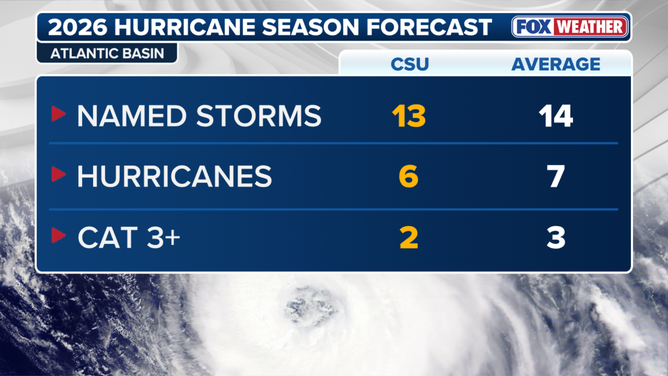
Colorado State University forecasts 13 named storms, 6 hurricanes (2 major) for 2026 Atlantic season — below average due to El Niño. First use of ACE2 AI model.
Key Takeaways
- 01CSU forecasts 13/6/2 — below average 14/7/3 (1880-2020)
- 02Robust El Niño is the main driver suppressing storm activity
- 03Major hurricane US landfall probability: 32% (below 43% average)
- 04First use of ACE2 AI model to verify forecast
- 05Season officially runs June 1 - November 30, 2026
The 2026 Forecast Explained
On April 9, 2026, Colorado State University — the most well-known US hurricane forecasting agency led by Dr. Philip Klotzbach — released its first forecast for the 2026 Atlantic hurricane season. Initial forecast: 13 named storms (tropical storms and hurricanes), 6 reaching hurricane strength, and 2 reaching major hurricane (Category 3+ on the Saffir-Simpson Hurricane Wind Scale).
These numbers are below the long-term historical average. The 1880-2020 average: 14.4 named storms, 7.2 hurricanes, 3.2 major hurricanes per year. However, the more recent 1991-2020 average is higher: 14.4 named, 7.2 hurricanes, 3.2 major. This shows recent decades have been more active than the mid-20th century — partly due to ocean warming and shifting ENSO patterns.
The El Niño Mechanism
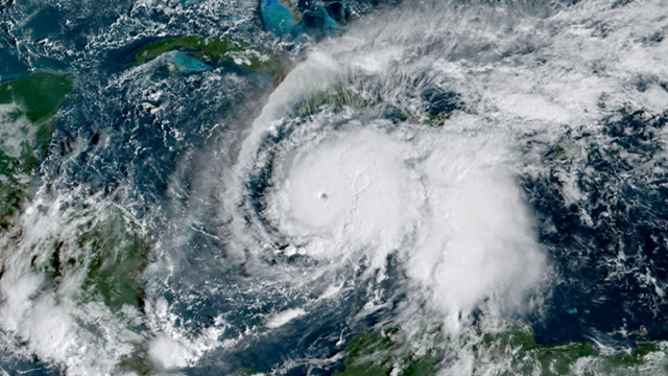
El Niño is abnormal warming of equatorial Pacific waters — can last 9-12 months. CSU forecasts a 'robust El Niño' for 2026 — stronger than average. Atlantic impacts: increased vertical wind shear, raised mid-level atmospheric pressure, and altered rainfall patterns. More on global climate shifts at our Arctic Climate Crisis hub.
Historical strong El Niño seasons: 1982-83, 1997-98, 2015-16. In all three, Atlantic storm counts were below average. Notably 1997: just 7 named storms, 3 hurricanes (average at the time was 12/6). However, note: El Niño is never the sole factor. Atlantic sea surface temperatures (SST), Bermuda high pressure, Saharan dust, and other factors all interact complexly.
Landfall Probability by Region
▸ Just one major hurricane can cause billions in damage. Below-average forecast does NOT mean 'no dangerous storms'. Hurricane Harvey 2017 caused $125B damage in a season with near-average count.
The ACE2 AI Model Debuts
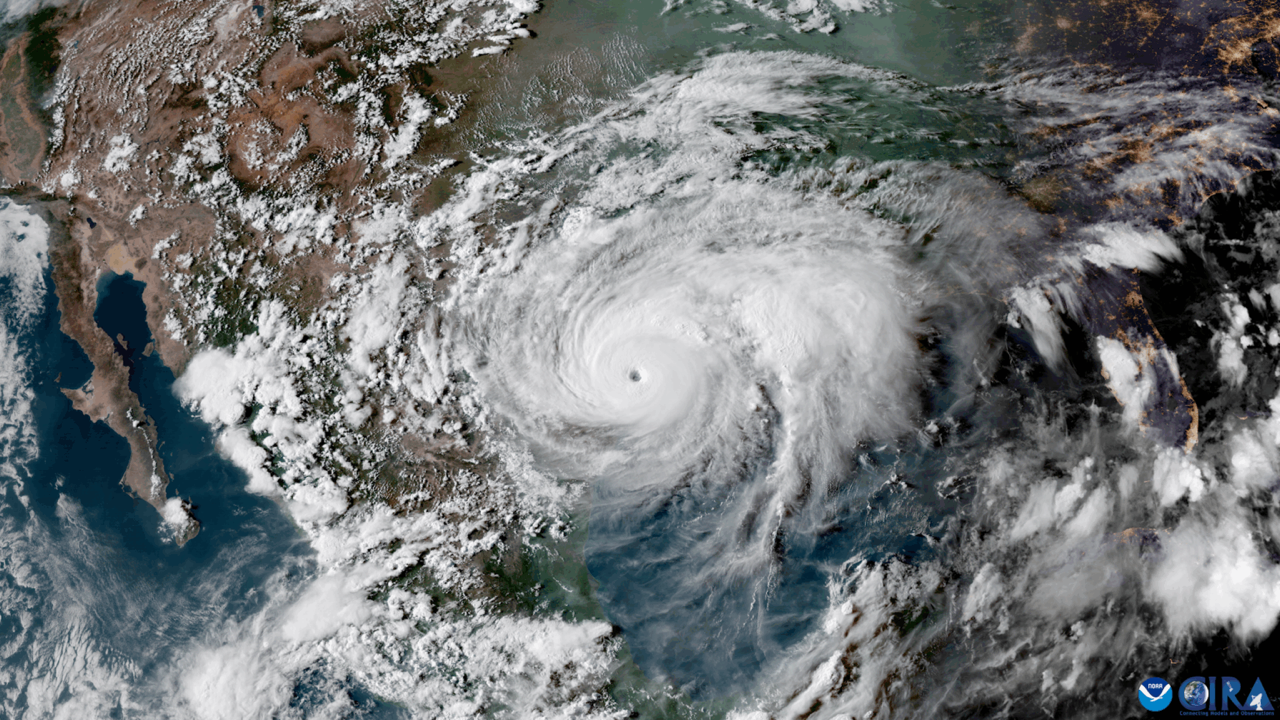
2026 marks a historic milestone: CSU uses the AI-based ACE2 (Atmospheric Climate Emulator 2) climate model for the first time to verify hurricane forecasts. This is a major leap in meteorological science. Traditional dynamical climate models require supercomputers running for weeks to produce a single scenario. ACE2, developed by Google DeepMind and NVIDIA, uses neural networks trained on 40 years of atmosphere-ocean data. Runtime: 1,000-10,000x faster. Accuracy: comparable or better on some metrics.
Practical implications: CSU can now run HUNDREDS of different scenarios instead of 10-20 previously. Examples: 'what if El Niño weakens?' or 'what if Saharan dust is heavier?' This provides much more accurate probability estimates. CSU scientists are cautious: ACE2 hasn't replaced traditional models but serves as supplementary verification. If 2026 actual results match both ACE2 and traditional forecasts, that will be strong evidence AI can transform meteorology.
References
- [1]Extended Range Forecast of Atlantic Seasonal Hurricane Activity (PDF)CSU Tropical Meteorology Project
- [2]Researchers predicting somewhat below-average Atlantic hurricane season for 2026CSU Engineering
- [3]Atlantic hurricane season 2026: Here's Colorado State University's tropical forecastFox 35 Orlando
- [4]2026 Hurricane Season: Colorado State forecast calls for near-average storm countFox 5 Atlanta
- [5]CSU predicts somewhat below-average 2026 Atlantic hurricane seasonWAFB / CBS
Frequently Asked Questions
Everything you need to know about the 2026 Atlantic hurricane forecast and Vietnam impact.
Related Topics
Stay on top of trends
Bookmark this page and check back often for the latest updates and insights.