Disney's Robotic Olaf: NVIDIA Physical AI Brings Frozen's Beloved Snowman to Life
Walt Disney Imagineering unveiled a free-roaming robotic Olaf at NVIDIA GTC 2026 on March 16 — trained with deep reinforcement learning inside NVIDIA's Kamino to walk on boats and interact with guests before debuting at Disneyland Paris on March 29.
A Historic Moment: Robotic Olaf at NVIDIA GTC 2026
When robotic Olaf walked onstage at NVIDIA GTC 2026 on March 16, the room fell silent in awe. This was not a tethered or remote-controlled character — this was a genuine AI robot walking autonomously, self-balancing, and spontaneously interacting with humans, powered by NVIDIA's breakthrough physical simulation advances.
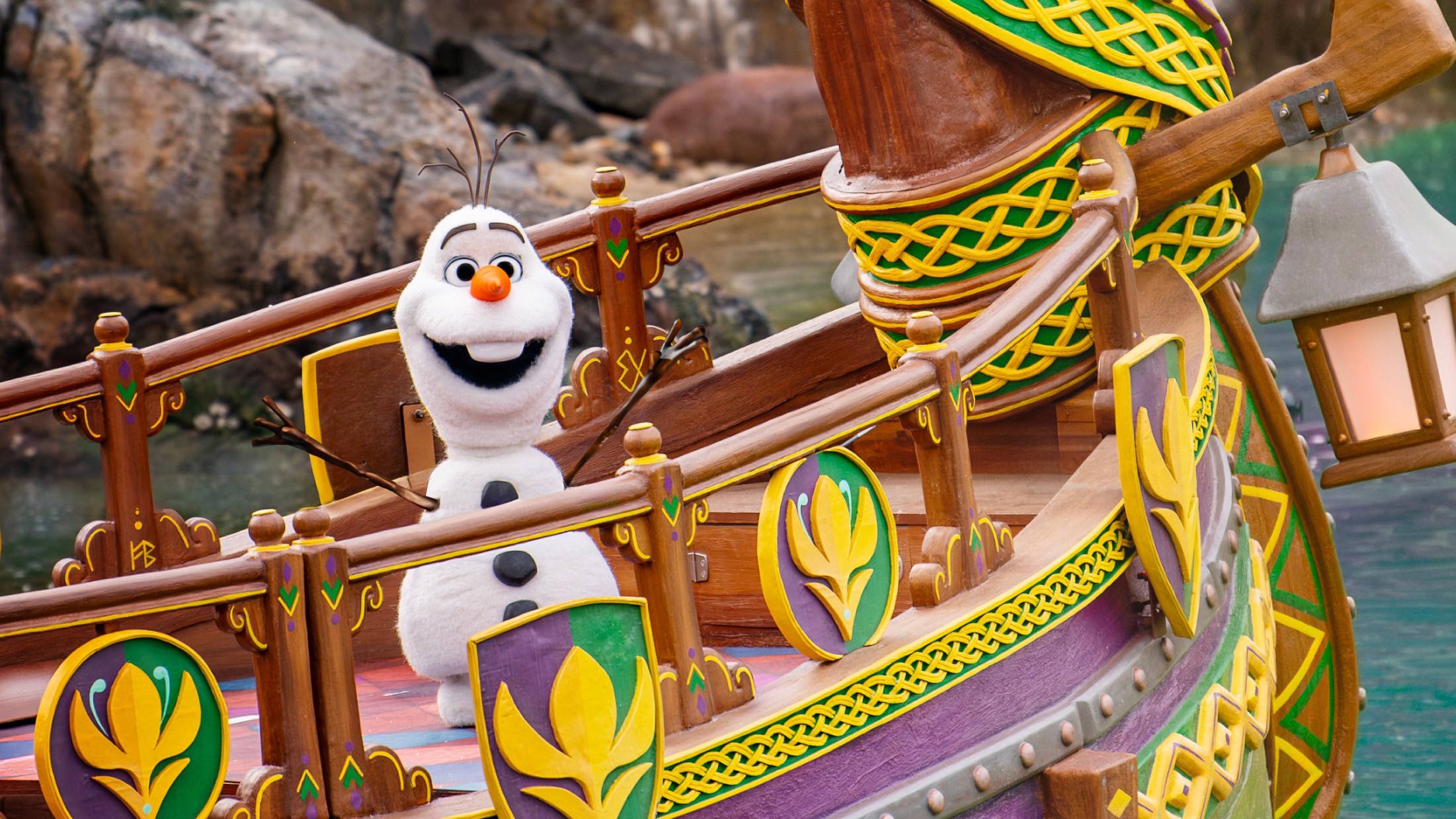
Photo: Disney Experiences — Robotic Olaf in A Celebration in Arendelle at Disneyland Paris
Free-Roaming
Disney's first robot that moves completely freely without fixed pre-programmed movement sequences.
Boat Balance
Olaf can maintain balance and walk on the rocking deck of a boat — an unprecedented engineering challenge.
Guest Interaction
The robot can spontaneously interact with visiting guests in ways consistent with Olaf's beloved character personality.
Physical AI
Uses NVIDIA's full physical AI stack: Kamino + Newton + deep reinforcement learning.
How Did NVIDIA Train Olaf to Walk?
Rather than manually programming every movement, Disney and NVIDIA let the robot learn through millions of trial-and-error attempts in an extremely realistic physics simulation environment. The result is a robot with fluid, naturally adaptive locomotion that no engineer could explicitly code.
Deep Reinforcement Learning
Olaf was trained using deep reinforcement learning across thousands of parallel simulation environments. Rather than scripting movements manually, the robot learns to stand, walk, and balance through millions of trial-and-error iterations.
[1] Disney ExperiencesKamino Simulation Platform
NVIDIA's Kamino platform (built on Isaac Sim) runs thousands of training environments in parallel, letting Olaf learn in compressed time. This allowed the robot to develop robust walking behaviors in weeks rather than years of real-world trial.
Newton Physics Engine
NVIDIA's Newton Physics Engine models realistic physical interactions including ground contact, balance on uneven surfaces, and dynamic stability on moving platforms like boats. This bridges the simulation-to-reality gap for real-world confident walking.
[1] WDW News TodaySimulation-to-Reality Transfer
The central challenge in physical AI robotics is transferring learned behavior from simulation to reality without performance degradation. NVIDIA and Disney bridged this gap by carefully tuning simulation physics parameters to match real-world deployment conditions.
Olaf vs. Previous Disney Robots: How Big Is the Leap?
The difference between robotic Olaf and previous Disney robots is not merely incremental improvement — this is a fundamental paradigm shift from 'scripted automation' to 'genuine AI agent'. Every guest encounter is a unique, unrepeatable moment.
Photo: Disney Experiences — Robotic Olaf vertical portrait shot
Earlier Disney robots like BDX Droids use pre-programmed movement sequences. They cannot freely navigate dynamic environments or autonomously adapt to changing conditions.
Olaf uses reinforcement learning AI, enabling free navigation, real-time gait adaptation, and spontaneous guest interaction — capabilities that pre-programmed robots cannot achieve.
From Lab to Disneyland Paris: Olaf's Journey
Robotic Olaf's journey from concept to the NVIDIA GTC stage and ultimately to Disneyland Paris's World of Frozen reflects the remarkable pace of physical AI advancement in recent years.
Development Begins
Walt Disney Imagineering begins collaboration with NVIDIA to develop the Olaf robot using the world's most advanced physical AI simulation platform.
Training Completed
Olaf completes training within Kamino, successfully learning natural locomotion across multiple surface types including the tilting deck of a moving boat.
Debut at NVIDIA GTC 2026
Walt Disney Imagineering unveils robotic Olaf at NVIDIA GTC 2026, demonstrating free-roaming locomotion, guest interaction, and balance on a boat — stunning robotics professionals worldwide.
Disneyland Paris Debut
Olaf officially debuts to the public in the World of Frozen area at Disneyland Paris — becoming the most advanced free-roaming robotic character Disney has ever deployed for guests.
What This Means for the Global Theme Park Industry
Robotic Olaf is not just a new attraction at Disneyland Paris — it signals the future of the entire global theme park industry. As physical AI matures enough for deployment in complex real-world environments, the boundary between fictional character and physical reality begins to blur in unprecedented ways.
Photo: Disney Experiences — Robotic Olaf wide promotional image
Personalized Experiences
Free-roaming AI robots create unique, personalized interactions at scale, replacing traditional identical character meet-and-greets.
Global Competition
Olaf's success may accelerate Universal, Six Flags, and other competitors to fast-track physical AI robotics investments to maintain competitive positioning.
New Business Models
AI robotic characters can multiply Disney's storytelling capacity without proportionally increasing the number of costumed character performers.
▸ If Disney deploys AI robots across all global parks, thousands of character performers could be affected -- but guest experiences would be personalized at an unprecedented scale.
Olaf at World of Frozen: The Guest Experience
March 29, 2026 marks a historic milestone: the first time a Disney AI free-roaming robot officially debuts to the public in the World of Frozen area at Disneyland Paris. This is an experience no other theme park in the world can match at this moment.
Arendelle-themed area — A Celebration in Arendelle experience
13 days after the NVIDIA GTC 2026 reveal
No tracks, no fixed script — Olaf moves freely within the area
Sources
Related: NVIDIA GTC 2026: Event Highlights | Perplexity AI Search: The Future of Search