James Webb's "Brain Nebula"
The Dying Star That Looks Like a Human Brain
The James Webb Space Telescope revealed breathtaking imagery of the 'Exposed Cranium' nebula — a dying star creating astonishing layered gas structures that look like a human brain when observed in infrared.
Exposed Cranium Nebula: A Dying Star's Cosmic Masterpiece
In March 2026, the James Webb Space Telescope released detailed imagery of the 'Exposed Cranium' nebula — a name given by astronomers due to its remarkable structure. This planetary nebula formed from a sun-like star in the final stages of its life, shedding its outer layers into concentric rings of gas and dust.[1]
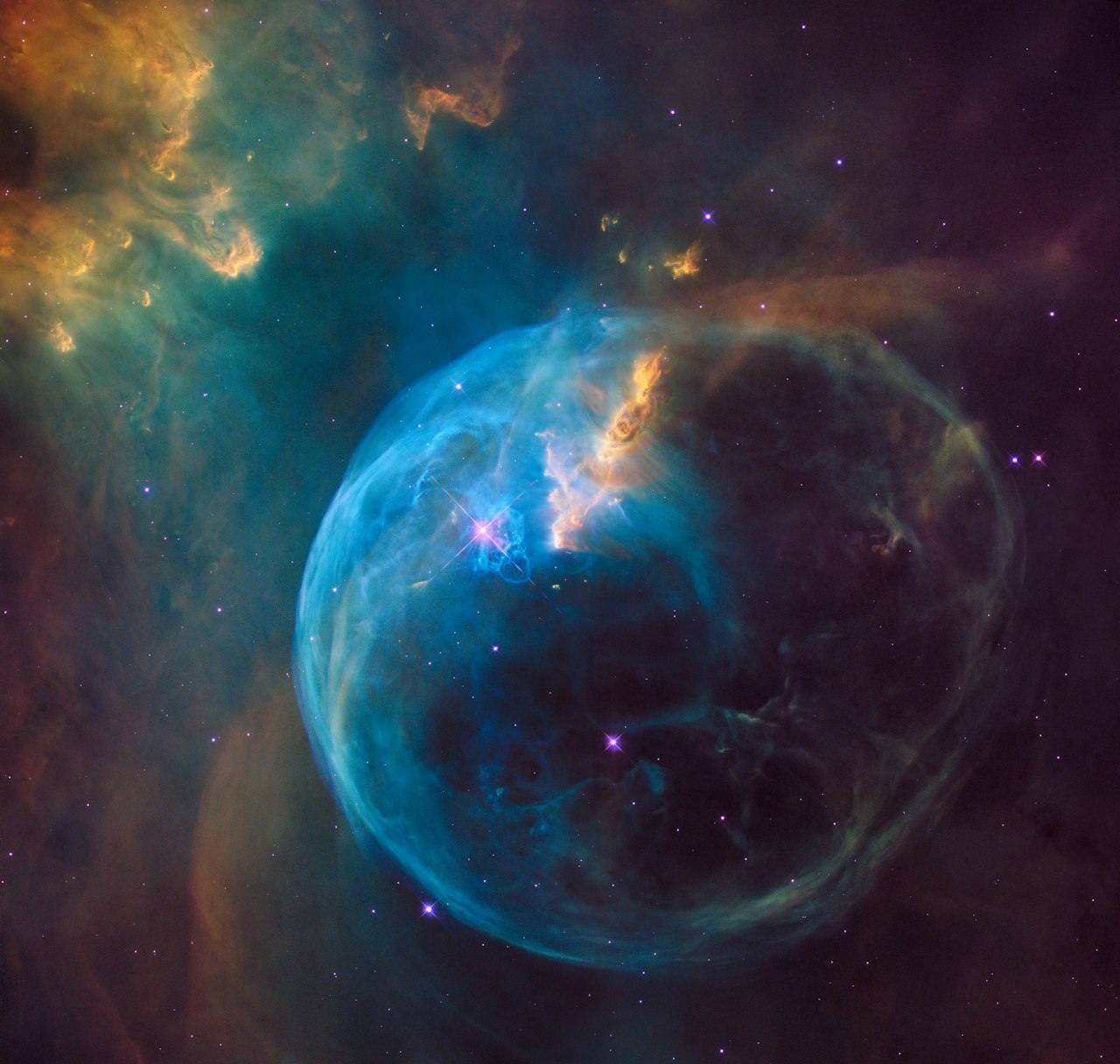
Photo: NASA/ESA — Infrared image of the Brain Nebula (Exposed Cranium) captured by James Webb Space Telescope
Layered Gas Structures
The nebula features multiple concentric gas layers glowing at different wavelengths, creating a brain-like tissue structure when observed in infrared.
Dark Central Divide
A dark dust lane bisects the nebula at its center, creating a distinctive 'groove' reminiscent of the division between brain hemispheres — one reason it earned its brain-like nickname.
Dying Central Star
At the center sits an extremely hot star on its way to becoming a white dwarf, blasting ultraviolet radiation into the surrounding gas layers, causing them to glow brilliantly.
Infrared Technology: Piercing the Cosmic Dust
JWST uses near-infrared and mid-infrared cameras (NIRCam and MIRI) to pierce through cosmic dust that blocks ordinary optical telescopes. Infrared wavelengths allow Webb to see hidden gas and dust layers inside the nebula with unprecedented detail.[2]
Photo: NASA — JWST infrared imaging — nebula gas-dust structure in deep space
Near-infrared camera — detects light from young stars and distant galaxies
Mid-infrared instrument — sees through thick dust, revealing hidden stars and structures
Near-infrared spectrograph — analyzes chemical composition of nebula gas and dust
Largest mirror ever put into orbit, gold-plated to maximally reflect infrared light
Psyche Asteroid and the Solar System's Mysteries
Beyond the Brain Nebula, JWST in 2026 also turned its lens toward the Psyche asteroid — a massive metallic body in the main asteroid belt that has baffled scientists for over 200 years. Webb's infrared observations revealed unprecedented surface composition detail, providing new clues about solar system origins.
Psyche Asteroid
Psyche is the only known metal-rich asteroid and may be the exposed metallic core of a primordial planet destroyed by collisions billions of years ago. JWST provided the most detailed map ever of its surface.
~280km diameter200+ Year Old Mystery
Since Psyche's discovery in 1852, scientists have been unable to precisely determine its composition and origin. NASA's Psyche spacecraft launched in 2023 and JWST 2026 data together are shedding new light on this mystery.
Discovered 1852Metals and Rare Minerals
Psyche is estimated to contain iron and nickel worth many quadrillions of dollars. JWST's infrared data helps scientists better understand mineral distribution and surface structure.
Incalculable valueTimeline of the Greatest Space Telescope
James Webb Launches
The James Webb Space Telescope launched on December 25, 2021, marking a turning point in the history of space exploration.
First Science Images
NASA released JWST's first science images in July 2022, revealing the deepest view of the universe ever captured with extraordinary clarity.
Landmark Discoveries
JWST discovered the earliest known galaxies, exoplanet atmospheres, and chemical signatures potentially related to life.
Brain Nebula — Exposed Cranium
JWST revealed unprecedented detailed imagery of the 'Exposed Cranium' nebula — a planetary nebula with layered gas structures resembling a human brain.
Psyche Asteroid & Extended Observations
JWST also began detailed observations of the metal-rich Psyche asteroid, helping unravel mysteries about the solar system's origins.
2026 — A New Dawn in Space Exploration
2026 marks an exceptional year for global space science. Beyond JWST's Brain Nebula discovery, several other major milestones occurred — from new observatories going live to lunar and asteroid exploration missions.[3]
Vera Rubin Observatory Goes Live
NASA's Vera Rubin Observatory came online in 2026, conducting a full-sky survey at unprecedented resolution. Over 10 years it will map billions of galaxies and detect thousands of transient objects.
Chang'e 7 Lunar Mission
China launched the Chang'e 7 mission in 2026 for lunar south pole resource mapping — particularly searching for frozen water and minerals, paving the way for lunar base plans.
Planetary Nebulae & Stellar Evolution
With JWST data, scientists in 2026 made major strides in understanding the final stages of sun-like star life — from red giant to planetary nebula to white dwarf.
Why These Discoveries Matter for Humanity
Every image from JWST, every successful mission isn't just satisfying human curiosity — they open profound insights into the origins of the universe, how stars and planets form, and even whether life is common throughout the cosmos.
Cosmology & Origins
Understanding how stars like our Sun will die helps scientists build more accurate cosmological evolution models and predict the long-term fate of our solar system.
Stellar Evolution & Cosmic Matter
Planetary nebulae like the Exposed Cranium are 'factories' distributing heavy elements — carbon, nitrogen, oxygen — into interstellar space. These elements are the building blocks of life.
Planetary Exploration
The Chang'e 7 mission and Psyche research open paths for future space resource extraction, potentially addressing critical resource scarcity challenges on Earth.
Full-Sky Survey
The Vera Rubin Observatory will discover millions of new objects — near-Earth asteroids, supernovae, and potentially evidence of dark matter — over its 10-year operational lifespan.
The Stunning Beauty of Deep Space
Photo: NASA — Deep space cosmic nebula — the stunning beauty of the universe through James Webb's lens
Impressive Numbers
▸ The Brain Nebula is the largest star-forming region observed by JWST -- 6,500 light-years from Earth
▸ This discovery reshapes our understanding of star formation and the potential for life beyond Earth
Related: Women Longevity 2026 · Vera Rubin Observatory