Key Takeaways
- NIS director Lee Jong-seok, on April 6, 2026, said it is 'fair to view' Kim Ju Ae as Kim Jong Un's heir.
- Kim Ju Ae is approximately 13 years old and first appeared publicly in 2022 at the Hwasong-17 ICBM launch.
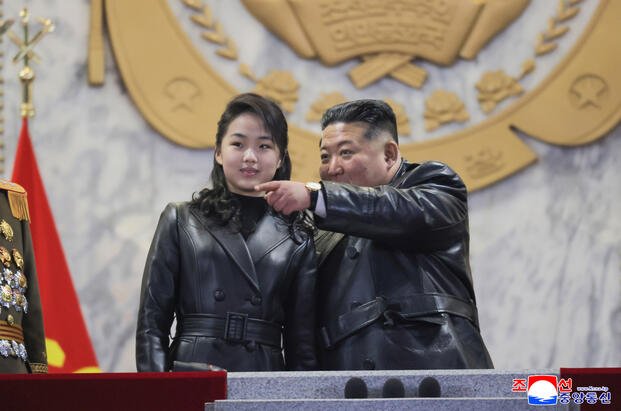
- A March 2026 photo series showed her driving a tank and firing pistols at a munitions facility — a military credential campaign.
- Kim Yo Jong (Kim Jong Un's sister) is assessed to have no independent power base and is not a successor candidate.
- Kim Jong Un is 42, so an actual transition could be decades away — this is planning, not a crisis.
The moment Seoul put a name on the heir
A 13-year-old child has just been labeled the heir to a nuclear-armed regime by the largest intelligence service in East Asia. NIS director Lee Jong-seok told a South Korean parliamentary intelligence committee on April 6, 2026 that the combined evidence now makes it 'fair to view' Kim Ju Ae as Kim Jong Un's successor.
That language — 'fair to view' — may sound cautious to outsiders, but in the NIS dictionary it is as close to a public confirmation as an intelligence service will get. It replaces the 'likely' assessment used from early 2024 onward, and reflects a long chain of signals accumulated over nearly four years.
Notably, the assessment comes just weeks after a March 2026 KCNA photo series showed Kim Ju Ae driving an army tank and firing pistols at a munitions facility. Per ZestLab analysis, this marks a shift from 'appearing next to her father' to 'appearing with her own military capability' — a classic Pyongyang succession-building pattern.
Public trajectory: 2022 to 2026
First public appearance at Hwasong-17 ICBM launch
KCNA released images of Kim Jong Un holding a young girl's hand while walking around the Hwasong-17 ICBM launch pad. It was the first time the outside world learned Kim Ju Ae existed.
→ If you have tracked North Korea since 2022, this was the first time the succession door cracked open in public.
Referred to as Kim's 'most beloved daughter'
State media began using the phrase 'most beloved daughter' when covering Kim Ju Ae's attendance at a military banquet — a rare linguistic upgrade inside Pyongyang's propaganda system.
→ Pyongyang propaganda language is always deliberate. Linguistic upgrades almost always precede a political step.
NIS first mentions succession
South Korea's National Intelligence Service (NIS) assessed Kim Ju Ae as 'likely' to be the heir, but still used cautious language.
→ At that point the NIS still said 'likely' — meaning there was still doubt.
Kim Ju Ae 'completes successor training'
Per an internal NIS report disclosed in early February 2026, Kim Ju Ae had been formally designated as heir after a period of structured training.
→ For regional analysts, this was the moment the file shifted from 'observation' to 'planning'.
Driving tanks and firing pistols
KCNA published a photo series of Kim Ju Ae operating an army tank and firing pistols at a munitions facility. Analysts called it a deliberate campaign to build her military credentials.
→ In a deeply patriarchal society, images of a female heir holding a weapon are a direct message to the generals.
Workers' Party parade
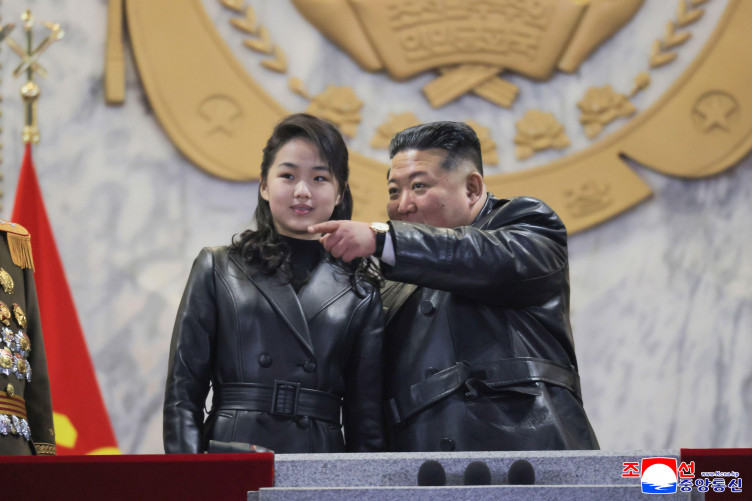
Kim Ju Ae stood beside her father at a parade closing a Workers' Party plenary session, positioned in a spot usually reserved for the regime's number-two figure.
→ Standing position at a North Korean parade is a more reliable kremlinology signal than any official statement.
NIS: 'fair to view' her as heir
NIS director Lee Jong-seok told a closed-door South Korean parliamentary intelligence committee it is 'fair to view' Kim Ju Ae as heir — the strongest language Seoul's intelligence service has used so far.
→ The gap between 'likely' (2024) and 'fair to view' (2026) is two years — fast movement in the intelligence world.
NIS intelligence assessment
Why Kim Yo Jong is not the successor
Kim Yo Jong, Kim Jong Un's sister, was widely seen as the regime's 'number two' between 2018 and 2022, when she appeared at the Singapore summit, at Panmunjom, and repeatedly read official statements on her brother's behalf. But per NIS, that role was mainly one of spokesperson: she commands no military unit, does not control the Organization and Guidance Department, and has no independent faction inside the Workers' Party.
More importantly, in the Paektu bloodline system succession travels vertically — father to child — not sideways between siblings. Kim Jong Un himself succeeded his father Kim Jong Il, not his uncle Kim Pyong Il. Choosing a 13-year-old over a sister with more than a decade of experience confirms the obvious: power in this regime is a dynasty, not a meritocracy.
Compared with other authoritarian successions
Kim Jong Un (2008–2011)
Publicly unveiled in 2010, succeeded after Kim Jong Il's death in December 2011.
Bashar al-Assad (1994–2000)
Pulled from a medical career in London and made an army general to build credibility.
Kim Ju Ae (projected)
The image-building campaign began in 2022, much earlier than previous cases.
Geopolitical implications
A teenage heir raises questions about policy continuity. If Kim Jong Un stays in power another 20 years, Kim Ju Ae will inherit the nuclear file from a completely different starting point: she is growing up in a North Korea that already has ICBMs and miniaturized warheads. Per ZestLab analysis, that likely favors continuity of the deterrence doctrine over any major shift.
Neither the US nor South Korea has adjusted near-term deterrence plans, but planners in Seoul and Washington are starting to model a 'female DPRK leader' scenario — something without precedent in the regime's history.
Related on ZestLab
References
- Military.com — Seoul Spy Agency Says It Is Fair to View Kim's Teen Daughter as His Heir (April 6, 2026)
- The Japan Times — South Korea Indicates Kim Jong Un's Daughter Is the Successor (April 7, 2026)
- TheJournal.ie — Kim Jong Un's Daughter Can Be Viewed as His Heir (April 6, 2026)
- Yonhap News Agency — NIS briefing coverage (April 2026)
Frequently Asked Questions
Related Topics
Stay on top of trends
Bookmark this page and check back often for the latest updates and insights.