Key Takeaways
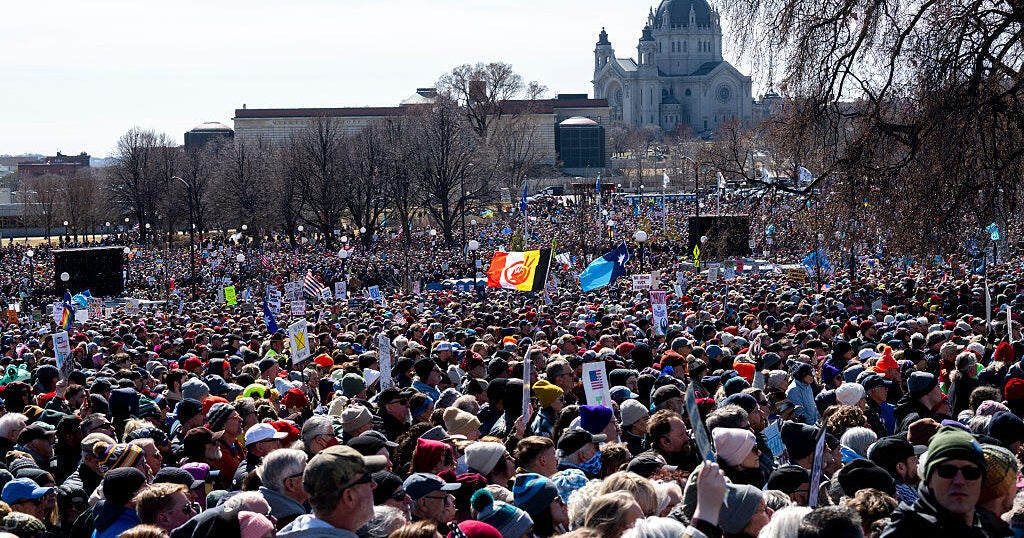
- 8 to 9 million participated in a single day, the largest in US history, roughly double the 2017 Women's March.
- Two-thirds of attendees came from non-urban and rural areas, reflecting discontent far beyond major cities.
- New York City recorded 350,000 marchers with zero arrests, an unprecedented achievement.
- Five core issues: ICE violence, Iran war, Epstein files suppression, democratic backsliding, government shutdown threat.
- Over 20,000 marched internationally across 15+ countries, the largest solidarity response since the 2003 Iraq War protests.
What Is the 'No Kings' Movement?
The 'No Kings' slogan draws from America's founding principle that no one is above the law. The movement was organized by two primary groups: Indivisible, a grassroots network of over 100,000 volunteers formed after the 2016 election, and the 50501 movement, a newer coalition focused on nonviolent direct action.
Co-sponsors included the AFL-CIO (America's largest labor federation), the Democratic Socialists of America (DSA), and the Human Rights Campaign (HRC). The alliance between labor unions, civil rights organizations, and grassroots movements created a united front rarely seen in modern American politics.
A notable detail: in Hawaii, protesters chose the slogan "No Dictators" instead of "No Kings" out of respect for Hawaiian Kingdom sovereignty, reflecting the movement's deep cultural sensitivity. The protests took place against a backdrop of multiple simultaneous crises, including the escalating US-Iran conflict and the economic fallout from Trump tariffs 2026.
City-by-City Breakdown
Over 3,300 events took place across all 50 states, Puerto Rico, and American Samoa. Below are the cities with the highest turnout, according to CBS News and Washington Post data.
Zero arrests. Crowd stretched from Brooklyn Bridge to Central Park.
Gov. Healey, Senators Warren and Markey addressed the crowd.
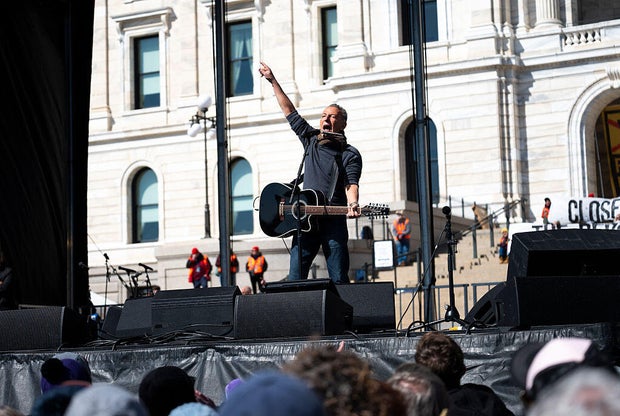
Bruce Springsteen performed. Senator Bernie Sanders spoke.
Bill Nye, Mehdi Hasan, civil rights leaders gathered at the National Mall.
70+ arrests, the only city with significant law enforcement confrontations.
Amsterdam, Madrid, Rome, Paris, London, Tokyo, Sydney held solidarity marches.
Who Showed Up?
One of the most striking features of No Kings was its geographic diversity. According to organizers, two-thirds of attendees came from suburban and rural areas, a stark contrast to previous protests that were typically concentrated in major urban centers.
The demographic makeup was also diverse in age and occupation: from factory workers in Ohio to teachers in Montana, from college students to military veterans. Many reported this was their first protest, suggesting the movement reached communities that had not previously engaged in street-level political action.
→ For the Vietnamese diaspora in the US, this event demonstrated that political polarization has extended far beyond party lines. Vietnamese-American communities in multiple cities reported significant participation.
Five Core Grievances
ICE Violence Against Immigrants
Shootings by Immigration and Customs Enforcement (ICE) targeting undocumented immigrants became a focal point of outrage. Protesters demanded comprehensive reform of the agency and an end to the use of force in deportation operations.
→ Immigration issues directly affect Vietnamese-American communities, especially families with undocumented members.
Iran War Escalation
Many participants viewed the US-Iran conflict as an unauthorized war that violated Article I of the Constitution. They demanded troop withdrawal and diplomatic negotiations.
→ The Iran war has pushed oil prices higher, directly affecting gas prices and cost of living for Vietnamese in America and in Vietnam.
Epstein Files Suppression
Protesters demanded full release of documents related to Jeffrey Epstein, arguing that the suppression of information was evidence of protection of the powerful.
→ Political transparency is a universal concern, reflecting worries about the corruption of power globally.
Democratic Backsliding
Concerns about executive power concentration, weakening of checks and balances, and threats to press freedom and judicial independence.
→ For Vietnamese, concerns about democratic erosion create natural comparisons to Vietnam's own historical experience with centralized governance.
Government Shutdown Threat
The use of federal government shutdown threats as political leverage left millions of civil servants and public service recipients anxious.
→ Government shutdowns affect visas, immigration processing, and federal services that Vietnamese-American communities rely on.
Timeline of Events
East Coast Marches Begin
Starting at 7 AM, crowds began gathering at over 3,300 locations nationwide. Boston and New York were among the first cities to report turnout exceeding expectations.
→ Public transit in major cities was overwhelmed. NYC Metro reported its highest off-peak ridership in history.
Saint Paul: Springsteen and Sanders Take the Stage
In Saint Paul, Minnesota, over 100,000 gathered. Bruce Springsteen performed 'Born in the U.S.A.' and Senator Bernie Sanders delivered a speech calling for the defense of democracy.
→ Springsteen's video was viewed 45 million times on social media within 24 hours, bringing the movement to an international audience.
New York Sets Record: 350,000, Zero Arrests
The march stretched from Brooklyn Bridge to Central Park. NYPD confirmed 350,000 participants and zero arrests, an unprecedented achievement in the city's protest history.
→ New York's 'absolute peaceful protest' model was praised by experts as a blueprint for future movements.
International Solidarity Wave
As the US entered evening, marches began across Europe and Asia. Over 20,000 protesters in Amsterdam, Madrid, Rome, Paris, London, Tokyo, and Sydney. Many carried banners reading 'Democracy Has No Borders'.
→ This marked the largest international solidarity response to a US domestic protest since the 2003 Iraq War demonstrations.
Notable Moments & Voices
Performed 'Born in the U.S.A.' before 100,000 in Saint Paul, Minnesota. Stated the song carries new meaning in the current context.
Spoke in Saint Paul, calling for the defense of democracy and working-class rights. Emphasized the movement's non-partisan nature.
Joined the Saint Paul march, calling for nonviolent action and persistence. Connected the No Kings movement to the history of anti-war protests.
Spoke in Washington D.C., emphasizing the importance of science, truth, and democratic institutions in safeguarding freedom.
International Solidarity
The No Kings movement did not stop at American borders. Over 20,000 people in more than 15 countries organized solidarity marches on the same day, March 28. According to Euronews, major demonstrations took place in Amsterdam, Madrid, Rome, Paris, London, Tokyo, and Sydney.
European protesters specifically cited concerns about the global implications of democratic erosion in the United States, drawing parallels to rising populist movements in their own countries. Many banners read 'Democracy Has No Borders,' a message emphasizing the universal nature of the struggle.
→ This was the largest international solidarity response to a US domestic protest since the 2003 Iraq War movement, demonstrating that American democracy remains a global symbol.
Historical Comparison
No Kings on March 28, 2026 shattered all records for protest size in United States history. With 8-9 million participants in a single day, the event was roughly double the 2017 Women's March, previously considered the largest at approximately 3-4 million. The most significant distinction was the extensive participation from rural areas, indicating the movement transcended the urban boundaries of traditional protests.
Compared to Historic US Protests
Estimates based on CBS News, NPR, Washington Post data. 2020 figures are cumulative over weeks.
Law Enforcement Response
Despite the enormous scale, the No Kings protests were remarkably peaceful nationwide. The NYPD confirmed zero arrests during the 350,000-person march, an unprecedented achievement.
The only notable exception was Los Angeles, which recorded over 70 arrests, primarily related to confrontations between protesters and security forces at flashpoints. Nationwide, there were approximately 70 total arrests among 8-9 million participants, an extremely low ratio for any large-scale event.
→ The ratio of 70 arrests per 8-9 million (0.0008%) is far lower than the average at major US sporting events, demonstrating the remarkable discipline of the movement.
What Happens Next?
Organizers from Indivisible and 50501 announced plans to maintain momentum through three pillars: sustained local action, mass voter registration targeting the 2026 midterm elections, and systematic policy monitoring at the state level.
The strong rural participation could have significant electoral implications, particularly in swing districts in the Midwest and Sun Belt. Based on ZestLab analysis, if even 10% of first-time protesters remain politically engaged, it could affect outcomes in at least 30 House races in the midterms.
The critical question is whether the movement can transition from protest to organized political action. History shows that large protests do not always lead to direct policy change. However, the scale and geographic diversity of No Kings creates an organizational foundation that previous movements lacked.
→ For the Vietnamese-American community, this represents an opportunity for deeper engagement in US political life, particularly on issues related to immigration and international relations.
References
- CBS News — No Kings rallies: Millions protest Trump across the nation (March 28, 2026)
- NPR — No Kings Saturday protests draw record turnout nationwide (March 28, 2026)
- Washington Post — No Kings protests and marches see record turnout (March 28, 2026)
- Euronews — Huge crowds protest against Trump on No Kings Day in the US and abroad (March 28, 2026)
- TIME — No Kings protesters take to streets in towns and cities across the U.S. (March 28, 2026)