technology

Nvidia CEO: AGI Is Already Here, Can Run Billion-Dollar Companies

Nvidia CEO Jensen Huang declares AGI 'is here now' — redefining artificial general intelligence as systems already running billion-dollar enterprises, igniting fierce debate across the AI research community.

March 2026AGI Declared80% Market Share
80%
AI Training Chip Market
83%
GPT-5.4 GDPVal Score
$3.4T
Nvidia Market Cap
6+
Labs Claiming AGI Progress

Key Takeaways

  • Jensen Huang declared in March 2026 that AGI 'is here now,' redefining AGI not as sentient machines but as AI systems capable of autonomously running billion-dollar operations
  • GPT-5.4 scored 83% on the GDPVal benchmark — the first model to pass the 80% threshold widely considered a proxy for general reasoning competence
  • Nvidia controls roughly 80% of the AI training chip market, making Huang's AGI declaration both a technical assessment and a strategic business move
  • Academic researchers and AI safety experts strongly dispute Huang's claim, arguing current systems still fail at novel reasoning, physical-world understanding, and genuine autonomy
  • Multiple AI labs — OpenAI, Google DeepMind, Anthropic, and xAI — are racing to claim AGI milestones, with Elon Musk predicting 2026 as the 'leap year' for artificial intelligence
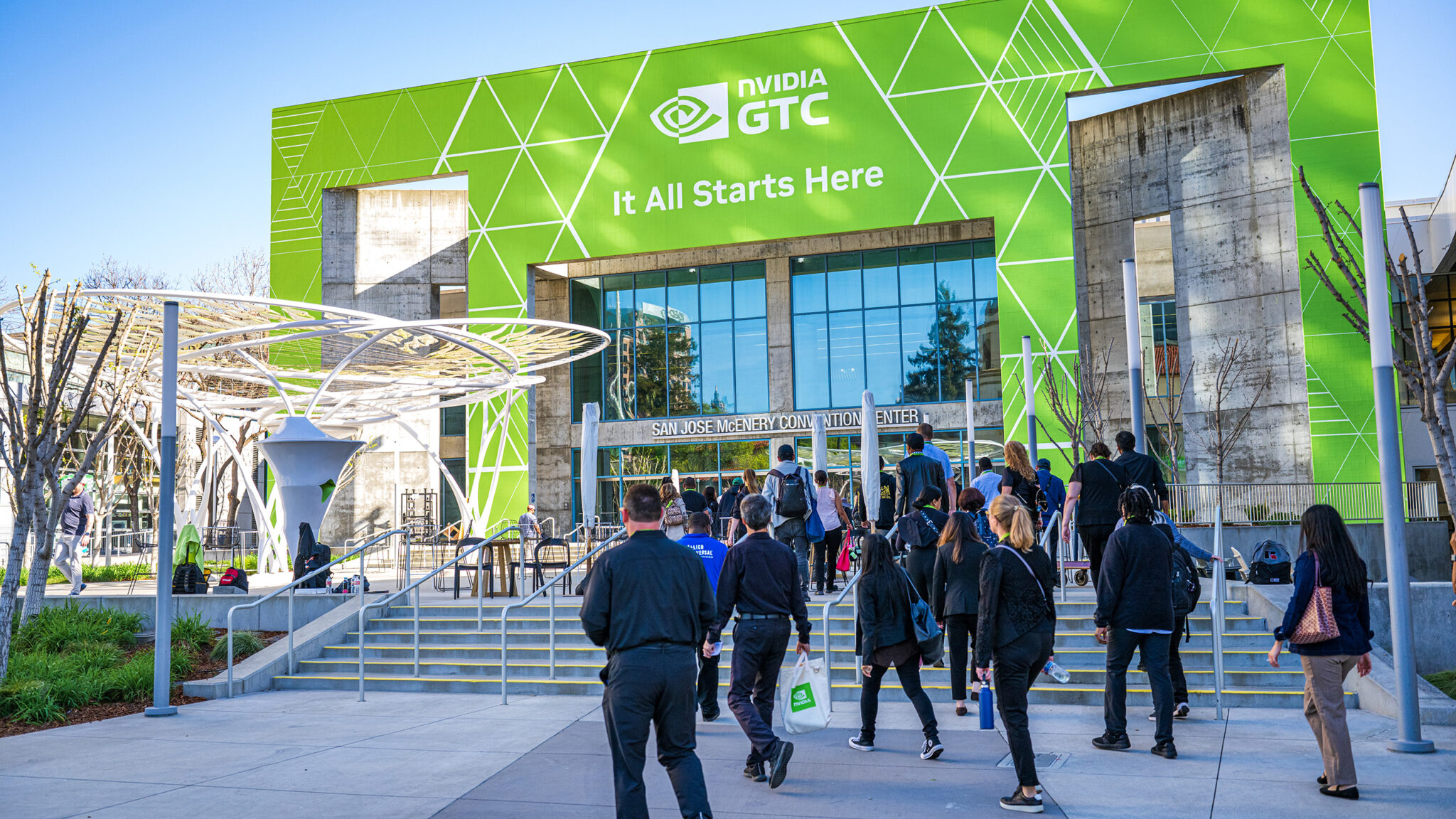
Jensen Huang presenting Nvidia's vision for artificial general intelligence
Photo: TechStartups

The Declaration That Shook Silicon Valley

In a keynote address at Nvidia's annual GTC conference in March 2026, Jensen Huang made a statement that reverberated across the technology world: artificial general intelligence is no longer a future aspiration — it is already here. Huang's claim rests on a pragmatic redefinition. Rather than the traditional academic benchmark of machines matching human cognition across all domains, he pointed to AI systems that are already autonomously managing supply chains, writing production-grade software, conducting scientific research, and operating billion-dollar business units with minimal human oversight. 'We used to ask when AGI would arrive. The answer is: look around you,' Huang told the audience of 30,000 developers and researchers. 'These systems don't need to pass a philosophy exam. They need to run a company — and they already do.'
-> If you own Nvidia stock, Huang's AGI narrative could be the single biggest catalyst for the next leg up — or the peak of AI hype if markets disagree.

We used to ask when AGI would arrive. The answer is: look around you. These systems don't need to pass a philosophy exam. They need to run a company — and they already do.


Nvidia GPU hardware powering AI training infrastructure worldwide
Photo: Nvidia

The Evidence: What Supports Huang's Claim

Huang's declaration did not emerge from thin air. Several converging developments lend weight to the argument that AI capabilities have crossed a critical threshold in early 2026. First, benchmark performance. OpenAI's GPT-5.4, released in February 2026, scored 83% on the GDPVal evaluation — a comprehensive test measuring general reasoning, domain expertise, planning, and value alignment. This marked the first time any model surpassed the 80% threshold that researchers had informally treated as a proxy for general competence. Second, real-world deployment. Autonomous AI agents are now managing logistics for Fortune 500 companies, generating and shipping production code at scale, conducting preliminary drug discovery research, and even making financial trading decisions within defined risk parameters. These are not demos or prototypes — they are operational systems handling billions in economic value. Third, the infrastructure buildout. Nvidia's own data shows that global spending on AI training compute exceeded $200 billion in 2025, with the company's H200 and Blackwell chips powering the vast majority of frontier model training runs.

The Counterarguments: Why Many Researchers Disagree

The backlash from the research community was immediate and pointed. Leading AI scientists argue that Huang is conflating narrow task automation — however impressive — with genuine general intelligence. Yann LeCun, Meta's chief AI scientist, was among the first to respond: 'Calling today's AI systems AGI is like calling a calculator a mathematician. They execute patterns brilliantly within trained distributions. They do not understand.' Critics highlight several persistent failures in current systems: inability to reliably reason about novel situations not represented in training data, lack of genuine physical-world understanding, brittle performance under adversarial conditions, and the absence of true self-directed goal formation. These gaps, researchers argue, represent qualitative differences from human cognition, not merely quantitative ones. The definitional dispute matters enormously. If a company selling $200 billion in AI chips per year gets to define when AGI has arrived, the benchmark becomes inseparable from the business incentive.
-> If you work in tech or AI, how AGI gets defined determines job security, regulation, and investment flows — this is not just an academic exercise.

AGI: Huang's Definition vs Academic Consensus

Huang's Pragmatic AGIAcademic Consensus
Core DefinitionAI running billion-dollar operations autonomouslyHuman-level cognition across all domains
Key BenchmarkEconomic value creation & task completionNovel reasoning, transfer learning, self-awareness
Current StatusAchieved — GPT-5.4 at 83% GDPValNot achieved — fundamental gaps remain
Physical World UnderstandingNot required for definitionEssential — embodied cognition required
Who Benefits from This DefinitionNvidia, AI chip makers, tech investorsSafety researchers, regulators, public interest

AI industry leaders racing toward artificial general intelligence milestones
Photo: MarketingProfs

The Road to AGI Claims: Key Milestones

Jan 2026

MIT Tech Review: 'AGI Could Arrive Within 5 Years'

-> Academic consensus began shifting from 'decades away' to 'possibly imminent' — a dramatic change in just two years.
Feb 2026

GPT-5.4 Breaks 80% GDPVal Barrier

-> For developers, the 83% GDPVal score means AI can now handle tasks previously requiring senior-level human expertise in most domains.
Mar 2026

Elon Musk: '2026 Is AI's Leap Year'

-> When both Nvidia and Tesla/xAI declare AGI milestones in the same month, the implications for regulation, employment, and investment are enormous.
Mar 2026

Jensen Huang Declares AGI 'Is Here Now'

-> Nvidia shares rose 4.7% on the day of the announcement — roughly $160 billion in market cap created by a single redefinition.

The AGI Race: Who Is Claiming What

OpenAI — GPT-5.4

83% GDPVal score, first past 80% threshold. Deploying autonomous agents across enterprise clients.

Google DeepMind — Gemini Ultra 2

Multimodal reasoning across text, code, video, and robotic control. AlphaFold 3 revolutionizing biology.

Anthropic — Claude Opus 4

Focus on safety-first AGI development. Extended thinking for complex reasoning chains.

xAI — Grok-4

Human-competitive on professional exams. Musk predicts 2026 as AI's 'leap year' for capabilities.

Nvidia — Hardware Kingmaker

80% of AI training runs on Nvidia chips. Blackwell architecture enables 4x training efficiency gains.

Meta — Llama 4 Open Source

Democratizing AGI-level capabilities through open-source models. Yann LeCun remains AGI skeptic.


Why the Definition War Matters More Than the Technology

The debate over whether AGI has arrived is not merely philosophical. It carries concrete consequences for regulation, investment, employment policy, and public safety. If Huang's pragmatic definition prevails — AGI as economically productive autonomous systems — then the regulatory conversation shifts from 'how do we prepare for AGI' to 'how do we govern AGI that already exists.' This framing favors less restrictive oversight, since the systems are already deployed and generating value. If the academic definition holds — AGI as human-equivalent general cognition — then current systems remain 'narrow AI,' however capable, and the urgency for safety regulation applies to a future state rather than the present. This framing favors more cautious, proactive regulation. The stakes are immense. According to MarketingProfs' analysis of the March 2026 AI landscape, governments worldwide are drafting AI legislation, and whether they classify current systems as AGI or not will determine the stringency of rules covering everything from autonomous weapons to algorithmic hiring.
-> Whether you are a developer, investor, or job seeker, the AGI definition debate will directly shape what opportunities and risks you face in the next 2-3 years.
Disclaimer
Whether AGI has been achieved depends heavily on how one defines it. This article presents multiple perspectives. ZestLab does not endorse any single definition.

Frequently Asked Questions

ML
By Minh Le · Senior Technology Correspondent
Published: March 27, 2026
technology·AGI 2026 · Jensen Huang AGI · artificial general intelligence · nvidia AGI claim
Share

Related Topics

AGI 2026Jensen Huang AGIartificial general intelligencenvidia AGI claimAI autonomous companiesnvidia 2026

Stay on top of trends

Bookmark this page and check back often for the latest updates and insights.