Vietnam's Manufacturing Boom
How Southeast Asia's Rising Star Is Reshaping Global Supply Chains
The Fastest-Growing Economy in ASEAN
Vietnam closed 2025 with 8.02% GDP growth — far outpacing most regional economies. AMRO projects Vietnam will achieve 7.6% in 2026, the highest in ASEAN+3, while the government targets an ambitious ~10%.[2]
The China+1 Strategy and Competitive Advantages
As US-China trade tensions escalate, multinationals are accelerating supply chain diversification. Vietnam emerges as the top destination thanks to competitive labor costs, an extensive FTA network, and a young, increasingly skilled workforce.[1]
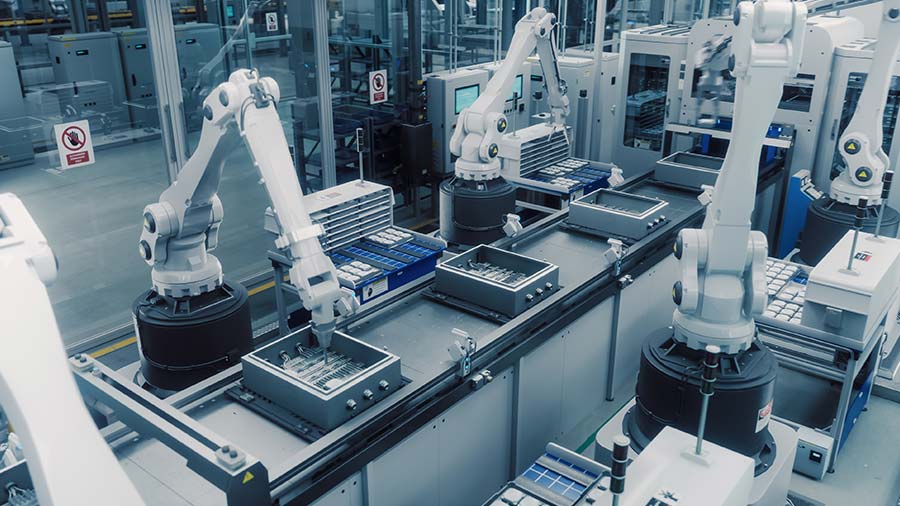
Photo: Vietnam Briefing — Vietnam electronics factory
Competitive Labor Costs
Factory wages in Vietnam are 40–50% lower than China, drawing manufacturing investment from international corporations.
Extensive FTA Network
Vietnam has signed 17 free trade agreements covering over 60 countries and territories, including the EU, US, Japan, and ASEAN.
Strategic Geographic Position
Located at the heart of Southeast Asia with 3,260 km of coastline and proximity to major international shipping lanes, Vietnam has outstanding logistics advantages.
Young Skilled Workforce
A population of 100 million with a median age of 30.5, combined with a 95% literacy rate and increasing investment in STEM education.
Samsung, Intel, and Foxconn Lead the Wave
These three major corporations anchor Vietnam's electronics manufacturing ecosystem, drawing hundreds of component suppliers and support service providers into the country.
Vietnam's largest foreign investor, accounting for over 30% of export revenue. Plants in Bac Ninh and Thai Nguyen manufacture smartphones, displays, and chips.
Intel's largest global chip assembly and test facility is in Ho Chi Minh City, with over 2,700 employees and a $1.5B investment.
Foxconn is rapidly expanding in Vietnam, building additional factories in Bac Giang to manufacture Apple products and other electronics components.
The Fastest-Growing Sectors
The Q1 2026 Industrial Production Index (IIP) recorded impressive growth across sectors: plastics surged 59.3% and autos jumped 45.9% year-on-year.[3]
Photo: VietnamNet — Vietnam industrial zone
The top export sector, accounting for over 30% of total export value. Samsung, Intel, LG, and Foxconn lead the growth.
Vietnam is the world's third-largest apparel exporter, supplying Nike, Adidas, Gap, and H&M.
Auto manufacturing surged 45.9% in Q1 2026. Toyota, Honda, Hyundai, and VinFast are all expanding capacity.
Plastics manufacturing achieved the highest growth rate in Q1 2026, driven by packaging and industrial component demand.
ASEAN's Most Extensive Free Trade Agreement Network
17 active FTAs give Vietnamese goods preferential tariff access to over 60 countries, creating a major competitive advantage over other regional manufacturing hubs.
Vietnam ranked in the Top 3 potential manufacturing hubs in Asia in the 2026 Asia Manufacturing Index, surveying 11 countries. This is the first time Vietnam has achieved this ranking.[1]
Challenges to Overcome
Despite enormous growth potential, Vietnam faces significant challenges on its path to becoming a leading global manufacturing hub.
Photo: Supply Chain Intelligence — Vietnam GDP growth and manufacturing IIP 2026
Labor Shortage
HighBac Ninh province needs over 330,000 factory workers. Companies are offering signing bonuses of $267–305 to attract workers, creating significant cost pressures.
Infrastructure Gaps
MediumRoad networks, seaports, and power supply have yet to keep pace with growth. New industrial zones require significant investment in logistics and utilities.
Domestic Supply Chain
MediumThe domestic content rate in electronics remains low, with most components still imported from China and South Korea. This makes supply chains vulnerable to external shocks.
US Trade Tensions
HighThe US is scrutinizing whether Chinese goods are being re-exported through Vietnam to circumvent tariffs. Vietnam must carefully manage trade relationships with both major economic powers.
The Road to Becoming a Global Manufacturing Hub
With strong macroeconomic fundamentals, an extensive FTA network, and growing foreign investment attraction, Vietnam is well-positioned to become one of the world's top manufacturing hubs in the coming decade.
Targeting 10% Growth
Vietnam's government targets ~10% GDP growth, driven by manufacturing expansion, institutional reforms, and export acceleration.
Industrial Infrastructure Upgrade
North-South expressway projects, port upgrades, and new industrial zone development will boost logistics competitiveness.
Moving Up the Value Chain
Vietnam aims to shift from assembly to higher-value-added manufacturing in semiconductors, AI hardware, and green technology.
▸ Vietnam now attracts over $20B in FDI annually -- creating roughly 500,000 new manufacturing jobs per year.