Key Takeaways
- 1Pepper export price surged $100/ton on April 9, reaching ~$5,000–5,200/ton FOB HCMC.
- 2Domestic prices slightly declined 500–1,500 VND/kg under harvest season pressure.
- 3Brazil drought in Espirito Santo and Indonesia’s 15% YoY production drop support export prices.
- 4Post-Ramadan Middle Eastern restocking and strong EU demand are key drivers.
- 5Iran ceasefire eases Red Sea shipping, reducing freight costs for exporters.
Price Flash — April 9, 2026
A stark divergence: export prices surge while the domestic market cools. Two worlds, one commodity.
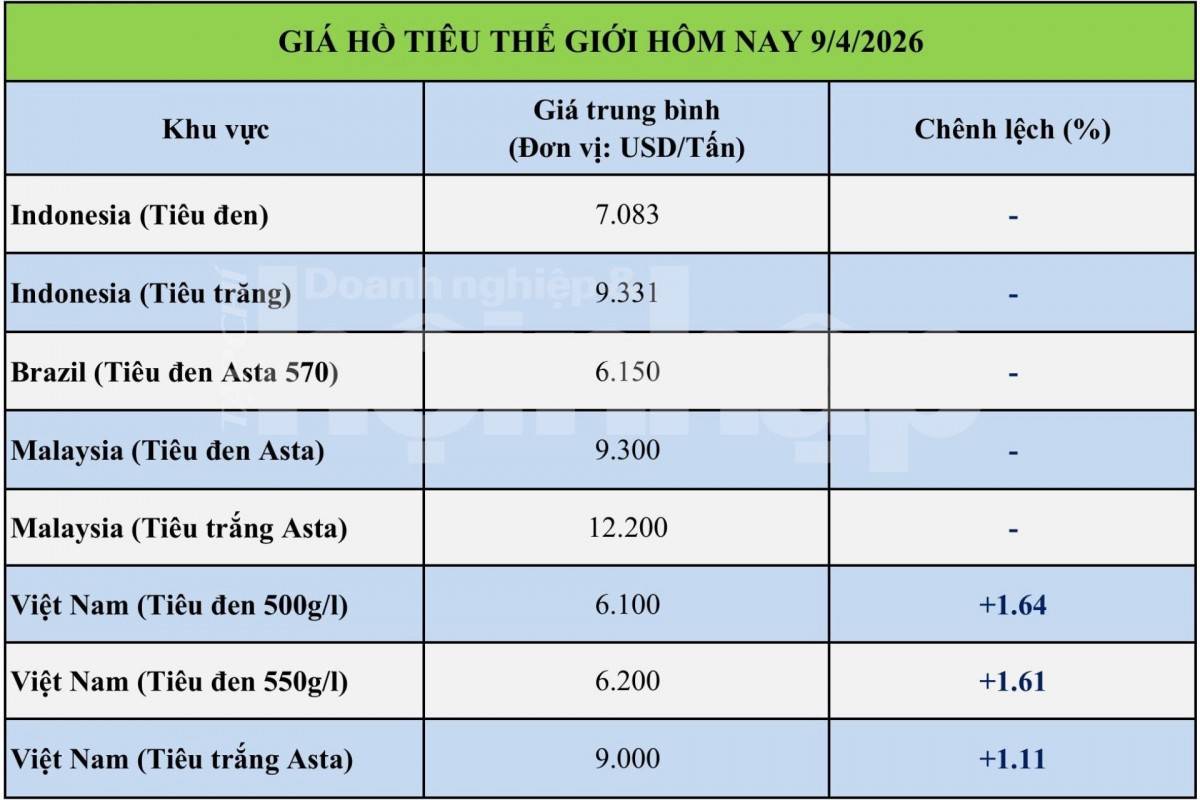
~$5,100
FOB HCMC, black pepper /ton
→ Exporting 100 tons → ~$10,000 additional revenue vs. previous session.
208K
VND/kg (average)
→ Farmers selling 1 ton today lose ~1,000 VND/kg vs. yesterday.
Demand Drivers: EU & Middle East
The European Union remains Vietnam's largest pepper import market, accounting for roughly 28% of total export volume. Demand is buoyed by food processing recovery after a deflationary period, with strict quality standards driving buyers to prioritize Vietnamese-origin pepper.
In the Middle East, spice import demand has surged following Ramadan (which ended late March 2026). Importers from the UAE, Saudi Arabia, and Iran are accelerating orders to replenish stocks for Eid al-Fitr celebrations and the summer season. This is a seasonal cycle, but this year benefits from the additional tailwind of the Iran ceasefire.
→ Vietnamese traders shipping 50 containers (~1,000 tons) to the Middle East in April could gain ~$100,000 extra from the price differential.
Supply Deficit: Brazil & Indonesia
Vietnam's two largest export competitors are both facing supply difficulties, creating a golden opportunity for the nation's pepper industry.
Brazil
Severe drought in Espirito Santo state — Brazil's main pepper-growing region. Feb–Mar 2026 rainfall down 40% vs. multi-year average, threatening significant yield reduction.
Rainfall: -40% vs. average
Indonesia
Indonesian pepper output is down 15% year-over-year, per industry reports. Orders from Southeast Asian importers are shifting to Vietnamese sources.
Output: -15% YoY
→ Vietnam could capture an additional 3–5% global market share in Q2 2026 by filling the supply gap from Brazil and Indonesia.
Vietnam's Global Market Position
Vietnam has maintained its position as the world's #1 pepper exporter for over a decade, accounting for more than 40% of global export volume. The Central Highlands (Gia Lai, Dak Lak, Dak Nong) are the primary production region, covering over 80% of the nation's pepper cultivation area.

In 2025, Vietnam exported approximately 260,000 tons of pepper, generating over $1.3 billion in revenue. While export price growth is encouraging, the primary challenge remains increasing value-added processing (ground pepper, dried pepper, pepper powder) rather than raw exports.
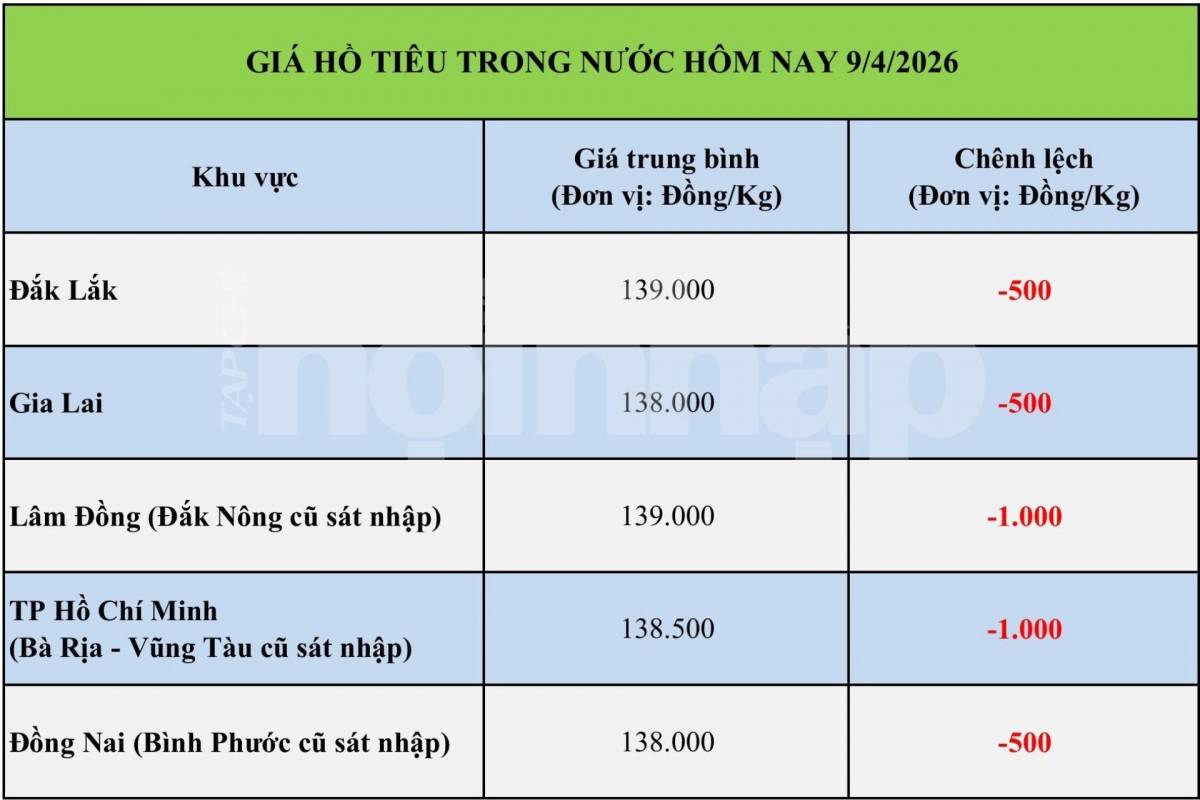
Provincial Pepper Prices — April 9, 2026
Source: DoanhNghiepHoiNhap.vn, April 9, 2026
| Province | Price (VND/kg) | Change |
|---|---|---|
| Gia Lai | 208,000 | -1,000 VND |
| Dak Lak | 207,000 | -1,000 VND |
| Dak Nong | 207,000 | -1,500 VND |
| Dong Nai | 209,000 | -500 VND |
| Ba Ria - Vung Tau | 210,000 | -500 VND |
| Binh Phuoc | 206,000 | -1,000 VND |
→ A Gia Lai farmer selling 5 tons today loses ~5 million VND compared to yesterday.
Iran Ceasefire & Shipping Impact
The Iran–US ceasefire has reduced maritime security risks in the Red Sea and Gulf of Aden — the primary shipping corridor from Vietnam to the Middle East and Europe. Marine insurance costs have dropped, and container freight rates have stabilized after months of volatility.
For pepper exports, this means: 5–10% lower logistics costs, shorter delivery times (no need to reroute around the Cape of Good Hope), and improved price competitiveness against more distant suppliers like Brazil.
→ Shipping a 20ft container from HCMC to Rotterdam could save $300–500 thanks to Red Sea stability.
Key Export Destinations
Estimated shares based on 2025 export data, ZestLab analysis
Domestic–Export Price Gap Analysis
The gap between farm-gate and FOB export prices is widening. With average domestic prices at 208,000 VND/kg (roughly $4,000/ton) and FOB prices at ~$5,100/ton, the intermediary margin reaches $1,100/ton (~22%).
Farm Gate
~$4,000
/ton
FOB HCMC
~$5,100
/ton
Margin
~22%
$1,100/ton
→ Farmers should consider joining export cooperatives for direct sales, rather than selling through multiple intermediary layers.
Q2 2026 Outlook
Macro factors are broadly supportive of Vietnamese pepper export prices in Q2 2026. However, domestic harvest pressure will persist through May, keeping farm-gate prices subdued.
Related Topics
Stay on top of trends
Bookmark this page and check back often for the latest updates and insights.