Indy 500 2026: Felix Rosenqvist Wins Closest Finish in Race History
sports

Indy 500 2026: Felix Rosenqvist Wins Closest Finish in Race History

On May 24, 2026 Felix Rosenqvist won the 110th Indianapolis 500 by 0.0233 seconds over David Malukas — the closest finish in the race's 115-year history — after a last-lap pass that flipped the lead with three turns to go.

May 24, 20260.0233s margin110th running70 lead changes
0.0233s
Winning margin
70
Lead changes in 200 laps
110th
Edition of the Indy 500
#60
Rosenqvist's winning car number

Key Takeaways

  • Felix Rosenqvist, driving the #60 Meyer Shank Racing with Curb-Agajanian entry, won the 2026 Indianapolis 500 — his first crown in the race that defines an IndyCar career.
  • The winning margin of 0.0233 seconds over David Malukas is the narrowest finish in the 110-year history of the Indianapolis 500 — beating the previous closest finish (0.043 seconds, Castroneves over Wheldon, 2006) by nearly half.
  • Rosenqvist seized the win with a turn-three pass on Malukas on the final lap — a low-line move that committed both drivers to a side-by-side run down the front straight at over 220 mph.
  • The race featured 70 lead changes across 200 laps at Indianapolis Motor Speedway — among the highest lead-change counts in the modern Indy 500 era and a key reason the front-running pack stayed tight to the finish.
  • Pato O'Ward, Scott McLaughlin and reigning Indy 500 winner Josef Newgarden were among the front-runners during the race — but none could match the late-race tire management that put Rosenqvist within striking distance on lap 200.
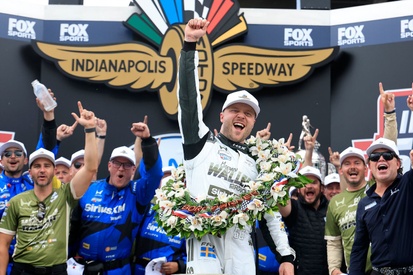
Felix Rosenqvist celebrates winning the 2026 Indianapolis 500 at Victory Lane
Felix Rosenqvist celebrates winning the 110th Indianapolis 500 at Victory Lane after the closest finish in the race's history — a 0.0233 second margin over David Malukas.Photo: Motorsport.com

Anatomy of a 0.0233-Second Finish

0.0233 seconds. That is the gap that decided the 110th Indianapolis 500 — and it is roughly the time it takes light to travel 7,000 kilometers, or the time the average human takes to blink one-tenth of an eyelid. At 220 mph, a 0.0233-second margin works out to a separation of just over two metres at the finish line — about the length of one IndyCar nose cone. The finish itself was the third corner of the final lap. Malukas had taken the lead on lap 197 by tucking the McLaren-prepared chassis into the bottom lane through Turn 1, forcing Rosenqvist into the dirty air that defines pack racing at Indianapolis. The Swede shadowed him for two full laps — never closer than half a car length, never further than two — saving the run for the very last opportunity. On the final approach to Turn 3, Rosenqvist committed to the low line. Malukas held the higher groove, a defensive call that protected him through Turn 3 but cost him exit speed. The two cars came out of Turn 4 side-by-side, drag-racing the front straight at a speed that flashes the data logger 220 mph. Rosenqvist's nose hit the yard of bricks 0.0233 seconds earlier — about 2.3 metres of asphalt — and the 110th Indianapolis 500 was over.
▸ ZestLab math — at 220 mph, 0.0233 seconds = 2.29 metres of separation. Rosenqvist won by less than the length of a single IndyCar nose cone.

Closest Finishes in Indianapolis 500 History

YearWinnerMarginRunner-up
2026Felix Rosenqvist0.0233 s (record)David Malukas
2006Helio Castroneves0.0430 sDan Wheldon
1992Al Unser Jr.0.043 sScott Goodyear
2014Ryan Hunter-Reay0.0600 sHelio Castroneves
1982Gordon Johncock0.160 sRick Mears
How is the margin measured?
IndyCar's official timing system measures the nose-of-car crossing the start/finish line stripe (the 'yard of bricks') to the nearest 0.0001 second using infrared beams. The 0.0233s figure is the gap published in the official 2026 Indianapolis 500 race results — not a TV broadcast estimate.

Race Day Timeline — How 0.0233 Seconds Built Up

Lap 1 — 12:45 ET

Green flag at Indianapolis Motor Speedway

33 cars take the green at the brickyard. Pole sitter Scott McLaughlin (Team Penske) leads the field into Turn 1, with Pato O'Ward and Josef Newgarden tight behind. Rosenqvist starts 7th, Malukas 11th.

▸ Starting from 7th, Rosenqvist needs to be in the top 5 by lap 150 — anything further back and pack-racing aerodynamics make a late charge structurally impossible.
Lap 100 — Halfway

23 lead changes through the first half

By the halfway mark the race already shows 23 lead changes — the leaders trade positions on every long green-flag stint. Tyre degradation is moderate; the cars stay within 0.6 seconds of each other across the top 8.

▸ A 23-lead-change halfway count was already on track for one of the wildest Indy 500s in decades. The eventual 70 lead changes confirms it.
Lap 175 — Final pit window opens

Strategy diverges — short-fill vs full-fuel

Meyer Shank Racing brings Rosenqvist in for a short-fill pit (4 gallons less than rivals) on lap 175, betting on tyre-saving over outright fuel headroom. Malukas and several others take full loads. The pit cycle reshuffles the front, with Rosenqvist emerging 4th — but with the fastest tyres in the field.

▸ The short-fill bet is the strategic origin of the win — a full-tank Malukas had outright pace, but Rosenqvist had tyre life when it mattered.
Lap 197 — Malukas takes the lead

David Malukas leads with 3 laps to go

Malukas gets past Rosenqvist into Turn 1 with three laps remaining. The broadcast caller calls the race for Malukas; the betting markets flip in his favour. Rosenqvist holds the bumper at half a car length for the next two laps without attempting a pass.

▸ Rosenqvist's restraint — refusing to attack on lap 198 or 199 — is the move that wins the race. He saved the slipstream for one shot, on the right corner.
Lap 200 — Final lap

Rosenqvist passes in Turn 3, holds to the bricks

Rosenqvist commits to the low line at Turn 3 and clears Malukas through Turn 4. Both cars race the front straight side-by-side at 220 mph; Rosenqvist's nose crosses first by 0.0233 seconds — the closest finish in 110 runnings of the Indianapolis 500.

▸ A win measured in milliseconds is also a win measured in trust — Rosenqvist trusted the low line to hold, Malukas trusted the high line to defend, and physics chose Rosenqvist by one nose cone.

Felix Rosenqvist by the Numbers

Indy 500 wins

First Indy 500 victory in his 7th start at the Brickyard — and the first Indianapolis 500 win for a Swedish driver since the modern era began in 1996.

Career IndyCar wins

Indy 500 marks Rosenqvist's career milestone victory in the NTT IndyCar Series after multiple podiums with Chip Ganassi Racing and Arrow McLaren prior to joining Meyer Shank Racing.

From Varnamo, Sweden

Born in 1991 in the small town of Varnamo, Sweden, Rosenqvist climbed through European single-seaters (F3, Formula E) before crossing to IndyCar in 2019.

Meyer Shank Racing

The win is a landmark moment for Meyer Shank Racing with Curb-Agajanian — only the second Indy 500 victory for the Ohio-based team after Helio Castroneves' famous 2021 triumph.
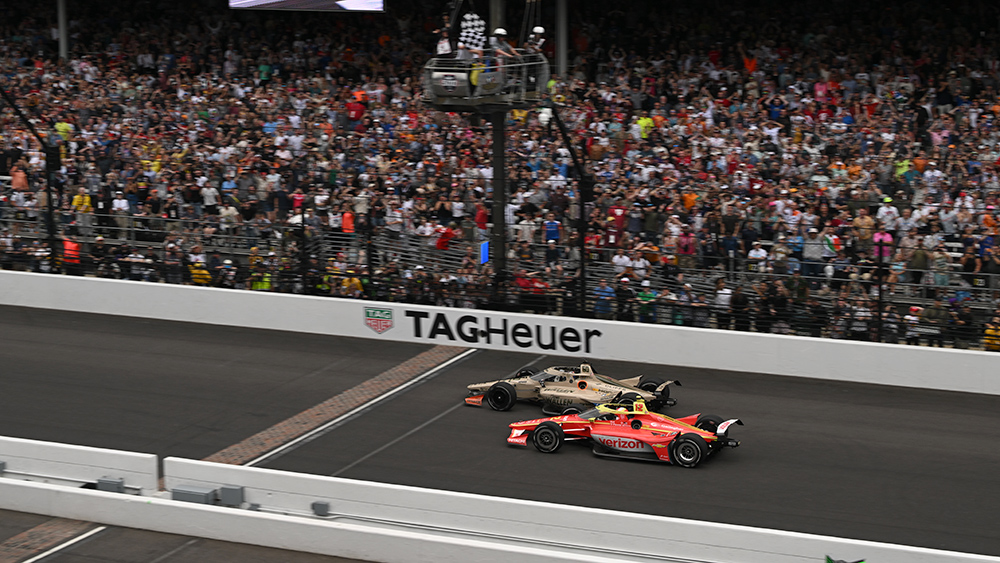

Two IndyCar cars cross the finish line side by side at Indianapolis Motor Speedway
The two IndyCars cross the finish line side by side at Indianapolis Motor Speedway — Rosenqvist (left) edging Malukas (right) by 0.0233 seconds, the closest margin in race history.Photo: IndyCar / IMS

I waited two whole laps for that one corner. If I went at lap 198, Malukas covers the low line and I'm done. You only get one shot at the bricks.

Felix Rosenqvist, post-race remarks from Victory Lane, May 24, 2026

Why the Closest Indy 500 in History Matters

Three things make the 0.0233 second margin more than a record-book footnote. First, it reframes how good 'good' looked. The previous benchmark — Castroneves over Wheldon in 2006 at 0.043 seconds — stood for two decades and was widely understood as the floor of what timing equipment could even resolve in a finish-line drag race. Rosenqvist's nose put that floor at half its previous level. Second, the win flips the IndyCar story arc heading into the rest of 2026. Team Penske — IndyCar's dominant operation through the early 2020s — went into Indianapolis with Newgarden (defending champion) and McLaughlin (pole sitter). Both finished outside the top 3. A Meyer Shank Racing victory at the marquee event is the first real crack in the Penske-Ganassi duopoly that has run modern IndyCar. Third, the race itself — 70 lead changes across 200 laps, top 5 cars within one second through most of the second half — is the format-defending evidence that the current IndyCar rules package produces racing that single-seater categories with bigger budgets cannot match. The aerodynamic regulations that allow this kind of close pack-racing are themselves now the model the Indianapolis Motor Speedway leadership is selling to broadcasters and to incoming sponsor partners.
▸ ZestLab read — the 0.0233s margin is not just a record, it is a marketing asset. Expect Indianapolis Motor Speedway to lean on this finish in every 2027 ticket and sponsorship pitch.

What Indy 500 2026 Means for Motorsport Fans in Vietnam
Vietnam's motorsport audience is small but rapidly literate — F1's 2020 Hanoi street circuit project, even though shelved, planted a generation of single-seater fans in Hanoi and Ho Chi Minh City. For that audience, the Indy 500 sits at an awkward broadcast time (early Monday morning, May 25, in Vietnam — 00:45 to 03:45 ICT), but the 0.0233 second finish is the kind of clip that goes viral inside the F1 Vietnam fan Facebook groups regardless of timezone. For Vietnamese fans paying for F1 streaming on FPT Play (around 79,000 VND/month for the sports package as of 2026) or via VPN-routed F1 TV Pro (around 80 USD or 2 million VND per season), IndyCar is the cheaper companion product — most race replays are available free on the IndyCar YouTube channel inside 48 hours, and the Indy 500 itself routinely posts in full. Compared to the 79,000 VND monthly bill for F1 access, the marginal cost of becoming an IndyCar follower in Vietnam in 2026 is effectively zero.
▸ Vietnamese fan math — F1 access via FPT Play costs ~948,000 VND/year. Adding IndyCar costs 0 VND extra. The Indy 500 finish is the entry-level clip that turns an F1-only viewer into a dual-series follower.
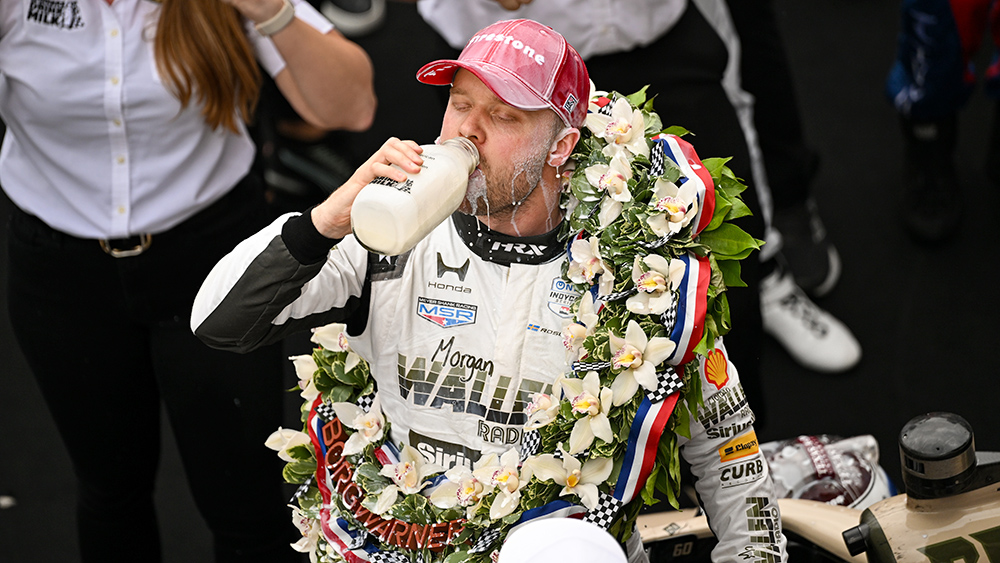
Felix Rosenqvist drinks milk in Victory Lane after winning the 2026 Indy 500
Felix Rosenqvist drinks milk in Victory Lane after winning the 2026 Indianapolis 500 — honouring the race tradition that traces back to Louis Meyer's 1936 buttermilk request.Photo: IndyCar / IMS

Indy 500 2026 — FAQ

NH
By Nam Ha · Sports & Fitness Writer
Published: May 25, 2026
sports·Indianapolis 500 2026 winner · Felix Rosenqvist Indy 500 · closest Indy 500 finish · Indy 500 2026
Share

Related Topics

Indianapolis 500 2026 winnerFelix Rosenqvist Indy 500closest Indy 500 finishIndy 500 2026Indy 500 2026: Felix Rosenqvist Wins Closest Finish in Race HistoryIndy 500 2026 2026Indy 500 2026 newsIndy 500 2026 updatesports

Stay on top of trends

Bookmark this page and check back often for the latest updates and insights.