Key Takeaways
- Russia launched 659 Shahed drones and 44 missiles (703 total) in the largest overnight barrage of 2026
- Ukrainian air defenses intercepted 667 targets, achieving approximately 95% success rate
- At least 16 people killed — Odesa bore the heaviest toll (9 dead, 23 wounded)
- In Kyiv, 17 apartment buildings and 10 homes damaged; a 12-year-old child killed
- Russia claimed it targeted missile and drone production facilities — not independently verified
Attack Scale
During the night of April 15-16, 2026, Russian forces launched 703 aerial weapons targeting Ukrainian cities. The barrage combined 659 Shahed-type one-way attack drones with 44 missiles of various types, according to Ukrainian military officials. This was the single largest attack of 2026, surpassing the January barrage of 580 weapons.
Waves of attacks persisted throughout the night, with drone groups flying in sequential waves from multiple directions to overwhelm air defense systems. This is a common Russian tactic designed to saturate defensive capabilities.
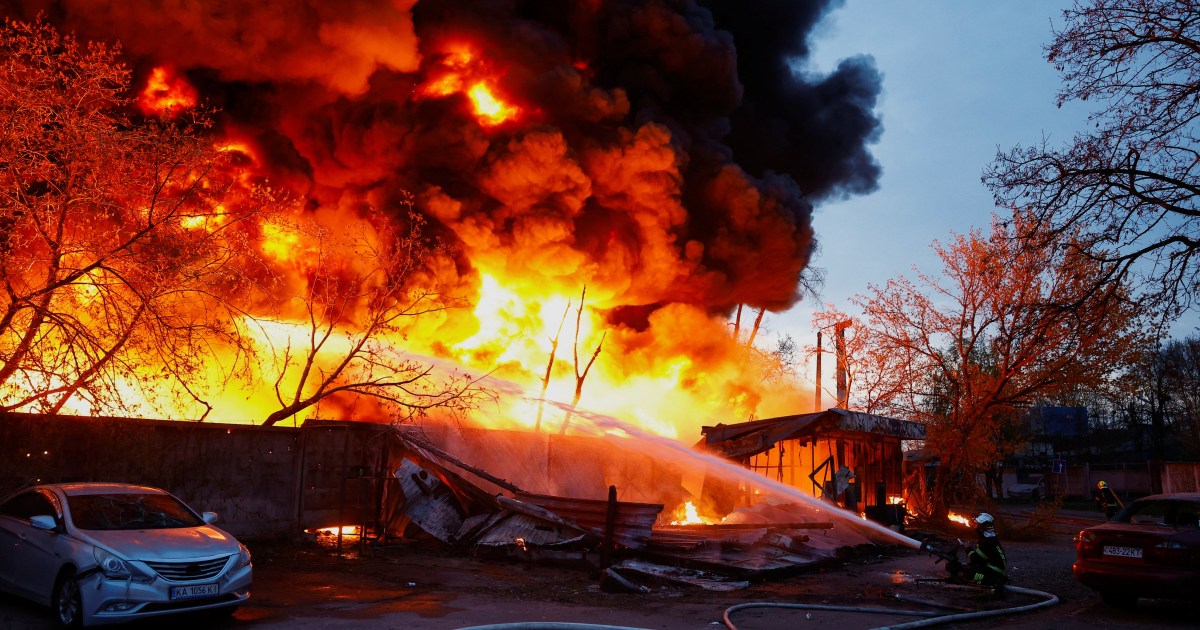
Photo: Reuters — Aftermath in Kyiv following the attack
City-by-City Breakdown
The attack targeted multiple regions across Ukraine. Odesa, Kyiv, and Dnipropetrovsk were the three cities hardest hit in terms of casualties.
In Kyiv, a 12-year-old child was among 4 people killed. City authorities reported 17 apartment buildings and 10 private homes damaged. In Odesa, home to a strategic port, 9 people were killed and 23 wounded, making it the deadliest city in this attack.
Air Defense: 95% Intercept Rate
Ukrainian air defenses intercepted 667 of 703 incoming weapons, an overall success rate of approximately 95%. Of these, 636 of 659 Shahed drones were downed (96.5%), while 31 of 44 missiles were intercepted (70.5%).
The high intercept rate reflects significant improvements from Western-supplied air defense systems including NASAMS, Patriot, and IRIS-T. However, the 36 weapons that penetrated defenses still caused severe casualties and property damage.
Civilian Casualties
At least 16 people were killed and dozens wounded across attacked cities. Victims included children: in Kyiv, a 12-year-old girl was killed when debris struck a residential area.
In Dnipropetrovsk, while the death toll was lower (3 killed), 34 people were wounded — the highest among affected cities. Many injuries resulted from shattered glass and building debris.
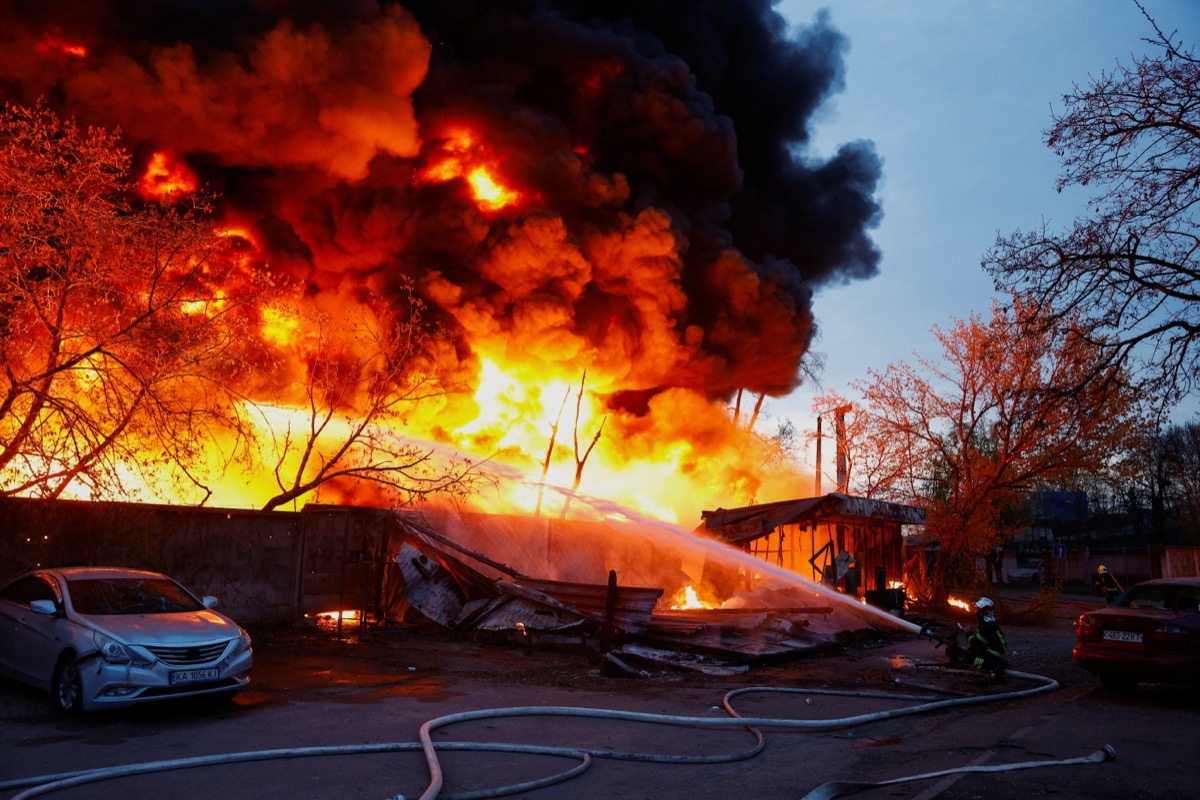
Photo: Reuters — Kyiv firefighters battling blazes after the attack
Weapon Types Analysis
The attack used a familiar mixed strategy: large quantities of cheap Shahed-136/Shahed-131 drones (estimated $20,000-$50,000 each) combined with more expensive cruise and ballistic missiles. The vast majority of weapons (94%) were drones, indicating Russia's growing reliance on unmanned systems to sustain attack tempo.
According to military analysts, the tactic of saturating air defenses with cheap drones forces Ukraine to expend interceptor missiles that cost many times more. Each NASAMS interceptor costs roughly $250,000, creating a severe cost asymmetry.
Context in the Broader War
The attack came amid Russia's continued escalation of its air campaign against Ukrainian civilian and energy infrastructure. In 2026, large-scale barrages have become more frequent, with Russia combining Iranian-produced drones with domestically manufactured missiles.
Russia claimed the strikes targeted Ukrainian missile and drone production facilities. However, actual damage was concentrated in residential areas. Ukrainian officials and international organizations have repeatedly condemned the airstrikes as violations of international humanitarian law.
International Response
The attack immediately drew strong international condemnation. The European Union and NATO condemned Russia's actions, calling for increased air defense aid to Ukraine. The UN Secretary-General also issued a statement demanding protection of civilians.
Several countries pledged to accelerate delivery of additional air defense systems. The attack also reinforced the importance of air defense in modern conflict — a lesson closely watched by nations worldwide.
Defense Lessons for Vietnam
The April 16 attack provides important military lessons for Vietnam, which is modernizing its air defense and naval forces. The saturation tactic using cheap drones demonstrates that traditional air defense must be supplemented by dedicated counter-UAV systems, electronic warfare, and directed energy weapons.
With a long coastline and numerous coastal installations, Vietnam must pay particular attention to defending against asymmetric threats from drones and cruise missiles. Investment in layered air defense systems and domestic production capabilities is a strategic priority.
— ZestLab analysis based on publicly available data from the Ukraine conflict and global military trends.
Related Coverage
References
Frequently Asked Questions
Related Topics
Stay on top of trends
Bookmark this page and check back often for the latest updates and insights.