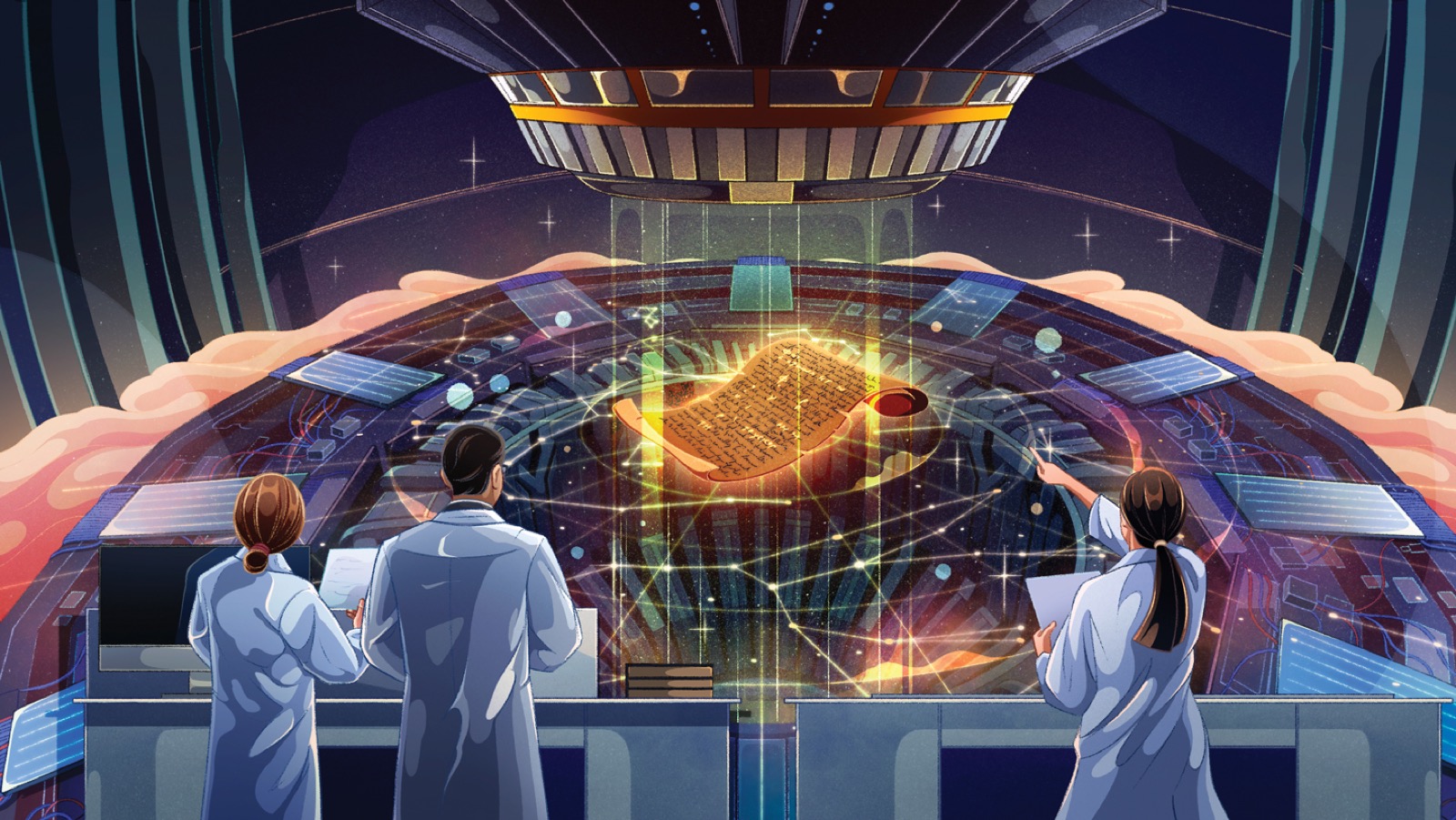
April's Most Notable Science Breakthroughs
Antarctic ice loss accelerating. Earth's core holds 9 oceans of hydrogen. Quasicrystals in spacetime.
Overview
April 2026 saw a remarkable cluster of scientific breakthroughs spanning multiple disciplines -- from alarming Antarctic ice loss acceleration, to the shocking discovery that Earth's core contains hydrogen equivalent to 9 oceans, to the first confirmation of quasicrystal structures in spacetime.
Each of these discoveries has the potential to reshape our understanding of Earth, the cosmos, and the future of technology. Below is a detailed analysis of each breakthrough.
Antarctic Ice Loss Accelerating Beyond Projections
New research published in Nature reveals Antarctic ice loss is outpacing current model projections. Massive ice shelves in West Antarctica are melting 40% faster than previously estimated, threatening to accelerate global sea level rise.
The finding has profound implications for hundreds of millions of people living in coastal zones worldwide. Scientists warn that tipping points could arrive sooner than expected, when ice loss becomes an irreversible process.
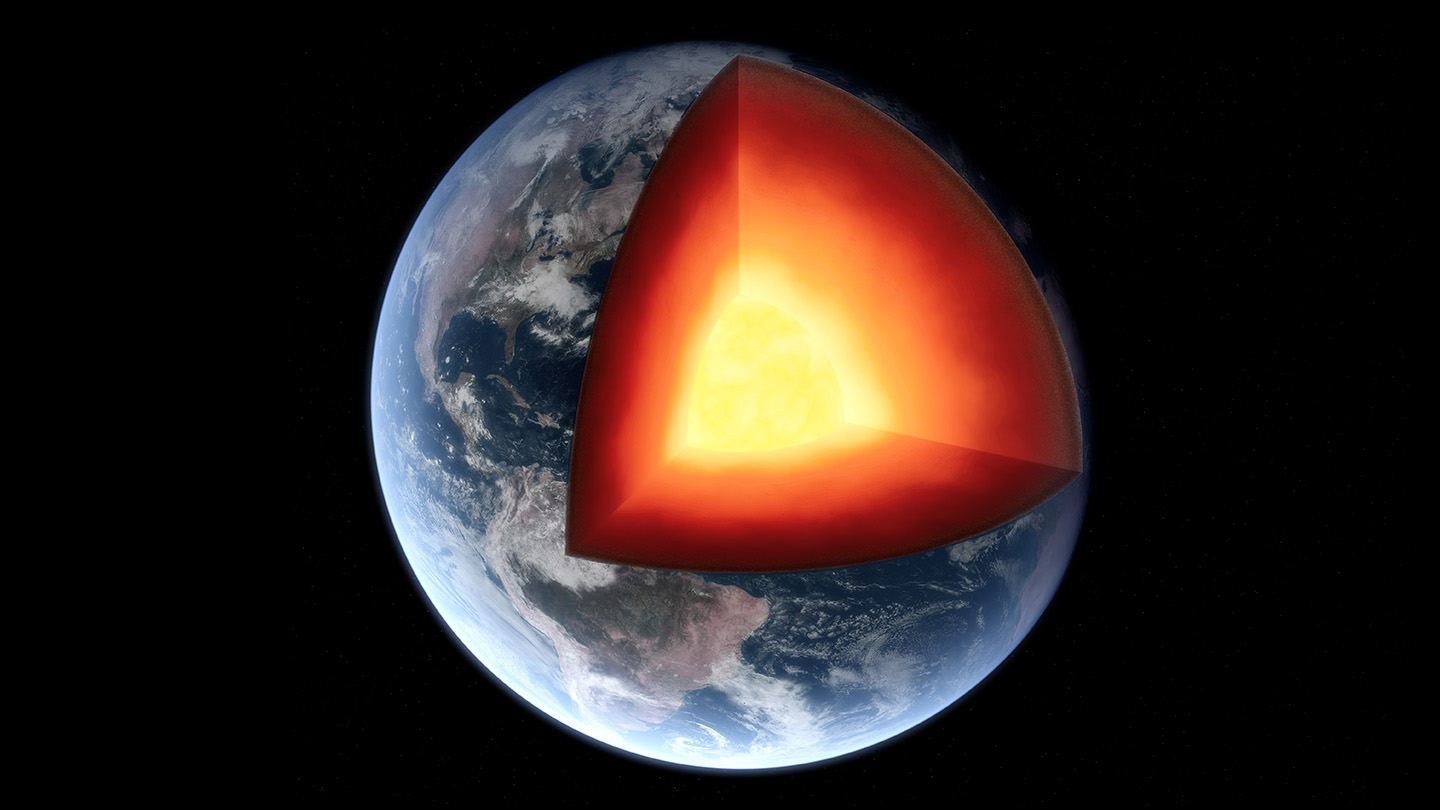
Earth's Core Contains 9 Oceans of Hydrogen
An international research team has demonstrated that Earth's inner core contains hydrogen equivalent to 9 oceans' worth of water. This discovery fundamentally changes our understanding of the planet's chemical composition and formation history.
By analyzing seismic waves passing through Earth's core with unprecedented precision, scientists found that hydrogen is 'locked' within the crystal structure of iron at extreme pressures and temperatures. The finding also suggests that many other rocky planets in the universe may contain similar hidden water reserves.
The hydrogen content in Earth's core equals 9 times the total water volume of all surface oceans.
Quasicrystals Confirmed in Spacetime
Theoretical physicists have confirmed that spacetime structure at the Planck scale may exhibit quasicrystal properties -- a non-periodic yet specially symmetric form of order. This discovery opens an entirely new approach in the quest to unify general relativity and quantum mechanics.
Quasicrystals, first discovered in materials in 1984 by Dan Shechtman (Nobel Prize 2011), have order without periodic repetition. Finding similar structures in the fabric of spacetime itself could help explain why the universe has the complex structure we observe.
AI Meteorology and Neuromorphic Computing
AI Improving Storm Tracking
Next-generation AI meteorological models have outperformed traditional methods in storm trajectory forecasting, reducing average errors by 23% for tropical cyclones. The systems combine real-time satellite data with deep learning.
Neuromorphic Computers Solving Physics
Neuromorphic computers -- mimicking brain architecture -- have for the first time solved complex physics equations with 100x better energy efficiency than traditional GPUs. The advance enables climate and nuclear physics simulations at unprecedented scales.
Gray Whales in New Migration Patterns
Marine biologists have documented gray whales (Eschrichtius robustus) shifting traditional migration routes, traveling further north than at any previously recorded time. The phenomenon is directly linked to Arctic Ocean warming, which pushes their food sources (amphipods) toward colder waters.
This behavioral shift reflects a cascade reaction in marine ecosystems: climate warming alters phytoplankton distribution, affects zooplankton, and ultimately forces large species to adapt or face population decline.
The Common Thread: Climate
The most notable pattern across April 2026 discoveries is a common thread: climate change and ocean warming. From accelerating Antarctic ice loss, to gray whale migration shifts, to cyanobacterial bloom outbreaks -- all are connected by one root cause: the planet is heating up.
"April 2026 science shows we are living in an era where prediction models are consistently outpaced by reality. The question is no longer 'whether climate change is happening' but 'how fast it is happening.'" -- ZestLab Analysis
Key Takeaways
- 01Antarctic ice is melting 40% faster than projected -- threatening to accelerate global sea level rise and potentially crossing tipping points earlier than expected.
- 02Earth's core contains hydrogen equivalent to 9 oceans, reshaping understanding of planetary chemistry and suggesting hidden water reserves on other rocky planets.
- 03Quasicrystal structures in spacetime confirmed for the first time -- opening new paths toward unifying relativity and quantum mechanics.
- 04AI meteorology reduces storm forecast errors by 23%, neuromorphic computers solve physics 100x more efficiently than GPUs, gray whales shift migration due to ocean warming.
Related Topics
Stay on top of trends
Bookmark this page and check back often for the latest updates and insights.