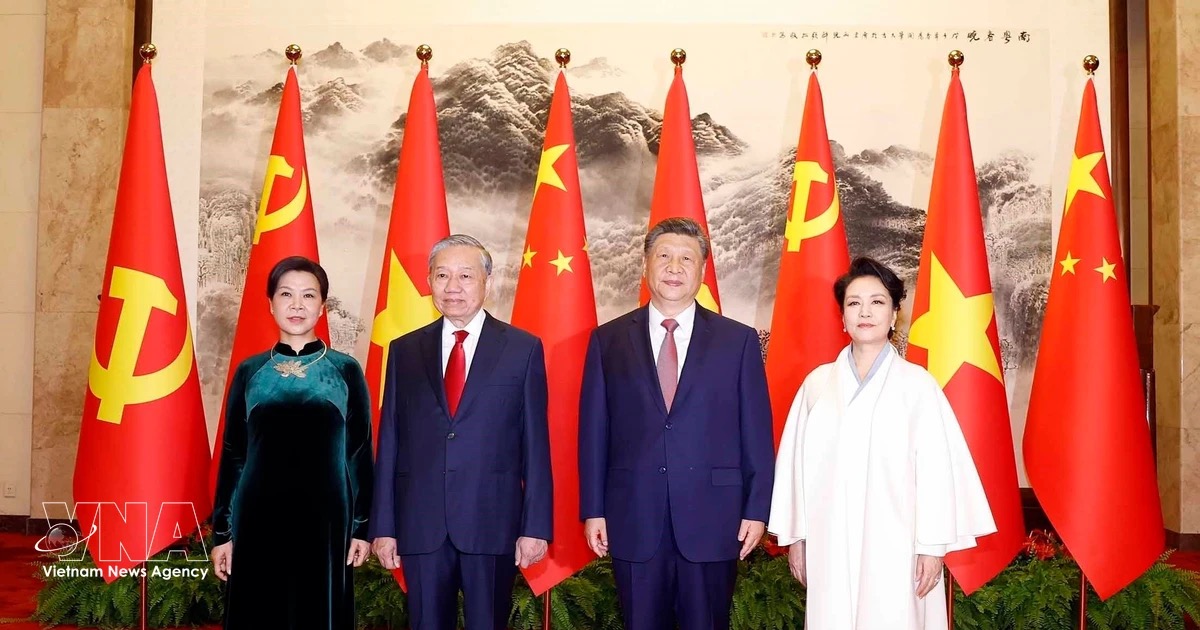
Vietnam-China Summit: 32 Deals Open a New Chapter
To Lam concludes 4-day state visit signing 32 cooperation documents. Trade reaches $290B.
Published: April 18, 2026
Photo: VNA/VietnamPlus
Key Figures
Visit Overview
General Secretary and President To Lam conducted a four-day state visit to China from April 14 to 17, 2026, at the invitation of General Secretary and President Xi Jinping. This was To Lam's first visit to China as the country's top leader, marking a new phase in bilateral relations.
The two leaders held official talks, comprehensively reviewing the Vietnam-China Comprehensive Strategic Cooperative Partnership, and agreed to elevate bilateral relations into a new phase with a long-term vision.
China is currently Vietnam's largest trading partner, while Vietnam is China's 4th largest trading partner and the largest within ASEAN. Bilateral trade reached $256.4 billion, up 24.8%, with some estimates suggesting the actual figure may exceed $290 billion.
32 Cooperation Documents: Key Highlights
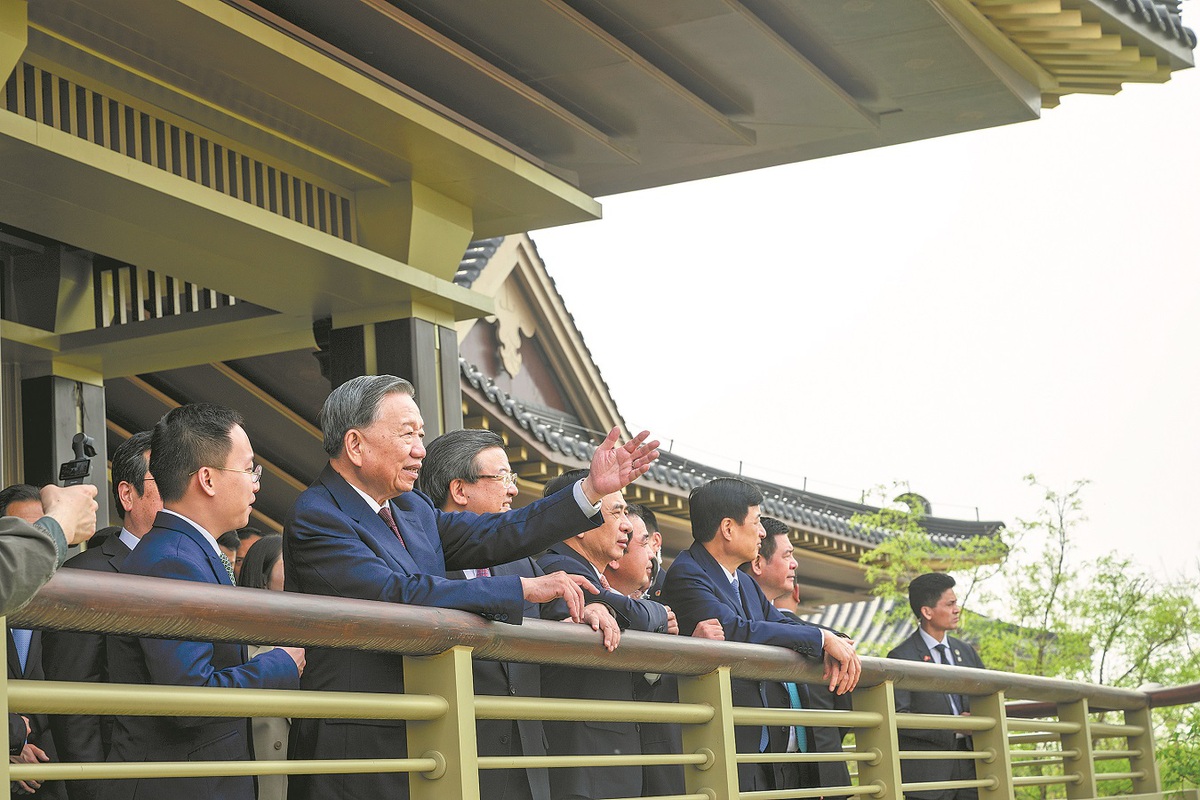
Photo: Xinhua/China Daily
Standard-Gauge Railways
Advancing Vietnam-China rail connectivity, reducing logistics costs, integrating into Belt and Road.
Artificial Intelligence
Joint AI research and application, data sharing, training high-tech talent.
Clean Energy
Developing wind and solar power, green energy transition for industrial sectors.
Tourism 2026-2027
Special tourism cooperation program, visa simplification, new air routes.
The "3+3" Strategic Dialogue Framework
One of the most significant outcomes of the visit was establishing the "3+3" strategic dialogue mechanism. This framework comprises 3 high-level channels (Party, Government, Legislature) combined with 3 focus areas (security, economy, people-to-people exchanges), creating a comprehensive and regular dialogue framework between the two nations.
The "3+3" mechanism is considered a significant institutional advance in bilateral relations, enabling sensitive issues to be addressed through multi-channel dialogue rather than accumulating into major disagreements.
-> This mechanism allows both sides to address disagreements at multiple levels, preventing escalation.
Trade and Economic Ties
Photo: Xinhua/China Daily
| Metric | Value |
|---|---|
| Bilateral Trade | $256.4B (+24.8%) |
| China's Rank for Vietnam | #1 Trading Partner |
| Vietnam's Rank for China | #4 Global, #1 ASEAN |
| Documents Signed | 32 |
| Tourism Cooperation | 2026-2027 |
Implications and Impact
The visit took place amid escalating global trade tensions driven by the US-China tariff war and the Iran conflict. Vietnam continues its balanced diplomacy strategy, deepening ties with China while maintaining strategic relationships with the United States and other partners.
For Vietnamese businesses, the 32 cooperation documents open opportunities in railways, AI, clean energy, and tourism. However, challenges remain, particularly in addressing the trade deficit (Vietnam runs a deficit with China) and safeguarding sovereignty interests.
-> Vietnamese exporters to China should monitor new policies emerging from the 32 documents, especially regarding technical standards and customs procedures.
Key Takeaways
To Lam's 4-day visit (Apr 14-17) was his first as Vietnam's top leader.
32 cooperation documents signed, spanning railways, AI, clean energy, and tourism.
Bilateral trade at $256.4B, up 24.8%, with estimates potentially exceeding $290B.
New "3+3" strategic dialogue mechanism established -- a key institutional advance.
Vietnam maintains its balanced diplomacy approach between major powers.
Regional Context
Amid the escalating US-China trade war with new tariffs, Vietnam has become central to the China+1 supply chain diversification strategy. To Lam's visit demonstrates Vietnam's approach of benefiting from both sides: serving as an alternative investment destination for Western firms while deepening economic ties with China itself.
The standard-gauge railway plan is particularly significant, as it would connect Vietnam directly into the Belt and Road network, reducing cargo transit time from Vietnamese factories to Chinese markets and beyond to Europe.