Wayve Raises $1.2B to Launch London Robotaxis With Uber — AI-First Autonomous Driving
technology

Wayve Raises $1.2B to Launch London Robotaxis With Uber — AI-First Autonomous Driving

UK startup Wayve just closed a $1.2 billion Series D at an $8.6 billion valuation, backed by Nvidia, Microsoft, Uber, and SoftBank. Commercial robotaxi trials in London begin in the second half of 2026 — powered by an AI that works in any city without pre-built maps.

$1.2B Raised$8.6B ValuationLondon 2026
$1.2B
Series D Funding
$8.6B
Post-Money Valuation
500+
Cities Tested Without Maps
10+
Target Markets by 2028

Key Takeaways

  • Wayve closed a $1.2 billion Series D at an $8.6 billion valuation — one of the largest-ever raises for a European AI company. Nvidia led the round with Microsoft, Uber, Mercedes-Benz, and SoftBank participating.
  • Commercial robotaxi trials launch in London in H2 2026, with passengers hailing rides through the Uber app — making London the first European city with a public robotaxi service.
  • Unlike Waymo (which requires detailed HD maps per city), Wayve's "embodied AI" foundation model generalizes across 500+ cities and 70+ countries without city-specific fine-tuning.
  • By 2027, Wayve's L2+ driver-assist technology will ship in consumer vehicles from Mercedes-Benz, Nissan, and Stellantis — a dual revenue stream beyond robotaxis.
  • Analysts estimate autonomous ride-sharing could eventually reduce per-ride costs by 60–80%, fundamentally reshaping urban transport economics.
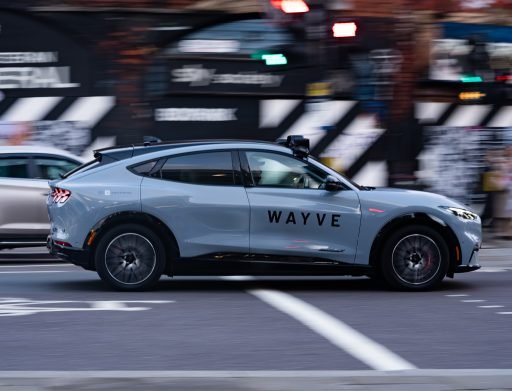
Wayve autonomous vehicle on London streets during testing
Photo: Wayve

What Makes Wayve Different: Embodied AI vs. HD Maps
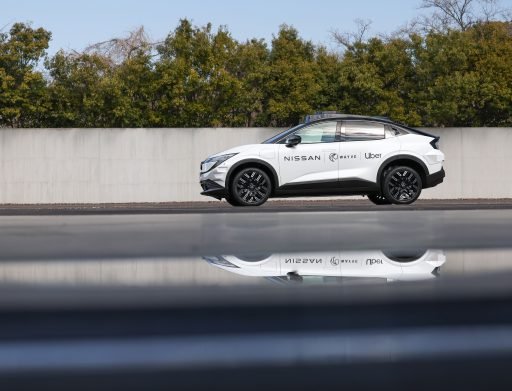
The autonomous vehicle industry has been dominated by one approach for the past decade: build hyper-detailed 3D maps of every street, lane marking, and traffic sign, then teach the car to follow those maps precisely. Waymo, Cruise, and most Chinese robotaxi companies use this method. It works well — but it scales terribly. Each new city requires months of mapping before a single ride can happen. Wayve takes the opposite approach. Founded in 2017 by Cambridge University AI researchers, the company treats driving as a general intelligence problem. Their foundation model — trained on driving data from 70+ countries — learns to drive the way humans do: by understanding scenes, predicting behavior, and making decisions in real time. No pre-built maps. No city-specific tuning. The results speak for themselves. Wayve has demonstrated its system working in over 500 cities across multiple continents without any local adaptation. Drop the AI into a city it has never seen, and it drives. This is the core reason Nvidia, Microsoft, and Uber are betting over a billion dollars on the company.
▸ If Wayve's approach works at scale, any city in the world could get robotaxis within weeks — not the years it takes Waymo to map and launch in a single new metro.
Wayve AI foundation model visualization showing real-time scene understanding
Photo: Wayve

Autonomous Driving: Wayve vs Waymo vs Tesla FSD

WayveWaymoTesla FSD
Core ApproachEmbodied AI foundation modelHD maps + LIDAR + ML stackVision-only neural network
Requires HD Maps?No — generalizes to new citiesYes — months of mapping per cityNo — but L2 only, driver required
Cities Active500+ (tested)~25 (mapped)Nationwide (L2 only)
Key BackersNvidia, Microsoft, Uber, SoftBankAlphabet (Google)Internal (Tesla)
Autonomy LevelL4 robotaxi + L2+ consumerL4 robotaxi onlyL2 (driver must supervise)
Commercial LaunchLondon H2 2026SF, Phoenix (live)No robotaxi timeline
ScalabilityHigh — no per-city setupLow — expensive city-by-cityHigh — but not full autonomy

Wayve: From Cambridge Lab to London Robotaxis

2017

Founded at Cambridge University

Alex Kendall and Amar Shah found Wayve with a radical thesis: autonomous driving should be solved with general AI, not hand-coded rules and HD maps. Early funding comes from academic and seed investors.

▸ A contrarian bet: while everyone else mapped cities meter by meter, Wayve built a brain that could learn to drive anywhere.
May 2024

Series C: $1.05B from SoftBank & Nvidia

Wayve raises over $1 billion in Series C, led by SoftBank Vision Fund with Nvidia as a strategic investor. The round validates the embodied AI approach and funds massive compute for model training.

▸ The first billion-dollar round signaled that big money was backing the "no maps" approach over Waymo-style mapping.
Jan 2026

Uber Partnership Announced

Uber and Wayve announce a strategic partnership to deploy autonomous vehicles on the Uber platform. London is chosen as the launch city, with plans to expand across Europe.

▸ Uber's global platform gives Wayve instant access to millions of riders — no need to build a consumer app from scratch.
Mar 2026

Series D: $1.2B at $8.6B Valuation

Wayve closes its Series D with Nvidia leading, joined by Microsoft, Uber, Mercedes-Benz, and SoftBank. The $8.6 billion valuation makes it one of Europe's most valuable AI startups. Funds earmarked for London launch and OEM integration.

▸ Two billion-dollar rounds in under two years — Wayve is now funded at a level comparable to Waymo's early years, but with a fundamentally more scalable approach.
H2 2026

London Robotaxi Launch via Uber

Commercial pilot begins in select London zones. Passengers hail Wayve-powered autonomous rides through the Uber app. Safety drivers present during the initial phase.
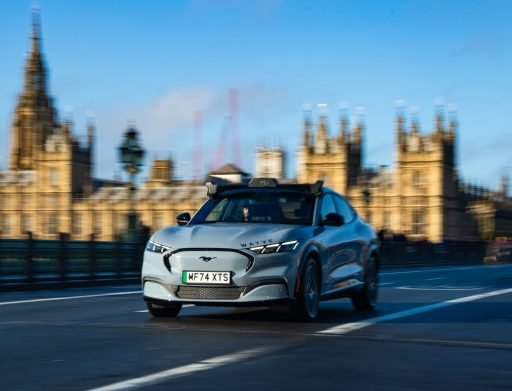
▸ London becomes the first major European city with a public robotaxi service — a milestone for European autonomous driving.
Wayve autonomous driving technology sensor suite and AI system
Photo: Wayve

Wayve's Technology Edge

Embodied AI Foundation Model

Wayve's driving model is trained end-to-end on raw sensor data from 70+ countries. It learns scene understanding, motion prediction, and driving decisions as a single unified system — not a pipeline of separate modules.

No HD Maps Required

While competitors spend months mapping each new city, Wayve deploys using standard GPS and real-time perception. The AI navigates unfamiliar roads the same way experienced human drivers do — by reading the environment.

Multi-OEM Integration

Beyond robotaxis, Wayve licenses its L2+ technology to Mercedes-Benz, Nissan, and Stellantis for consumer vehicles shipping in 2027. This dual-revenue model funds the robotaxi business while scaling the technology across millions of cars.

Global Scale from Day One

Trained on data from 70+ countries, Wayve's model handles left-hand/right-hand traffic, diverse road conditions, and local driving cultures. This is the fundamental advantage: one model for the entire world, not one model per city.


What This Means for Vietnam & Southeast Asia

Vietnam is one of the most active ride-hailing markets in Southeast Asia, with Grab and Uber (via partnership) processing millions of trips daily. The Wayve-Uber partnership has direct implications for the region. If Wayve's map-free approach proves successful in London, expanding to Southeast Asian cities like Ho Chi Minh City and Hanoi becomes technically feasible — something that was practically impossible with Waymo's map-dependent model. Vietnam's chaotic mixed traffic (motorbikes, cars, pedestrians sharing lanes) would be the ultimate test for any embodied AI driving system. For VinFast, Vietnam's homegrown EV maker, Wayve's multi-OEM licensing model presents an opportunity. VinFast vehicles could potentially integrate Wayve's L2+ technology as a differentiator in the global EV market. The combination of VinFast hardware with Wayve's AI could accelerate Vietnam's position in the autonomous driving supply chain. The broader impact: if robotaxis drop ride costs by 60-80% as analysts project, affordable autonomous transport could transform mobility in developing markets where car ownership remains expensive.
▸ A Grab or Uber ride in HCMC at 60% lower cost could make autonomous ride-hailing cheaper than owning a motorbike — a transportation revolution for 100 million Vietnamese.

Frequently Asked Questions

Published: March 27, 2026. This article is for informational purposes only and does not constitute investment advice. Information sourced from official company announcements and verified reporting.
ML
By Minh Le · Senior Technology Correspondent
Published: March 27, 2026
technology·Wayve robotaxi London · Wayve autonomous driving · London self-driving taxi · Wayve funding 2026
Share

Related Topics

Wayve robotaxi LondonWayve autonomous drivingLondon self-driving taxiWayve funding 2026UK autonomous vehiclesrobotaxi launch EuropeWayve AI drivingself-driving cars London

Stay on top of trends

Bookmark this page and check back often for the latest updates and insights.