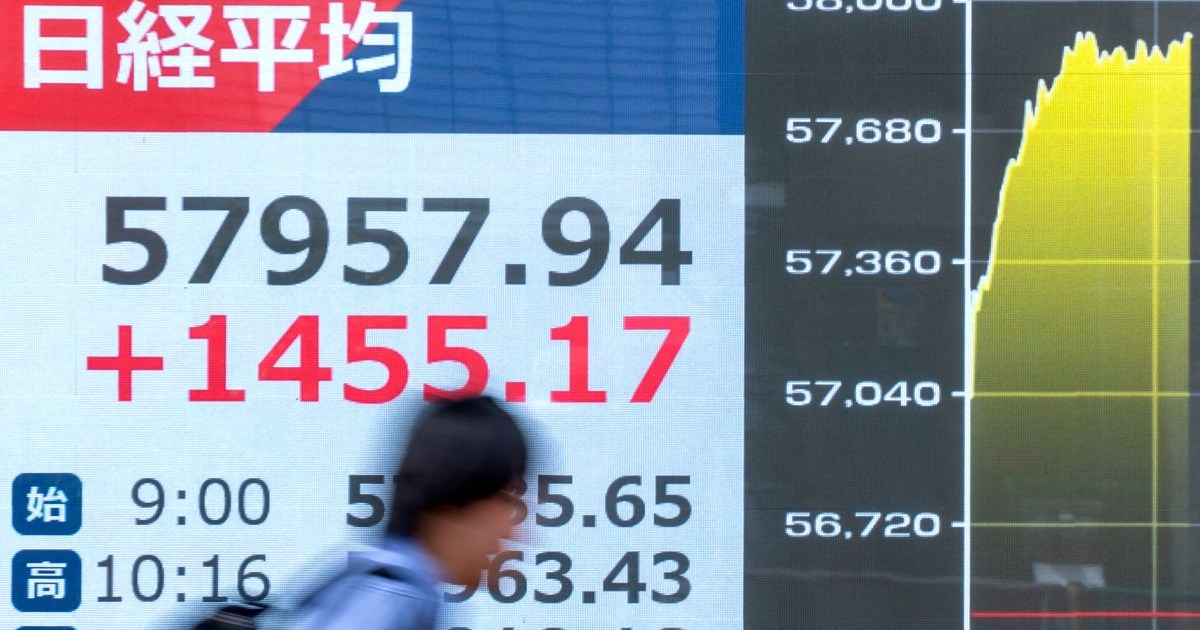
Photo: AFP via Al Jazeera
- +South Korea's KOSPI surged 3.7% — the largest gain in Asia; Nikkei rose 2.5%
- +S&P 500 had already gained 1% overnight in the US, setting a positive tone
- +Crude oil fell from over $103 to below $98/barrel as negotiation hopes rose
- +President Trump stated Iran had 'reached out' to negotiate
- +Markets had crashed on April 13 blockade news — fully recovered on April 14
Market-by-Market Analysis
The April 14, 2026 trading session saw a synchronized recovery across Asia, with South Korea leading on heavy buying into semiconductor and shipbuilding sectors.
KOSPI (South Korea)
+3.7%South Korea was Asia's strongest performer. Samsung Electronics rose 4.2%, SK Hynix surged 5.1% as investors rotated back into semiconductors. Shipbuilders also rallied on expectations that maritime trade routes would stabilize.
ZestLab analysis: If you held 1,000 Samsung shares, your position gained roughly 3.2 million won in a single session.
Nikkei 225 (Japan)
+2.5%The Nikkei rebounded sharply from the previous session's shock. Export and automotive stocks led, with Toyota up 2.8% and Sony gaining 3.1%. A slightly weaker yen also supported exporters.
ZestLab analysis: Japanese exporters benefited from a double tailwind: easing geopolitics plus a weaker yen.
Greater China and Southeast Asia
+0.4 to +0.6%Hong Kong's Hang Seng gained 0.4%, Shanghai SSE Composite rose 0.5%, and Singapore's STI advanced 0.6%. Gains were more modest as these markets had less direct exposure to the April 13 blockade shock, but overall sentiment improved notably.
ZestLab analysis: Southeast Asian markets tend to react slower but more steadily to geopolitical sentiment shifts.
Photo: AFP via Al Jazeera
Oil Reversal: From $103+ to Below $98
Crude oil had spiked above $103 per barrel on April 13 following blockade reports near the Strait of Hormuz. Just 24 hours later, as negotiation reports emerged, oil plunged below $98 — a drop of approximately 5% in a single session.
ZestLab analysis: At global consumption of ~100M barrels/day, each $1 drop in oil prices saves roughly $100M per day for the world economy.
Trump: Iran 'Reached Out'
According to Al Jazeera reporting on April 14, 2026, President Trump stated that Iran had reached out and expressed a desire to negotiate. No specific details about the content or timeline of talks were disclosed.
This diplomatic signal, although unconfirmed from Iran's side, was sufficient to shift global market sentiment. Investors quickly unwound defensive positions and rotated back into risk assets, particularly equities and industrial commodities.
Notably, gold — the traditional safe haven — dipped 0.8% as 'risk-on' sentiment returned. US Treasuries also fell as investors sold bonds to rotate into equities.
Why Did Markets Rebound So Quickly?
April 13 oversold bounce
The April 13 selloff on blockade news created attractive entry points. Many blue-chip stocks dropped 3-5% in a single session, creating value opportunities for institutional investors.
De-escalation premium
Even the possibility of negotiations was enough to reduce geopolitical risk premiums. Investors price by probability — when conflict odds decrease, equities respond immediately.
S&P 500 led the way
The 1% overnight gain in the S&P 500 set a positive tone for Asia. US markets often serve as a directional compass for global capital flows.
Which Sectors Benefited Most?
Semiconductors
SK Hynix, Samsung, TSMC
Global supply chains stabilizing
Airlines
ANA, Korean Air, Singapore Airlines
Middle East/Asia routes could reopen
Shipping
Hyundai Heavy, Kawasaki KHI
Hormuz strait trade flow expectations
Automotive
Toyota, Hyundai Motor
Export recovery + lower fuel costs
Energy (lagged)
Inpex, Woodside
Directly impacted by falling oil

Photo: AP via Al Jazeera
Impact on VN-Index and ASEAN Markets
Vietnam's VN-Index also benefited from the global positive wave, though gains were more modest than Korea and Japan. This reflects Vietnam's market characteristics — less volatile to Middle Eastern geopolitics but still affected by foreign capital flows when 'risk-on' sentiment returns.
ZestLab analysis: For Vietnamese investors, this volatility is a reminder that Middle Eastern geopolitics can impact domestic markets through oil prices and foreign capital flow channels.
Similar Episodes in History
The 'selloff-rebound' pattern driven by Middle Eastern geopolitical news is not new. Markets tend to overreact to bad news and recover quickly when any de-escalation signal emerges.
US airstrike kills Gen. Soleimani (Iran)
Markets dropped sharply for one session then recovered within 3 days as Iran's response was restrained.
Russia invades Ukraine
Asia fell 2-4% on the first day but recovered 50-70% within the following week as sanctions were clarified.
Iran drone attack on Israel
Markets dropped 1-2% then quickly recovered as Israel did not retaliate directly.
Hormuz blockade and negotiation reports
KOSPI fell 2.5% on April 13 and surged 3.7% on April 14 — the largest swing in the current cycle.
3 Scenarios Ahead
Based on April 14, 2026 data, ZestLab outlines 3 primary scenarios for Asian markets in the coming week.
Bullish Scenario (30-40%)
Formal US-Iran talks materialize. Oil drops below $90/barrel. Asian equities continue to rally 2-4% through the week. VN-Index pushes above the 1,280 level.
Base Case (40-50%)
Negotiation reports are not further confirmed. Markets hold current levels but remain volatile. Oil oscillates around $95-100/barrel. Investors trade cautiously while awaiting more information.
Bearish Scenario (15-25%)
Iran denies negotiation reports or a new military incident occurs. Oil surges back above $105/barrel. Markets sell off again, potentially harder than the first time. VN-Index could test the 1,200 level.
Frequently Asked Questions
Related Topics
Stay on top of trends
Bookmark this page and check back often for the latest updates and insights.