Emperor Penguin Now Endangered
IUCN upgraded emperor penguins to Endangered on April 9, citing climate-driven sea ice loss. Population may halve by 2080s.
Photo: Getty Images via ABC News -- Adult emperor penguins at Snow Hill, Antarctica
Key Takeaways
- IUCN upgraded emperor penguin from Near Threatened to Endangered on April 9, 2026
- Antarctic fur seal also upgraded to Endangered in the same assessment
- Climate-driven sea ice loss is the primary threat driving the reclassification
- Population projected to decline by half by the 2080s under current warming trends
- In 2023, catastrophic breeding failure killed over 10,000 emperor penguin chicks
- 54 known colonies with approximately 250,000 breeding pairs remain
The IUCN Decision
On April 9, 2026, the International Union for Conservation of Nature (IUCN) officially upgraded the conservation status of the emperor penguin (Aptenodytes forsteri) from Near Threatened to Endangered on their Red List. This marks the first time the iconic species has been placed at such a high threat level, reflecting the severity of the climate crisis gripping Antarctica.
The decision came after years of accumulated data on sea ice loss, breeding failures, and population decline. In the same assessment, the IUCN also upgraded the Antarctic fur seal (Arctocephalus gazella) to Endangered, signaling that the Antarctic ecosystem as a whole is under immense pressure from climate change.
Why Endangered Now?
Emperor penguins are the only penguin species that breeds during the Antarctic winter, requiring stable sea ice for at least 9 months to complete their breeding cycle. When ice breaks up prematurely or fails to form sufficiently, chicks that have not yet developed waterproof feathers are plunged into freezing waters. Three converging factors drove the IUCN to act:
Accelerating sea ice loss
Antarctic sea ice reached a record low in December 2025, with extent falling more than 2 million square kilometers below the long-term average. This trend has been accelerating since 2016 and is worsening year over year.
Mass breeding failure
In 2023, an unprecedented sea ice loss event killed at least 10,000 chicks across multiple colonies. It was the most catastrophic breeding failure ever recorded, with 4 out of 5 colonies in the Bellingshausen Sea losing all their chicks.
Pessimistic projection models
Climate models project that if greenhouse gas emissions continue rising, over 90% of emperor penguin colonies could be quasi-extinct by the end of this century. Even under moderate emission reduction scenarios, the population is expected to halve by the 2080s.
Sea Ice Crisis Data
Antarctic sea ice is the foundation of the entire ecosystem. Its decline threatens not only emperor penguins but cascades through countless other species. For more on the Antarctic climate crisis, see our coverage of Arctic sea ice record low 2026 and climate rotation 2026.
Source: NSIDC (National Snow and Ice Data Center) -- Annual maximum sea ice extent in September.
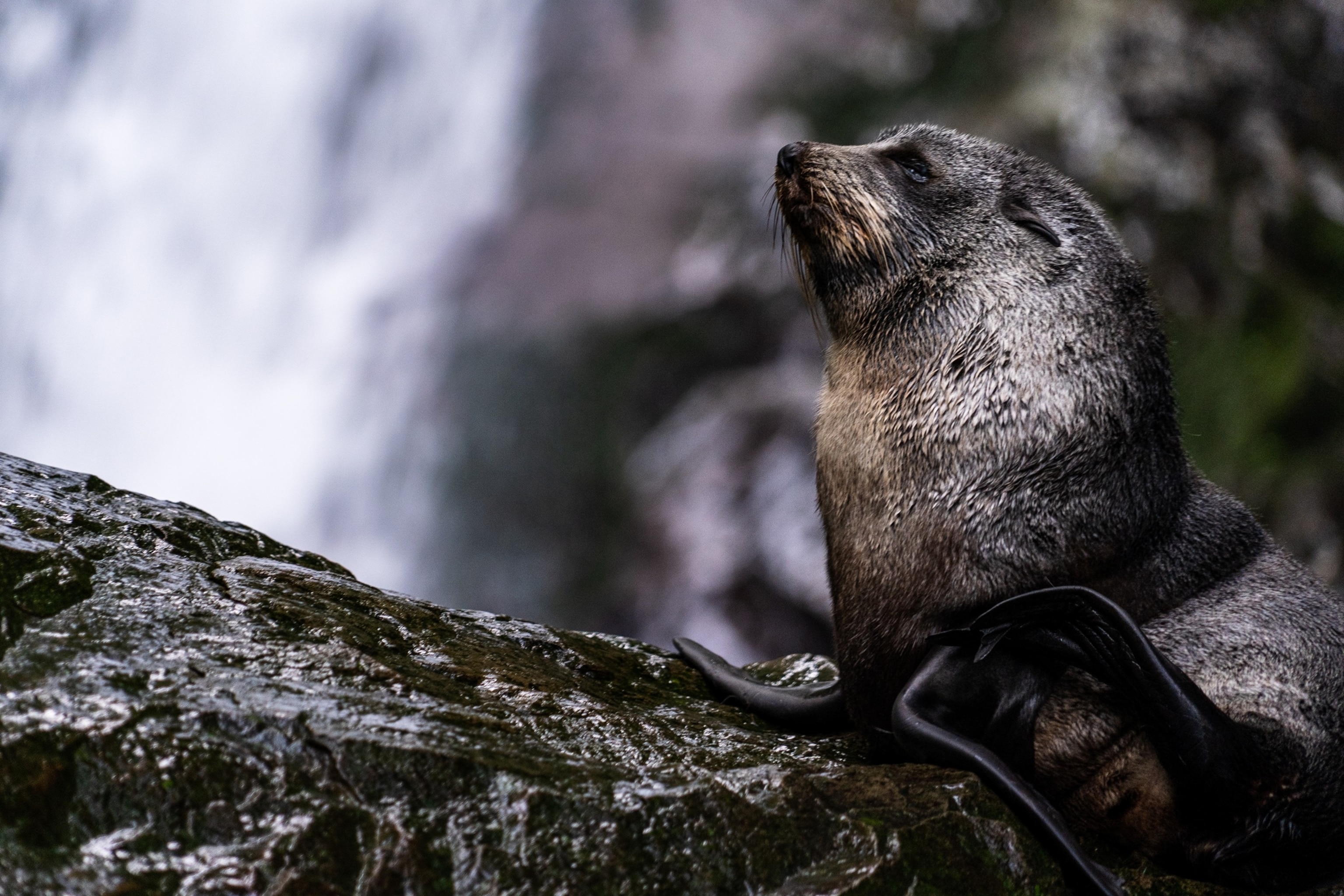
Photo: ABC News -- Antarctic fur seal, also upgraded to Endangered
Population Projections
There are currently approximately 250,000 breeding pairs spread across 54 known colonies around the Antarctic continent. However, the future of the species depends entirely on how the world responds to climate change.
-> With roughly 250,000 breeding pairs today, a 50% decline means losing approximately 125,000 pairs -- equivalent to losing every colony in East Antarctica.
The 2023 Breeding Catastrophe
The 2023 breeding season became one of the most devastating events recorded in emperor penguin history. When sea ice broke up abnormally early in late winter, thousands of chicks that had not yet developed their waterproof feathers were plunged into the freezing waters of the Southern Ocean.
-> 10,000 chicks represent roughly 4% of the entire year's generation -- an irrecoverable loss given that emperor penguins breed only once per year.
Antarctic Fur Seal: A Parallel Crisis
In the same assessment, the IUCN also upgraded the Antarctic fur seal (Arctocephalus gazella) to Endangered. This is no coincidence -- both species depend on the Antarctic sea ice ecosystem and are affected by the same root cause: global warming.
Emperor Penguin
- -Needs stable ice 9+ months for breeding
- -Only penguin species breeding in winter
- -54 colonies, ~250,000 breeding pairs
- -Primary threat: sea ice loss
Antarctic Fur Seal
- -Depends on krill -- a sea ice-dependent species
- -Population concentrated on South Georgia Island
- -Had recovered from commercial hunting -- now declining again
- -Primary threat: krill decline from ice loss
Conservation Efforts
The IUCN status upgrade is a critical step but not sufficient on its own. Scientists and conservation organizations are pushing multiple initiatives to protect emperor penguins and their habitat.
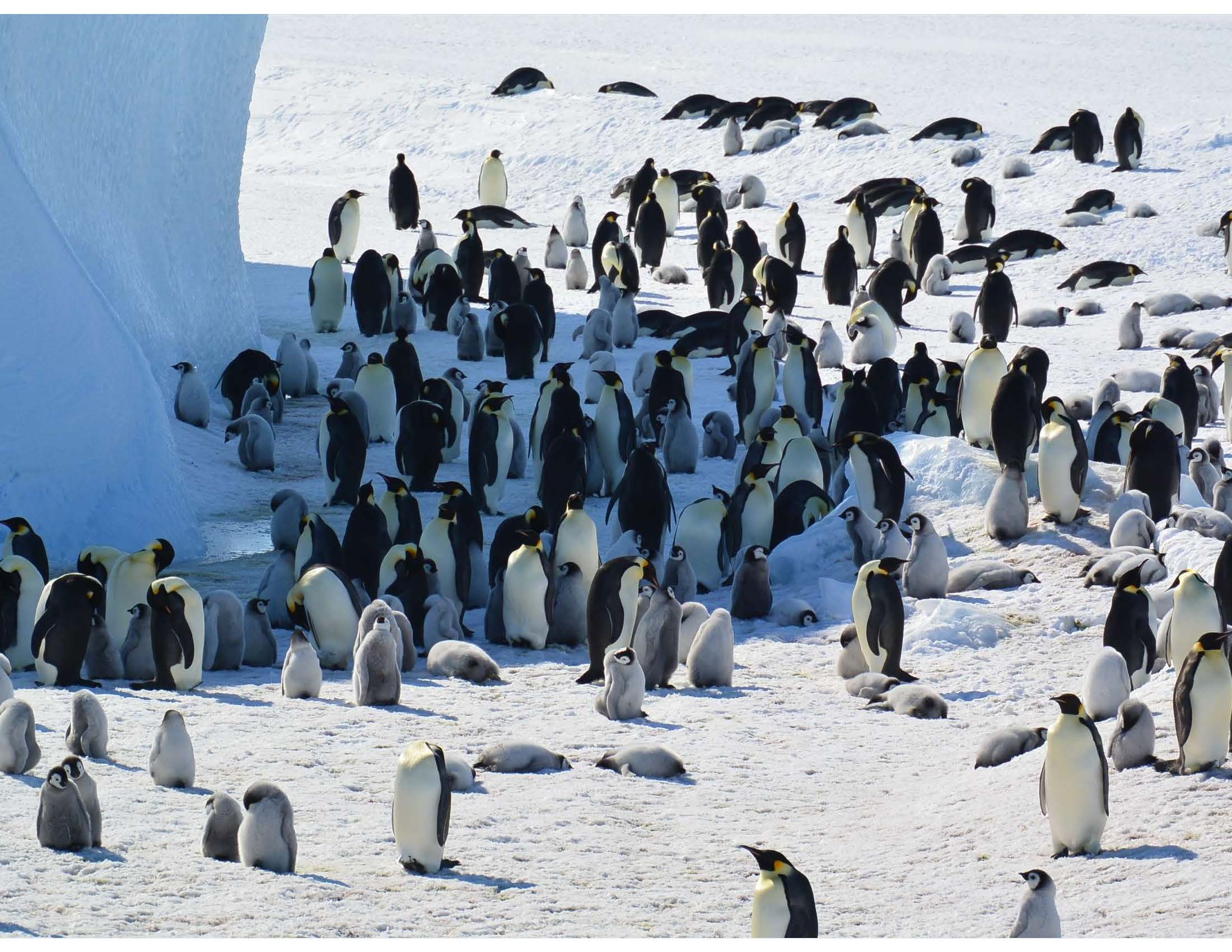
Photo: Philip Trathan/IUCN -- Emperor penguin chicks developing their feathers
Antarctic Marine Protected Areas
Proposals to establish new Marine Protected Areas (MPAs) in East Antarctica and the Antarctic Peninsula are being pushed at the Commission for the Conservation of Antarctic Marine Living Resources (CCAMLR). MPAs would limit fishing and reduce disturbance to breeding colonies.
Satellite monitoring
Scientists use satellite imagery to track all 54 colonies from space, detecting early sea ice breakup and predicting breeding failures before they occur. This early warning system helps prioritize conservation resources.
Paris Agreement and emissions reduction
According to researchers, the single most effective way to save emperor penguins is to reduce global greenhouse gas emissions. Every 0.1 degrees Celsius of warming prevented saves thousands of breeding pairs.
Genetic research and adaptation
Research teams are analyzing the emperor penguin genome to understand their capacity to adapt to changing conditions. Some colonies have already shown signs of shifting breeding locations to more stable ice areas.
What Can You Do?
Even thousands of kilometers from Antarctica, individual actions can make a difference. Climate change is a global problem, and solutions must come from everywhere.
-> According to scientists, if everyone reduced emissions by 2 tonnes of CO₂ per year, it could slow global warming enough to save dozens of emperor penguin colonies from extinction.
More from this topic— Arctic Climate Collapse 2026: Ice, Fire & Rising Seas
Related Topics
Stay on top of trends
Bookmark this page and check back often for the latest updates and insights.