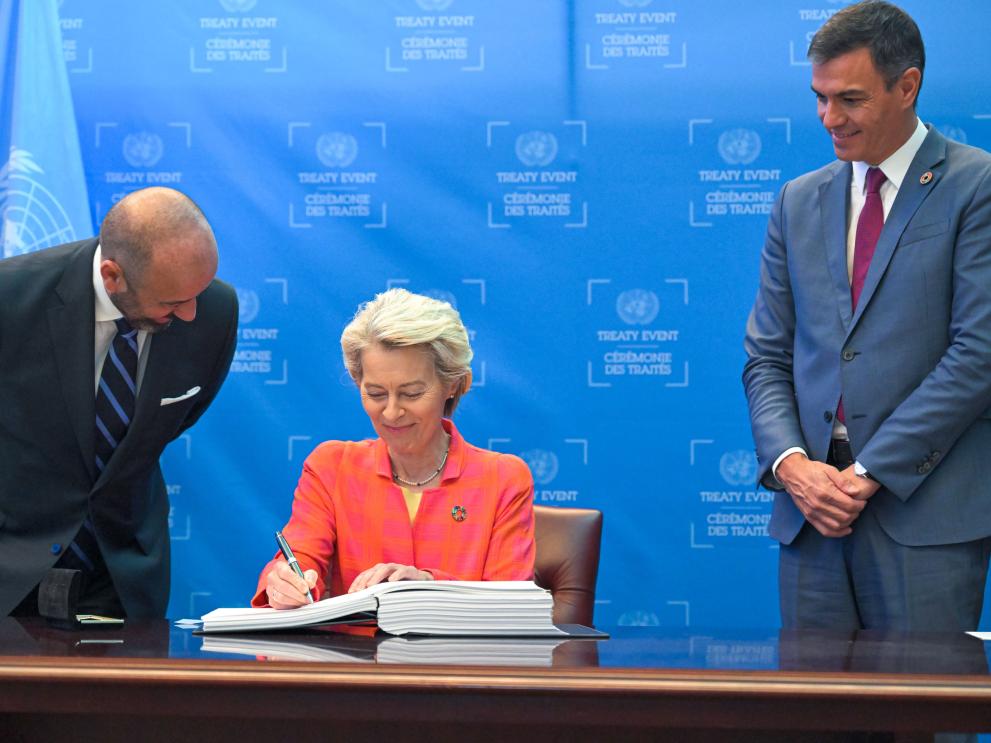
Photo: Reuters — International waters — 60% of Earth's ocean — received a binding legal protection framework for the first time
What Are the High Seas?
The "high seas" are ocean areas beyond 200 nautical miles from any coastal nation's baseline — outside any country's Exclusive Economic Zone (EEZ). This space belongs to no nation, covering approximately 60% of ocean surface area, 95% of ocean volume, and 50% of Earth's surface. Much like progress on EU renewable energy, ocean protection requires international cooperation to address challenges like the growing microplastics crisis threatening marine life worldwide.
Before the Treaty
- No real rule of law
- Unlimited fishing
- Free genetic resource extraction
- Only 1.2% protected
- Pollution with no accountability
After the Treaty (2026)
- Binding legal framework
- International marine protected areas
- Genetic resource benefit-sharing
- Environmental impact assessments
- Targeting 30% protection by 2030
UNCLOS 1982 — The 1982 UN Convention on the Law of the Sea created the basic legal framework but left a major governance gap in the high seas. The BBNJ Treaty 2023/2026 fills that 40-year gap.
The Treaty's Four Pillars
Marine Protected Areas (MPAs)
For the first time, nations can establish marine protected areas in international waters — places previously ungoverned. MPAs will protect humpback whale migration routes, deep-sea coral reefs, and seamounts.
Environmental Impact Assessments (EIAs)
Any activity with potential environmental impact on the high seas — from deep-sea mining to scientific research — must undergo environmental assessment first. This is an unprecedented control mechanism in international waters.
Marine Genetic Resource (MGR) Benefit-Sharing
High seas organisms contain invaluable genetic material for medicine, pharmaceuticals, and biotechnology. The treaty ensures benefits from exploiting these resources are fairly shared, especially with developing nations.
Capacity Building
Developed nations are obligated to provide technical and financial support to Small Island Developing States and developing nations — helping them fully participate in ocean conservation. No one is left behind in protecting the high seas.
The Key Numbers
▸ Before the treaty, only 1.2% of high seas were protected -- compared to 17% of land. The treaty targets 30% ocean protection by 2030.
The Negotiation Journey
What Was Happening Before
For decades, the high seas were the "Wild West" of uncontrolled exploitation. No common governance body, no conservation obligations, and no benefit-sharing mechanism. The result was rapid degradation of deep ocean ecosystems.
Unregulated Fishing
Large fishing fleets could fish freely anywhere in international waters without permits or limits. Many deep-sea fish species declined to alarming levels.
Genetic Resource Exploitation
Biotech corporations freely collected high seas organisms for pharmaceutical research and patents — without sharing any benefits with the international community.
Deep-Sea Mining Plans
Companies could plan mineral extraction on the international ocean floor without full environmental impact assessments or community consultation.
Irresponsible Pollution
Vessels could discharge waste in many international waters without penalty. Plastic and chemical pollution accumulated in areas with no accountability.
Marine Protected Areas in International Waters
The MPA mechanism is the heart of the treaty. For the first time, the international community can collectively protect important ocean areas beyond any nation's jurisdiction — from humpback whale migration corridors to deep-sea coral reefs thousands of meters below the surface.
Proposal
Any member state can propose establishing an MPA in international waters, supported by scientific evidence of the area's significance.
Scientific Review
An independent scientific and technical committee reviews the proposal, assessing ecological importance, vulnerability, and recovery potential.
Collective Decision
The Conference of the Parties (COP) votes to approve or reject. A majority is required. No country has unilateral veto power.
Enforcement
MPAs are enforced by patrol vessels of member states, satellite monitoring, and AIS systems tracking vessels at sea.
Priority Protected Areas
Marine Genetic Resources
Organisms living in the high seas — from bacteria at hydrothermal vents 4,000m below the ocean floor to bizarre deep-sea fish — contain invaluable genetic material that pharmaceutical and biotech industries have extracted billions of dollars from. Before the treaty, major corporations could patent discoveries based on international marine genetic resources without sharing profits with anyone.
| Organism | Habitat | Application | Value |
|---|---|---|---|
| Hydrothermal vent bacteria | Deep-sea thermal vents | Heat-resistant enzymes for PCR, COVID-19 tests | Billions of dollars |
| Deep-sea coral | Seamounts 200–2000m | Anti-cancer compounds, biomaterials | Open research |
| Deep-sea sharks | Open deep water | Shark cartilage, cancer research | Commercial exploitation |
| Deep-sea microalgae | International waters | Biofuels, food, pharmaceuticals | High potential |
Key point: The treaty requires companies and researchers to share benefits from high seas genetic resources with the international community, especially developing nations. Specific sharing mechanisms are being negotiated in PrepCom meetings.
The Challenges Ahead
The treaty entering into force is a historic breakthrough — but it's just the beginning. Turning intent into actual protection across the world's largest ocean expanse requires overcoming major obstacles.
Enforcement at Sea
The high seas are vast and remote. Monitoring and enforcing regulations across 60% of the ocean is an enormous logistical, financial, and technological challenge. No specialized international patrol force currently exists.
Compliance and Sanctions
The treaty lacks strong enforcement mechanisms. If a country violates it, punitive options are limited. The treaty's strength depends heavily on member states' political will.
Non-participating States
Some major maritime powers have not yet ratified. If nations with large fishing fleets or deep-sea mining operations don't join, protection effectiveness will be significantly limited.
Area Classification Disputes
MPA definitions and classifications, along with EIA assessment criteria, are still being negotiated. Countries with different economic interests will debate each specific decision.
First Conference of the Parties (COP 1) — Late 2026
COP 1 will be the key moment: member states will elect the secretariat, establish the scientific committee, and begin proposing the first MPAs. This is the first real test of parties' political will.
Vietnam and Southeast Asia
As a country with 3,260 km of coastline and a significant ocean economy, Vietnam has much at stake in this treaty — both from conservation and sustainable blue economy perspectives.
Vietnamese Fishers
With a large offshore fishing fleet, Vietnamese fishers must comply with new regulations when operating in international waters. This requires updating fisheries law and training fishers.
South China Sea Ecosystem
The South China Sea connects to important international waters. The treaty supports protection of coral reefs and ecosystems linking Vietnam's EEZ and the high seas.
Capacity Building
As a developing country, Vietnam benefits from capacity building provisions — receiving technical support, marine research training, and ocean monitoring technology.
Blue Economy
The treaty creates a legal framework for sustainable ocean economic development. Vietnam's marine eco-tourism, aquaculture, and marine research industries can all benefit.
Southeast Asia and the High Seas
Southeast Asian seas — home to the world's largest coral reefs and highest marine biodiversity — connect directly to international waters in the Pacific and Indian Oceans. Protecting migration corridors of fish, sea turtles, and whales in international waters will directly support the region's inshore marine ecosystems. ASEAN nations, including Vietnam, the Philippines, Indonesia, and Malaysia, all have strategic interests in implementing this treaty.
References
Related: Sea Level Rise 2026 and Microplastics Health Crisis.
Frequently Asked Questions
Illustrative imagery. Photo: ZestLab Archive
Related Topics
Stay on top of trends
Bookmark this page and check back often for the latest updates and insights.