Peter Magyar
Tisza - Respect and Freedom Party
53.6%
Viktor Orban
Fidesz - Hungarian Civic Alliance
~30%
Photo: Getty Images via CBS News / Getty Images via CBS News
Published: April 13, 2026
Hungary 2026: Peter Magyar Defeats Orbán in Historic Election
Peter Magyar's Tisza party wins two-thirds majority, ending Orbán's 16-year rule. What it means for Europe and democracy.
Key Takeaways
Peter Magyar and Tisza win two-thirds supermajority, ending Orban's 16-year rule - the largest opposition victory since 1990.
Magyar captures 53.6% of the vote while Orban's Fidesz drops to approximately 30%, a historic collapse from dominance.
The EU loses its biggest internal blocker: Hungary repeatedly vetoed Ukraine aid and Russia sanctions under Orban.
Both Trump and Putin lose their closest European ally - shifting the balance of power within NATO.
Magyar pledges rule of law, anti-corruption reform, and EU reintegration after years of democratic erosion.
The Results
Hungary Parliamentary Election 2026
Voter Turnout
65%+
Tisza Seats
2/3+
Supermajority
Yes
The result marks the largest collapse of a ruling party in Central Europe since the fall of communism. With a two-thirds supermajority, Tisza gains the power to amend the constitution that Orban had rewritten to consolidate his authority. Voter turnout exceeded 65%, signaling that Hungarians were ready for change after nearly two decades under a political system increasingly seen as corrupt and undemocratic.
Sources: CBS News, Al Jazeera, NPR - April 12, 2026
Who Is Peter Magyar?
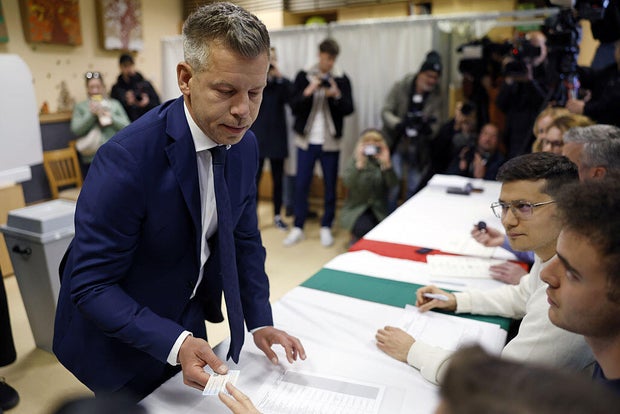
Peter Magyar, 43, rose from relative obscurity in Hungary's legal establishment to become the country's most popular opposition figure in under two years. He founded the Tisza party (Respect and Freedom) in 2024 after publicly denouncing the corruption he said was embedded in Orban's government. The broad coalition he built - spanning urban middle class to rural farmers - fundamentally reshaped Hungary's political map.
Magyar's campaign centered on three pillars: rule of law, anti-corruption, and European integration. He pledged to restore judicial independence, bring transparency to public spending, and realign Hungary with its EU partners. His pragmatic, direct leadership style provided a stark contrast to Orban's populism.
Orban's 16-Year Legacy
2010
Orban returns to power with supermajority, begins rewriting the constitution.
2014
Declares building an 'illiberal democracy', tightens control over media and judiciary.
2018
Wins third consecutive term, consolidates power through favorable electoral laws.
2022
Fourth term begins amid Ukraine war; Hungary blocks EU aid to Kyiv.
2024
Magyar breaks from Fidesz elite, founds Tisza party, polls surge.
2026
Fidesz collapses: just 30% of the vote, supermajority lost to Tisza.
Orban leaves behind a deeply divided Hungary. He consolidated power through media control, constitutional rewrites, and an electoral system designed to favor the ruling party. But ultimately, public frustration with corruption, inflation, and a pro-Russia foreign policy overwhelmed every structural advantage he had built.
What This Means for the EU
Ukraine Aid
Billions in blocked EU aid to Ukraine can now proceed
Russia Sanctions
No more single-country vetoes from Hungary
Rule of Law
Article 7 proceedings may be lifted
EU Budget
Frozen rule-of-law funds can be released
EU leaders immediately welcomed the result. The European Commission president called it 'a new day for Hungary and for Europe.' For years, Hungary was the EU's biggest obstacle on Ukraine solidarity, Russia sanctions, and democratic values. With Magyar's government, Brussels expects constructive partnership instead of constant confrontation.
Trump and Putin Lose an Ally
Orban was the only European leader who consistently defended Putin and championed Trump's policies. His defeat shifts the balance of power within both NATO and the EU.
Orban was a regular guest at Trump's Mar-a-Lago and the only EU leader to visit Moscow since Russia's invasion of Ukraine. He blocked EU military aid packages for Ukraine, opposed energy sanctions on Russia, and used 'peace diplomacy' as cover for pro-Kremlin positioning. Without Orban, Moscow loses its most reliable veto voice in the EU, and Washington loses its most enthusiastic continental supporter.
Hungary's Future
With a supermajority, Magyar has the tools for deep reform. But the challenges are immense: Hungary's economy is heavily dependent on Russian energy and Chinese investment, the state apparatus was Fidesz-ified over 16 years, and society is divided between progressive urban and conservative rural populations.
Priority 1
Restore judicial independence and press freedom
Priority 2
Investigate Orban-era corruption, recover assets
Priority 3
Rebuild relationship with Brussels and EU partners
Challenge
Diversify economy away from Russia and China dependence
Vietnam Perspective
Orban's collapse offers several lessons for developing nations. When a government concentrates power for too long, checks and balances erode, and corruption becomes systemic rather than exceptional. But when public dissatisfaction reaches a threshold, change can come faster and more decisively than any forecast predicted.
For Vietnam, Hungary's election highlights that: (1) anti-corruption is not just a slogan but a genuine public demand, (2) economic over-dependence on a few major partners (as Hungary had with Russia) creates serious political risk, and (3) younger generations can reshape politics when effectively organized. These lessons are practically relevant for any nation seeking to balance stability with reform.
Frequently Asked Questions
References
- CBS News — Hungary general election: Viktor Orban, Peter Magyar results (April 12, 2026)
- Al Jazeera — Peter Magyar wins Hungary election, unseating Viktor Orban after 16 years (April 12, 2026)
- NPR — Hungary: Viktor Orban concedes defeat (April 12, 2026)
Related Topics
Stay on top of trends
Bookmark this page and check back often for the latest updates and insights.