Key Takeaways
- Trump became the first sitting president to attend Supreme Court oral arguments.
- The executive order limits birthright citizenship to children with at least one U.S. citizen or permanent resident parent.
- Every lower court found the order illegal; it has never been in effect.
- Over 250,000 babies born in the U.S. each year would be affected.
- The Supreme Court ruling is expected by the end of June 2026.
A Sitting President at the Supreme Court
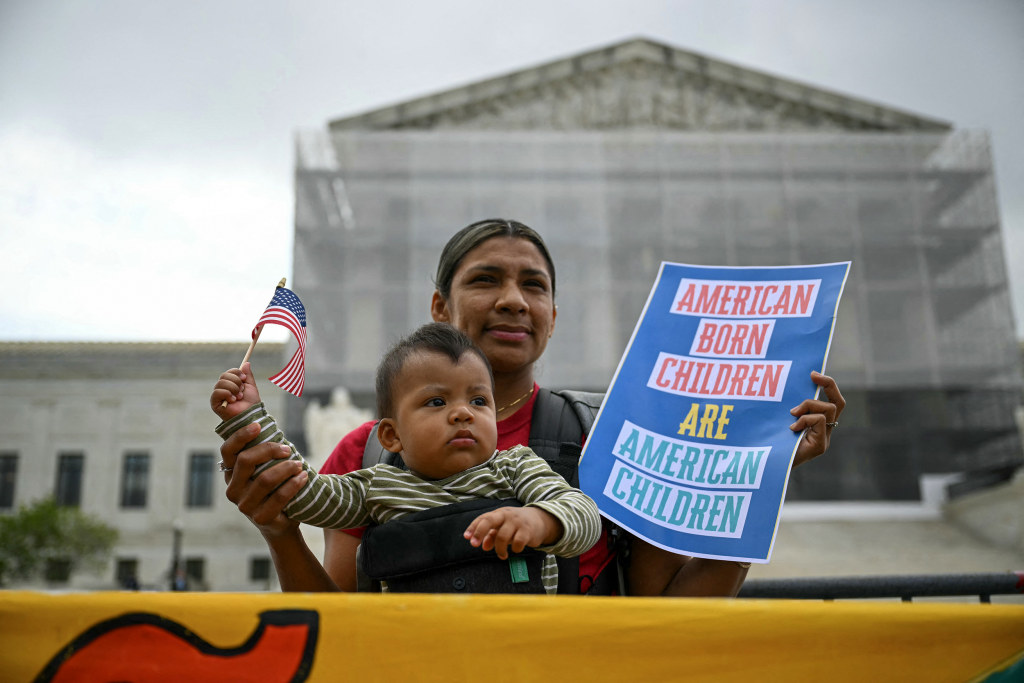
At 10 a.m. EDT on April 1, 2026, President Donald Trump walked into the courtroom of the U.S. Supreme Court — an image without precedent in American history. No sitting president had ever before attended oral arguments at the highest court, an institution long regarded as a symbol of judicial independence.
His presence carried profound symbolic weight. According to NBC News, the arguments concerned the very executive order he signed on his first day back in office, seeking to redefine who qualifies as an American citizen at birth on U.S. soil. The case of Trump v. Barbara poses the largest constitutional question about citizenship rights since 1898.
→ If you are a legal immigrant in the U.S. awaiting a green card, this ruling could alter your child's citizenship status if born before you obtain permanent residency.
What the Executive Order Says
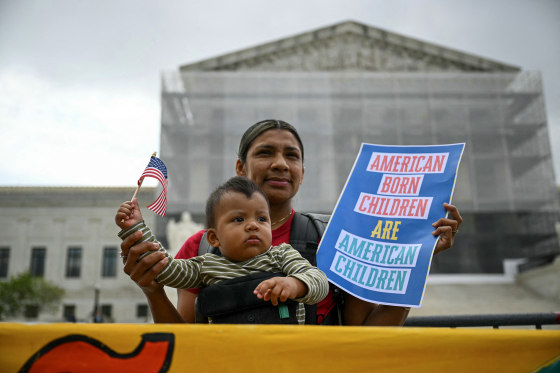
Signed on his first day back at the White House, Trump's executive order limits birthright citizenship. Under its terms, only children born on U.S. soil to at least one parent who is a U.S. citizen or lawful permanent resident would automatically be recognized as citizens.
The order directly targets two groups: children born to parents who entered the country illegally and children born to parents on temporary visas (tourists, students, short-term workers). The Trump administration relies on a new interpretation of the phrase "subject to the jurisdiction thereof" in the 14th Amendment.
→ A Vietnamese student studying in the U.S. on an F-1 visa who gives birth: under this order, the child might not be recognized as a U.S. citizen.
The Constitutional Question: The 14th Amendment
14th Amendment, Section 1"All persons born or naturalized in the United States, and subject to the jurisdiction thereof, are citizens of the United States."
The entire legal dispute revolves around six words: "subject to the jurisdiction thereof." For over a century, courts have interpreted this phrase broadly: anyone born on U.S. soil is subject to the jurisdiction of the United States and therefore a citizen. The only recognized exception has been children of foreign diplomats.
The Trump administration cites the 1884 case Elk v. Wilkins, in which the Supreme Court ruled that a Native American born within a tribal nation was not automatically a citizen. However, over a quarter of Native American law experts dispute the use of this case, arguing that the legal context of 1884 was entirely different from today.
→ Over 140 years after Elk v. Wilkins, a ruling originally about Native American tribal sovereignty is being used to argue about immigrant children's citizenship — a highly contested expansion.
The Journey Through Lower Courts
Impact by the Numbers
The 250,000 children per year is an estimate from policy analysts based on U.S. birth data. This group includes children born to those who entered illegally, visa overstayers, tourists, international students, and seasonal workers. If the Supreme Court upholds the order, these children would be born on American soil but not be American citizens.
→ The Vietnamese-American community — about 2.2 million people — includes many families with members awaiting immigration status adjustments. This ruling could directly affect their children.
Legal Arguments: Both Sides
- "Subject to the jurisdiction" does not include those present illegally or temporarily on U.S. soil.
- Elk v. Wilkins (1884) proves that birth on U.S. soil alone is insufficient for citizenship.
- Birthright citizenship creates incentives for illegal immigration and "birth tourism."
- The president has executive authority to interpret and enforce immigration law.
- The 14th Amendment is clear: ALL persons born on U.S. soil are citizens, except children of diplomats.
- United States v. Wong Kim Ark (1898) established precedent: the son of Chinese parents born in San Francisco was a U.S. citizen.
- Elk v. Wilkins involved tribal nations — an entirely different context from modern immigration.
- A president cannot use an executive order to override a constitutional right — only a constitutional amendment can change this.
→ If the Supreme Court sides with the administration, it would be the first time in modern history a president successfully narrowed the scope of an amendment — setting precedent for constitutional changes via executive order.
Trump's Political Strategy
Trump's decision to attend the Supreme Court in person was a calculated political move. According to CT Mirror analysis, his presence sends the message that this is the administration's top priority — not a peripheral lawsuit. Regardless of the legal outcome, the image of the president sitting in the courtroom will be widely used in political campaigns.
Immigration remains one of the most divisive issues in American politics. According to Fox 5 DC, this case also sits within the broader context of a series of hardline immigration policies pursued by the Trump administration, including controversial trade tariffs.
Follow more on Trump trade and immigration policies at Trump Tariffs & Trade War.
→ For the Vietnamese diaspora: stricter immigration policies could affect family sponsorship processes and work visas — monitor developments closely after the June ruling.
Outlook: What Comes Next
The Supreme Court is expected to issue its ruling before the end of June 2026. There are three main scenarios: (1) The Court upholds the lower court rulings, declaring the order illegal — birthright citizenship is preserved; (2) The Court reverses the lower courts, allowing the order to take effect — this would be a historic change; (3) A narrow ruling that only addresses whether the president has the authority to issue this order, without fully resolving the constitutional question.
Regardless of the outcome, Trump v. Barbara has already become one of the most significant constitutional cases of the 21st century. It raises fundamental questions about the nature of American citizenship and the limits of executive power. The Supreme Court, with its current 6-3 conservative lean, must weigh over a century of legal precedent against contemporary political pressures.
See more related analysis at Trump Tariffs & Trade War hub.
→ If you are a Vietnamese-American with family awaiting sponsorship: consult an immigration attorney before the June ruling to prepare for all scenarios.