Photo: Unsplash — Oil refinery at night with flames
On March 19, 2026, Iran launched missiles at Qatar's Ras Laffan LNG gas facility and Saudi Arabia's oil installations — an escalatory response after Israel struck Iran's South Pars gas field. This marks the most serious direct attack on Gulf energy infrastructure in modern history. Qatar has expelled all Iranian military attachés, Saudi Arabia declared trust completely shattered, and global energy markets have descended into turmoil.[1]
Conflict Map: The Gulf Region
Tactical map showing struck positions and strategic hotspots across the Persian Gulf region.
Diplomatic Escalation Timeline
The sequence of events leading to the Gulf energy crisis of March 19.
Israel Strikes South Pars
Israeli forces launched airstrikes on Iran's South Pars gas field, triggering the escalation chain.
Iran Issues Retaliation Warning
Tehran declared it would respond against any nation deemed complicit in the attack. UN Security Council holds emergency session.
Iran Strikes Ras Laffan
Iranian missiles hit Qatar's Ras Laffan gas facility — the world's largest LNG hub. Extensive damage reported.
Saudi Arabia Facilities Hit
Saudi Arabia reports damage at oil facilities following Iranian strikes. Riyadh declares 'trust in Iran completely shattered'.
Qatar Expels Attachés
Doha expels all Iranian military attachés — the strongest diplomatic measure Qatar has ever taken against Tehran.
Energy Markets Shocked
Oil prices spike 18% within 24 hours. 20% of global LNG supply affected. OPEC+ holds emergency meeting.
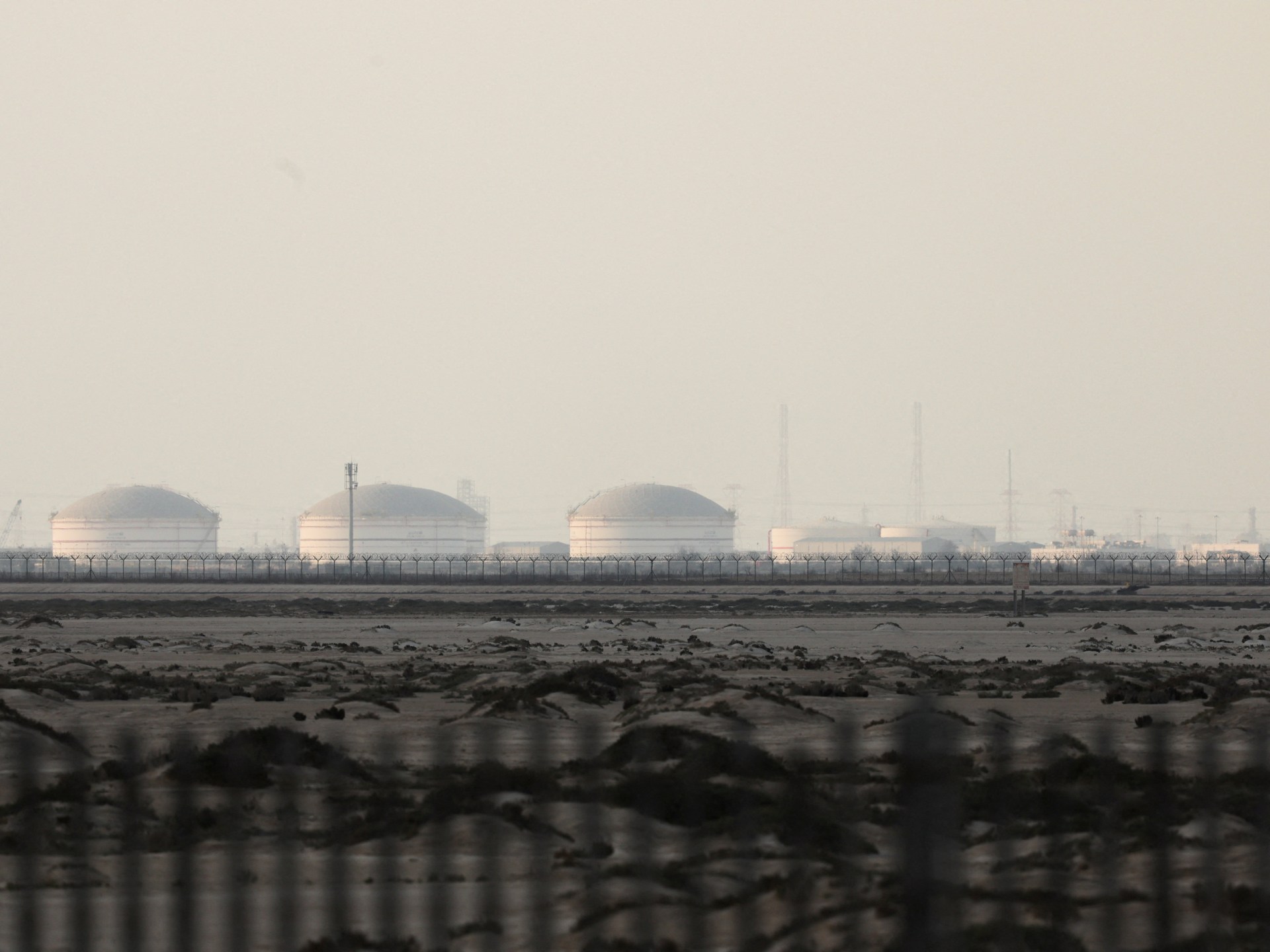
Photo: Unsplash — Oil storage tanks
Global Energy Impact Gauge
The scale of oil and LNG supply disruption caused by the strikes.
Ras Laffan supplies ~20% of global LNG. Damage here triggers immediate supply shock worldwide.
Brent crude surged 18% within 24 hours as news of the strikes spread across global markets.
Qatar is the world's top LNG exporter, supplying 22% of global LNG exports.
21% of world's oil flows through the Strait of Hormuz — the world's most strategic chokepoint.
Ras Laffan: World's Largest LNG Hub — Struck
Ras Laffan is the world's largest natural gas industrial city, processing most of Qatar's LNG output — accounting for roughly 22% of global LNG exports. Any disruption here immediately shocks energy markets in Europe and Asia.
Initial reports describe 'extensive damage' at multiple points within the Ras Laffan complex. Experts estimate it could take weeks or months to restore full production capacity, with long-term LNG contracts under threat.
Qatar supplies LNG to Japan, South Korea, China, India, and Europe. This strike comes as Europe increasingly depends on Gulf LNG following reduced Russian gas imports. The global energy consequences of the attack could extend for months.[3]
Saudi Arabia: Trust in Iran Completely Shattered
"The trust of the Kingdom of Saudi Arabia in the Islamic Republic of Iran has been completely destroyed. These actions constitute a blatant violation of national sovereignty and the critical energy infrastructure of the region."
Saudi Arabia and Iran have had a complex relationship for decades, experiencing a period of rapprochement in 2023 mediated by China. However, the March 19 strikes have erased those diplomatic gains, pushing the Gulf into unprecedented instability.[1]
Qatar Expels Iranian Military Attachés
Historic Decision
The expulsion of military attachés is the strongest diplomatic measure Qatar has ever taken against Iran, clearly signaling the complete collapse of regional trust.
What Comes Next?
Qatar may close Iran's embassy or recall its own ambassador if tensions continue to escalate. The US and allies are watching closely.
Regional Impact
UAE, Kuwait, and Bahrain are considering similar measures. The Gulf Cooperation Council (GCC) may convene an emergency meeting.
Mediation Role
Oman — typically a mediator — has called for restraint. Turkey and Qatar previously served as communication channels with Iran.
Photo: Unsplash — Petroleum refinery smokestacks
International Response
National Security Council holds emergency session. Fifth Fleet bolsters Persian Gulf presence. Washington strongly condemns the strikes.
Secretary-General calls for immediate ceasefire. Security Council convenes emergency session. Russia and China block a condemnation resolution.
Activates energy contingency mechanisms. EU High Representative calls for immediate de-escalation to protect LNG supplies flowing to Europe.
Beijing calls for restraint and offers mediation. China is Qatar's largest LNG customer — it has direct stakes in regional stability.
Context: The Israel-Iran Escalation Cycle
The March 19 Gulf crisis is a direct consequence of Israel's strike on Iran's South Pars gas field days earlier. South Pars is the world's largest gas field, providing much of Iran's export revenue. Israel targeting this strategic asset — and Iran retaliating by striking neighboring states' infrastructure — has created a dangerous escalation spiral.[2]
- Israel strikes South Pars (Iran) — Mar 15
- Iran issues retaliation warning — Mar 17
- Iran strikes Ras Laffan (Qatar) — Mar 19
- Iran strikes Saudi Arabia oil facilities — Mar 19
- Qatar expels Iranian military attachés — Mar 19
What Happens Next?
Further Escalation
HighIran may continue strikes or blockade the Strait of Hormuz if international pressure is insufficient. This would trigger the worst global oil crisis in decades.
Mediated Ceasefire
MediumOman, Turkey, or China may broker a temporary ceasefire — but regional trust could take years to rebuild even under the best circumstances.
GCC Military Response
Low-MediumIf Iran continues strikes, Saudi Arabia and UAE may mobilize military forces. The US has defense commitments to GCC allies.
Global Energy Crisis
OngoingSurging energy prices, LNG shortages in Europe and Asia, rising energy inflation. The economic impact has already begun.
▸ Attacks on Gulf energy infrastructure affect 30% of global oil supply -- every household feels this through fuel and food prices
Related: US homeland security crisis and FCC broadcast threats.
Frequently Asked Questions
More from this topic— US-Iran Conflict
Related Topics
Stay on top of trends
Bookmark this page and check back often for the latest updates and insights.