Photo: Fortune
Key Takeaways
- USTR launched dual Section 301 probes on March 11-12, 2026: overcapacity (16 economies) and forced labor (60 economies)
- Investigation expedited from 1 year to 5 months, targeting tariff completion by July 24, 2026
- Vietnam targeted in both probes with $178B bilateral trade surplus
- If fully imposed: largest US tax hike since 1993, estimated at $171.1B (0.54% of GDP)
- China holds 70% of global goods surplus in 2025, exceeding $1.2 trillion
What Happened?
On March 11 and 12, 2026, the United States Trade Representative (USTR) published two Federal Register notices launching separate Section 301 investigations of unprecedented scope. The first targets industrial manufacturing overcapacity across 16 economies, from China to the European Union. The second, far broader, examines forced labor failures across approximately 60 economies.
This represents the largest Section 301 investigation in history, surpassing the 2018 China-focused probe in both scope and speed. The USTR aims to complete the process within 5 months — compared to the typical timeline of over one year.
For Vietnamese exporters to the US, 5 months is an extremely tight window to prepare for tariffs that could fundamentally reshape their cost structures.
Why Section 301?
The answer lies in the landmark February 20, 2026 ruling. The US Supreme Court, by a 6-3 margin, declared that the International Emergency Economic Powers Act (IEEPA) does not authorize the president to impose commercial tariffs. This ruling invalidated the legal basis the Trump administration had used for the majority of tariffs since 2025.
Section 301 of the Trade Act of 1974 provides an alternative path. This statute allows the USTR to investigate and penalize trading partners' "unfair" trade practices — but requires a formal process with comment periods and public hearings.
The Section 301 process is more formal but also more transparent — Vietnamese businesses have an opportunity to submit counterarguments before the April 15, 2026 deadline.
16 Economies Under Investigation
The overcapacity investigation targets economies with the largest trade surpluses with the US, including traditional allies like Japan and South Korea.
Vietnam: $178B Surplus in the Crosshairs

Photo: Holland & Knight
Vietnam appears on the target list of both investigations — a particularly concerning position. The bilateral trade surplus with the US reached $178 billion in 2025, up from $104 billion in 2023, making Vietnam the third-largest surplus country after China (global) and Mexico.
Three key export sectors face direct risk: electronics (approximately 37% of exports to the US, including Samsung and Intel operations), textiles (roughly 25%), and footwear (about 13%). Many FDI factories in Vietnam source components from Chinese supply chains — something the USTR may view as "transshipment" to circumvent tariffs.
If 10-25% tariffs hit Vietnamese goods, a garment worker in Binh Duong could lose their job as factories cut orders — this is not just a macroeconomic story.
China: $1.2 Trillion Surplus and Pushback
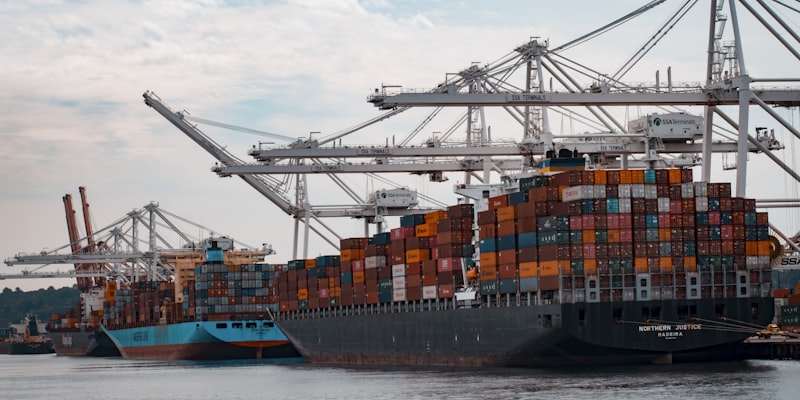
Photo: Fortune
China's global trade surplus exceeded $1.2 trillion in 2025 — a record, representing approximately 70% of the total global goods surplus. Beijing has responded forcefully, calling the investigation "Section 301 abuse" and warning of proportional retaliation.
The "overcapacity" argument centers on industries where China dominates: steel (54% of world output), EV batteries (76% of production), and solar cells (80% of output). The USTR argues that Chinese state subsidies create production capacity far exceeding domestic demand, exporting the surplus at low prices, undermining fair competition.
Trade Surplus with the US, 2025
Billions USD. China: global surplus. Others: bilateral with US.
Source: US Census Bureau, USTR Federal Register, March 2026
When China faces higher tariffs, some orders shift to Vietnam — but if Vietnam is also tariffed, the "China+1" advantage erodes significantly.
Forced Labor Probe: 60 Economies Under Scrutiny
The second investigation is significantly broader, covering approximately 60 economies worldwide. The USTR examines whether trading partners have adequate measures to prevent products from forced labor entering supply chains, particularly related to the Xinjiang region (China) and mining sectors in Africa.
For Vietnam, the main risk lies in supply chain linkages with China. Many FDI electronics factories in Vietnam use components and raw materials of Chinese origin, including polysilicon and cotton — two commodities already restricted under the US Uyghur Forced Labor Prevention Act (UFLPA).
Vietnamese businesses must audit supply chains immediately: if polysilicon or cotton in US-bound products originates from Xinjiang, the risk of port seizure is real.
Timeline to July 2026
Typically, a Section 301 investigation takes about one year. This time, the USTR has compressed it to 5 months — an unprecedented pace reflecting political urgency.
6-3 ruling declared the International Emergency Economic Powers Act does not authorize tariffs, forcing the administration to find new legal basis.
Two separate investigations: manufacturing overcapacity (16 economies) and forced labor failures (60 economies).
Businesses and foreign governments submit formal written comments to USTR.
USTR holds public hearings on industrial manufacturing overcapacity, accepting testimony from stakeholders.
Expedited 5-month investigation timeline concludes, potential imposition of new tariffs — the largest US tax hike since 1993.
The April 15 written comments deadline is only 2 weeks away — Vietnamese trade associations and chambers must act now if they want their voices heard.
Asia's Response
Responses from targeted countries have been varied. Malaysia declared that any trade deals signed under pre-IEEPA pressure are "null and void," setting a notable legal precedent. Japan and South Korea, traditional US allies, are lobbying aggressively for exemptions.
India is pursuing bilateral negotiations to mitigate impact, while Taiwan emphasizes its "irreplaceable" role in global semiconductor supply chains. Vietnam, whose Prime Minister visited Washington in January 2026, is working to maintain diplomatic goodwill for exemption negotiations.
Vietnam's "middle path" diplomatic strategy is being tested — without exemptions, Vietnamese exports to the US will compete at higher price points.
Economic Impact: Largest Tax Hike Since 1993
According to Tax Foundation analysis, full implementation of Section 301 tariffs would represent the largest US tax increase since the Omnibus Budget Reconciliation Act of 1993, estimated at $171.1 billion or 0.54% of GDP.
For American consumers, prices of electronics, clothing, and footwear imported from Asia would rise noticeably. For Vietnam, exports to the US — approximately 30% of total export revenue — could decline significantly if tariffs erode Vietnamese price competitiveness.
An American family buying a Vietnam-assembled iPhone could pay $50-150 more. Conversely, the Vietnamese worker who assembled that phone could lose their job.
What This Means for Businesses and Consumers
For Vietnamese businesses: the most critical period is from now until April 15 (comment deadline) and May 5 (hearings). Industry associations, chambers of commerce, and individual businesses all have the right to submit written comments to USTR. This is an opportunity to demonstrate that manufacturing in Vietnam is not synonymous with tariff circumvention from China.
For consumers: if tariffs are imposed in July, US goods prices would gradually rise from Q3 2026. In Vietnam, indirect impact through reduced export orders could affect employment in industrial zones starting late 2026.
The time to act is now, not July. Businesses that wait will lose the chance to influence the decision. Consumers should monitor developments closely.
References
- Fortune — Trump launches Section 301 probes into Asia trade (March 16, 2026)
- Holland & Knight — USTR Launches Awaited Section 301 Investigations (March 2026)
- CNBC — Trump trade investigations replace IEEPA tariffs (March 11, 2026)
- White & Case — USTR Initiates Section 301 Investigations into 16 Trade Partners (March 2026)
- Trade Compliance Resource Hub — Trump 2.0 Tariff Tracker (March 24, 2026)