Artemis II Splashdown: Crew Returns from Historic Moon Mission
NASA's Orion capsule splashed down in the Pacific on April 10, 2026, after carrying four astronauts 252,756 miles from Earth — the farthest humans have traveled since Apollo 13 in 1970 and the first crewed lunar flyby in 54 years.
Key Takeaways
- Artemis II splashed down at 5:07 PM PDT on April 10, 2026, off the coast of San Diego, ending the first crewed mission beyond low Earth orbit since Apollo 17 in December 1972 — a 54-year gap.
- The four-person crew — Reid Wiseman, Victor Glover, Christina Koch and Canadian Jeremy Hansen — traveled 252,756 miles from Earth, breaking Apollo 13's 1970 record of 248,655 miles by roughly 4,100 miles.
- Victor Glover became the first Black astronaut to travel to the vicinity of the Moon, Christina Koch the first woman, and Jeremy Hansen the first non-American — three historic firsts compressed into a single mission.
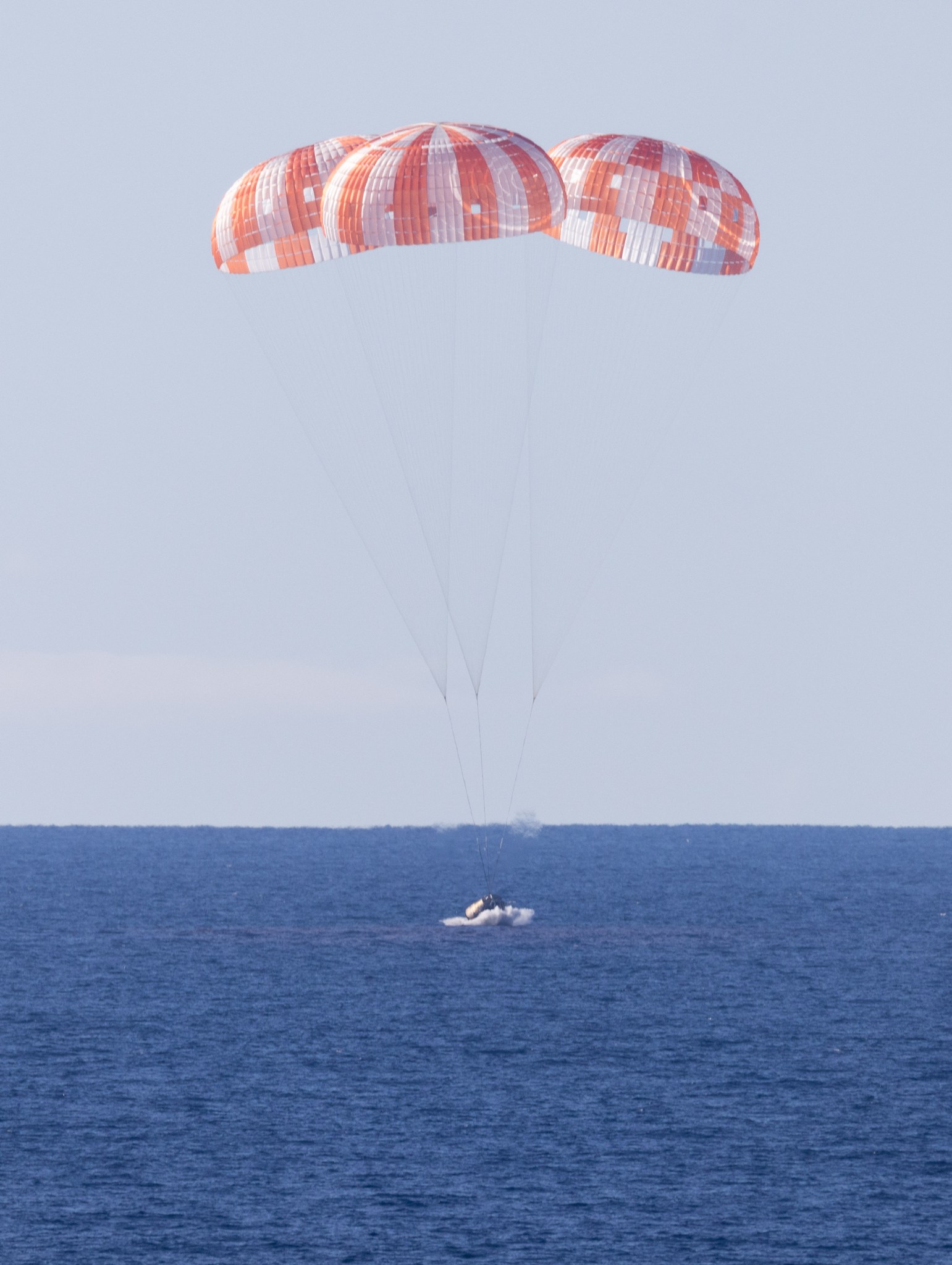
- The Orion capsule re-entered Earth's atmosphere at 24,500 mph (Mach 32), with heat-shield temperatures touching 2,760°C — roughly half the surface temperature of the Sun — before three orange parachutes slowed it to a 17 mph splashdown.
- The successful splashdown clears the path for Artemis III — NASA's first crewed lunar landing since Apollo 17 — targeted for the lunar south pole in late 2026 using a SpaceX Starship Human Landing System.
Fifty-Four Years of Distance: Why This Mission Matters
Distance: Artemis II Tops Every Crewed Mission in History
Comparing the maximum distance from Earth across all crewed spaceflights. Apollo 13 held the record from April 1970 thanks to its accident geometry; Artemis II is the first mission to break it by design.
Apollo 13 vs Artemis II: Two Lunar Loops, 56 Years Apart
| Metric | Apollo 13 | Artemis II | |
|---|---|---|---|
| Year | April 1970 | April 2026 | |
| Max distance | 248,655 mi | 252,756 mi | |
| Crew size | 3 | 4 | |
| Mission status | Failure (oxygen tank rupture) | Success (all objectives met) | |
| Mission length | 5d 22h | 9d 8h | |
| Splashdown | South Pacific | Pacific off San Diego | |
| Recovery ship | USS Iwo Jima | USS San Diego (LPD-22) | |
| Capsule heat-shield peak | ~2,800°C | ~2,760°C | |
| Crew firsts | None (all-white-male US crew) | First Black astronaut, first woman, first non-American to lunar vicinity |

Three Firsts on One Capsule: Glover, Koch, Hansen
Meet the Artemis II Crew
Reid Wiseman — Commander
US Navy captain, former chief of the Astronaut Office. Logged 165 days on the ISS during Expedition 40/41 in 2014. Selected as Artemis II commander in April 2023.
Victor Glover — Pilot
US Navy commander, F/A-18 test pilot. Flew on Crew-1 SpaceX Dragon mission in November 2020. First Black astronaut to fly beyond low Earth orbit.
Christina Koch — Mission Specialist
Electrical engineer, holder of the longest single spaceflight by a woman (328 days, 2019–2020). First woman to travel to lunar vicinity.
Jeremy Hansen — CSA Mission Specialist
Royal Canadian Air Force colonel, CF-18 fighter pilot. Artemis II was his first spaceflight. First non-American astronaut to travel to lunar vicinity.
Mission Timeline: 10 Days Around the Moon
SLS Launch from Kennedy LC-39B
Space Launch System Block 1 lifts off from Pad 39B at Kennedy Space Center. Twin solid rocket boosters generate 7.5 million pounds of thrust at liftoff — the most powerful rocket NASA has flown since the Saturn V.
Translunar Injection Burn
Orion separates from the ICPS upper stage and performs the translunar injection burn, committing the crew to a free-return trajectory around the Moon. Velocity tops 24,200 mph relative to Earth.
Lunar Flyby — Far Side Loop
Orion passes 4,600 miles above the lunar far side. The four astronauts become the first humans to see the far side of the Moon with their own eyes since Apollo 17 in 1972. Live broadcast peaks at 87 million concurrent viewers worldwide.
Maximum Distance — 252,756 mi
At 6:27 AM EST, Orion reaches its apogee — the farthest point from Earth in the mission. Telemetry confirms 252,756 miles, surpassing Apollo 13's 1970 record of 248,655 miles by approximately 4,100 miles.
Entry Interface — Re-Entry Begins
Orion strikes the upper atmosphere at 24,500 mph (Mach 32) over the Pacific. Heat-shield temperatures rise from -100°C to 2,760°C in 90 seconds. The capsule enters a four-minute communications blackout.
Splashdown — Pacific off San Diego
Three orange main parachutes deploy at 9,500 feet, slowing the capsule to 17 mph for a Pacific splashdown 50 miles off San Diego. USS San Diego (LPD-22) recovery team reaches Orion in 24 minutes.
Crew Egress — All Four Safe on Deck
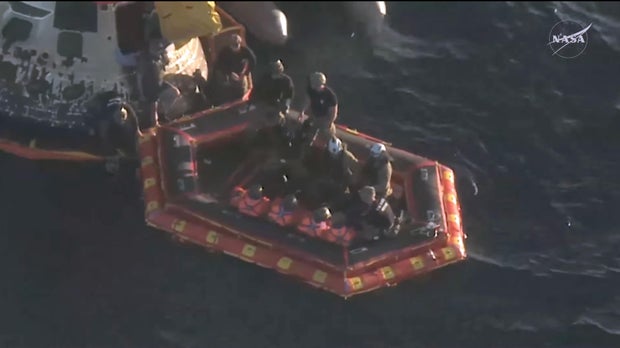
Wiseman, Glover, Koch and Hansen exit Orion through the side hatch onto an inflatable recovery raft, then board USS San Diego via helicopter. All four pass post-flight medical screening with no notable issues.
Inside Orion: The Hardware That Came Home
Welcome home, Artemis II. Four astronauts, the farthest humans have ever traveled, and we caught them in the Pacific tonight. This is the bridge to Artemis III and to the Moon's south pole.
What's Next: The Artemis III Lunar Landing
Late 2026 — Crewed Lunar Landing
Artemis III targets the lunar south pole, the first human surface landing since Apollo 17. SpaceX Starship Human Landing System provides the lunar transit; SLS + Orion still handles Earth launch and Earth return.
South Pole Target Zone
13 candidate landing sites in the Shackleton crater region were narrowed to 3 after Artemis II laser ranging confirmed sub-meter topographical accuracy. Final site selection scheduled for July 2026.
First Woman & Person of Color
NASA's Artemis III crew assignment is expected by June 2026. Christina Koch is a leading candidate to step onto the lunar surface, fulfilling the program's foundational 2019 promise.
Artemis Accords Membership
43 nations had signed the Artemis Accords by April 2026, up from 31 in 2024. Vietnam is in active dialogue but has not yet signed; signing would unlock partner-state astronaut slots from Artemis VI onward.
Lunar Gateway Construction
The cislunar Gateway station's first two modules (HALO and PPE) launch in 2027 on a Falcon Heavy. Gateway becomes a permanent staging post for Moon and Mars missions through the 2030s.
$93B Program Cost to 2026
NASA Inspector General estimates total Artemis program spend at $93B through fiscal 2026, with a per-launch SLS cost of $4.1B. Cost pressure is the leading risk to Artemis IV and V slipping into 2028+.
Frequently Asked Questions
Sources
- NASA Welcomes Record-Setting Artemis II Moonfarers Back to Earth — NASA (2026-04-10)
- Artemis II Splashdown Live Updates — CBS News (2026-04-10)
- Artemis II Flight Day 10: Re-Entry and Splashdown Live Updates — NASA (2026-04-10)
- Artemis II astronauts splash down safely after NASA Moon mission — NBC News (2026-04-10)