- Artemis II sets new distance record: 252,756 miles from Earth — 4,111 miles farther than Apollo 13
- First woman (Christina Koch) and first Canadian (Jeremy Hansen) on a lunar trajectory
- 35 geological features observed; first-ever solar eclipse witnessed by humans from deep space
- Proposed crater names: Integrity and Carroll — an emotional tribute from the crew
- Splashdown expected April 9-10, 2026 in the Pacific — paving way for Artemis III's south-pole landing
A Historic Moment: Humans Near the Moon After 54 Years
At 14:37 EST on April 6, 2026, NASA's Artemis II Orion spacecraft completed its closest lunar flyby, marking the first time humans have been near the Moon since Apollo 17 in December 1972. The four-person crew broke Apollo 13's distance record and is now en route home.
Artemis II is not a landing mission — that is Artemis III's job, targeted for 2027-2028. But this test flight carries equal weight: it proves Orion, its life-support stack, and the full Artemis architecture can take humans beyond low-Earth orbit and return them safely. For broader context on the program, see our 2026 space missions hub.
→ A generational inspiration moment — Earthrise livestreamed to classrooms worldwide for the first time since the 1960s.
Six Days in Space: Mission Timeline
Liftoff from Kennedy Space Center at 07:12 EST. SLS rocket propels Orion into Earth orbit before firing TLI (Trans-Lunar Injection) toward the Moon.
→ First crewed SLS launch — a validation moment for a program decade in development.
Orion crosses the Van Allen radiation belts. Life-support and navigation systems perform nominally. Crew checks optical cameras and runs science protocols.
→ First human test of Orion's life-support in deep space — critical data for Artemis III.
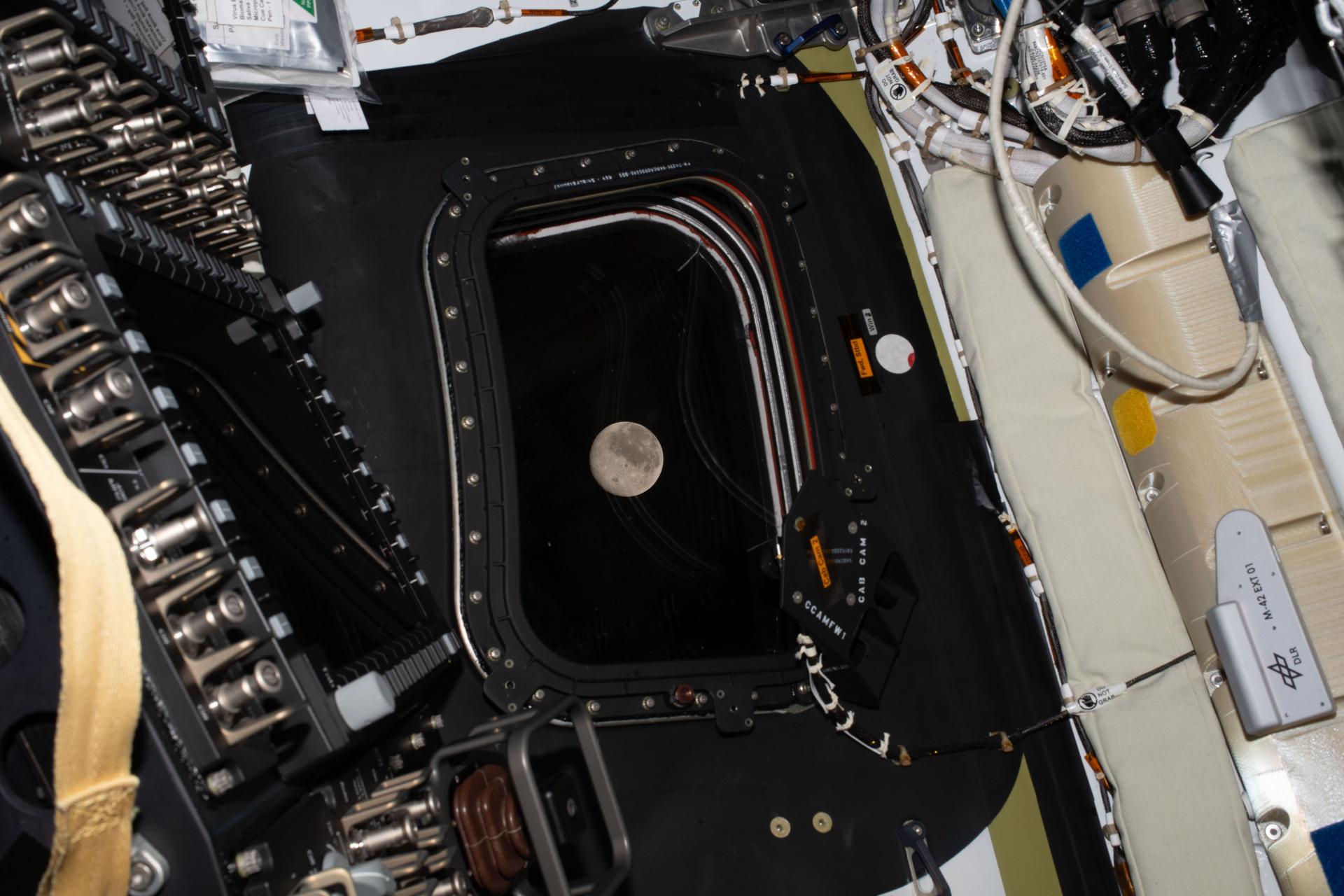
Distance to the Moon shrinks below 10,000 miles. Crew observes 35 geological targets with wide-spectrum cameras and 4K livestream cameras broadcasting to Earth.
→ Live Earthrise imagery travels globally — the first crewed lunar view in 54 years.
Closest approach: 4,067 miles above the lunar surface at 60,863 mph. 40-minute comms blackout behind the Moon. New distance record: 252,756 miles from Earth.
→ Beat Apollo 13 (1970) by 4,111 miles — a new benchmark in human spaceflight.
Orion fires trajectory correction burns. Splashdown expected in the Pacific Ocean April 9-10, 2026, near San Diego. USS Portland is prepped for recovery.
→ A clean re-entry validates Orion for Artemis III's crewed south-pole landing in 2027-2028.
The 252,756-Mile Record: How It Compares to Apollo
For 54 years, Apollo 13 held the record for farthest distance humans had ever traveled from Earth: 248,655 miles. That record was an accident — when an oxygen tank exploded in 1970, the crew was forced into a free-return trajectory around the Moon to get home.
Artemis II broke that record by design: 252,756 miles, exceeding Apollo 13 by 4,111 miles. This is the first mission in history purposely planned to send humans farther than any Apollo flight.
→ That extra 4,111 miles is roughly the distance from New York to Paris — added on top of a route that already reached the Moon.
Seven Hours of Science: 35 Geological Targets
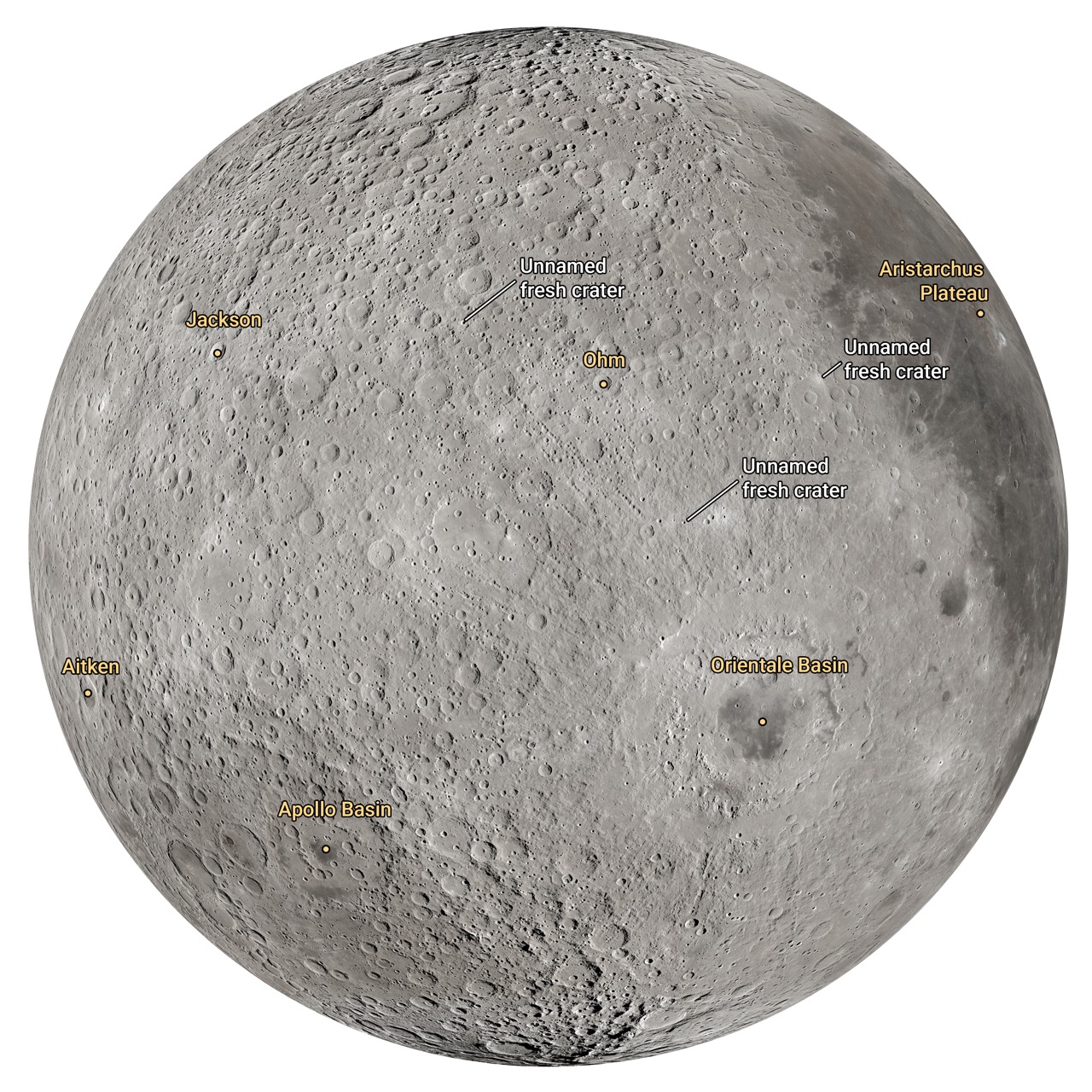
During roughly seven hours near the Moon, the crew observed 35 geological features, most notably Orientale Basin — a 600-mile-wide impact crater on the lunar far side. They captured wide-spectrum imagery, 4K video, and science-grade stills to support mapping for Artemis III's eventual landing zone selection.
For earlier background on how we got here, read our Artemis II mission overview.
A Solar Eclipse from Space: Never Seen Before
As Orion slipped behind the Moon, the crew watched the Sun eclipse for nearly an hour — a view no humans had ever experienced before. From lunar distance, the Moon is large enough to fully block the Sun for an extended period, producing a brilliant solar corona framed around the dark silhouette.
Integrity and Carroll: The Crater Naming Story
The crew proposed naming two lunar craters: "Integrity," after the Orion command module, and "Carroll," in memory of Commander Reid Wiseman's late wife, who passed away during his mission training. The proposal will be submitted to the International Astronomical Union (IAU) for formal review.
→ A rare human moment in aerospace engineering — a reminder that behind every mission are people with families, losses, and hopes.
The Crew: Four People, Four Milestones
What Comes Next: Artemis III and the Lunar South Pole
If Artemis II splashes down safely, NASA will move toward Artemis III — the first crewed lunar landing since Apollo 17 in 1972. The target: the lunar south pole, where permanently shadowed craters contain water ice — a crucial resource for establishing a long-term presence.
The mission is targeted for late 2027 or 2028, pending SpaceX Starship HLS readiness. If it succeeds, the Artemis generation will not just return to the Moon — it will set the stage for human Mars missions in the 2030s.
References
- NASA — Artemis II Flight Day 6: Crew Ready for Lunar Flyby — 2026-04-06
- CNN Live Updates — NASA Artemis 2 Flyby Moon Mission — 2026-04-06
- NPR — Artemis II Astronauts Heading Home After Historic Flyby — 2026-04-06
Frequently Asked Questions
More from this topic— Space Missions 2026: Moon, Mars & Beyond | ZestLab
Related Topics
Stay on top of trends
Bookmark this page and check back often for the latest updates and insights.