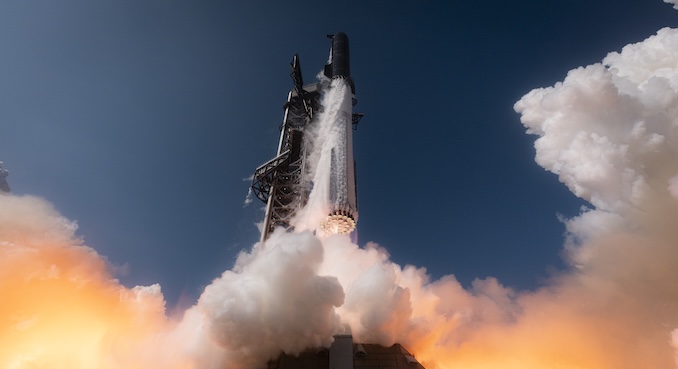
SpaceX Starship Flight 12: Largest Rocket Ever Launches Successfully
SpaceX's 407-foot Starship Version 3 lifted off from Starbase Texas on May 22, 2026 — Booster 19 splashed down in the Gulf, Ship 39 reignited its engines mid-coast, and NASA's Artemis lunar lander timeline just got a tangible push forward.
Key Takeaways
- SpaceX Starship Flight 12 launched May 22, 2026 at 5:30 PM CDT from Starbase, marking the debut flight of Version 3 — the tallest, most powerful rocket ever built at 407 feet (124 meters).
- Both stages performed planned controlled splashdowns: Super Heavy Booster 19 in the Gulf of Mexico and Ship 39 in the Indian Ocean — a clean recovery profile after May 21's hydraulic-pin scrub.
- Mission tested in-space engine reignition ~39 minutes after launch — the exact maneuver NASA needs for the Human Landing System (HLS) to descend to the lunar surface on Artemis III.
- Two of the 22 deployed payloads carried imaging sensors trained on Ship 39's heat shield tiles — early data on the thermal protection system upgrade that has historically been Starship's weakest link.
- SpaceX has burned more than $15 billion on Starship development across the program's lifetime, including roughly $3 billion in R&D during 2025 — a price tag now hinged on Version 3 maturing fast enough for the late-decade Artemis cadence.
What Happened on Flight 12
Starship Version 3 vs Version 2 — What Changed
| Spec | Version 2 (Flights 9-11) | Version 3 (Flight 12) | |
|---|---|---|---|
| Stack height | ~397 ft (~121 m) | 407 ft (124 m) | |
| Raptor engines (booster) | 33 (Raptor 2) | 33 (uprated Raptor 3 mix) | |
| Heat shield system | Tile + ablative backup | Re-tiled with instrumented imaging payloads | |
| In-space relight test | Partial — single Raptor | Full sequence at T+39 minutes | |
| Payload deployed | 0 (test only) | 20 Starlink simulators + 2 instrumented | |
| Booster recovery profile | Tower catch attempt | Controlled Gulf splashdown |
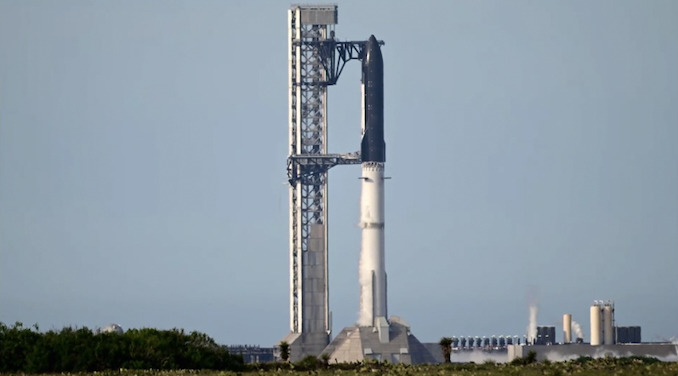
Flight 12 Timeline — From Scrub to Splashdown
T-0:43 — Hydraulic pin scrub
Inside the final hour the launch director called a scrub after a hydraulic pin on the orbital launch mount failed an integrity check. SpaceX recycled to T-24 hours rather than push through.
T-0 — Liftoff
Booster 19's 33 Raptor engines light up. The stack clears the tower and rolls onto its azimuth toward the eastern range.
Stage separation + booster boostback
Hot-staging separates Ship 39 from Booster 19. The booster flips, relights, and begins its return profile toward a Gulf of Mexico splashdown target.
Booster 19 controlled splashdown
Super Heavy executes its landing burn over the Gulf and touches the water in a controlled vertical posture — no catch attempt, but a clean instrumented recovery target.
Ship 39 in-space engine reignition
Ship 39's center Raptor relights on schedule — the deep-space restart that NASA's HLS variant must perform to drop out of lunar orbit and land Artemis astronauts.
Ship 39 planned splashdown
Ship 39 re-enters and meets its target splashdown in the Indian Ocean. The 22 deployed payloads complete their separate orbital test profiles.
Why NASA's Moon Plan Was Watching Every Second
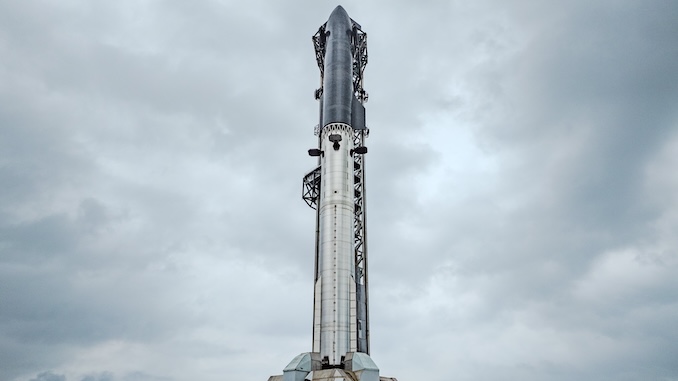
The $15 Billion Question — Where the Money Went
Starbase build-out
Two orbital launch mounts, the Mechazilla tower, propellant farms, and a tile factory next door — Starbase is now a vertically-integrated launch city.
Raptor engine program
Raptor 2 to Raptor 3 took an internal rebuild — fewer parts, higher thrust, full-flow staged combustion at production scale never attempted before.
Iterate-and-explode test cadence
Eleven prior flights, multiple anomalies, plus pad and tile rework after each. The expensive part of move-fast-and-break-things is the rebuilding.
An epic launch — minor engine anomaly during booster return, otherwise on the money. Version 3 is the ship that takes us to the Moon and Mars.