Key Takeaways
Hezbollah chief Naim Qassem rejected Washington talks, calling them "futile" due to Israel's disarmament demands.
Israel launched its Lebanon campaign in March 2026 after Hezbollah fired retaliatory rockets.
Over 2,055 killed in Lebanon including 165 children and 87 medics.
1.2 million Lebanese displaced from their homes amid severe humanitarian crisis.
The conflict is part of the multi-front US-Iran war, impacting global shipping and trade.
Qassem's Rejection of Negotiations
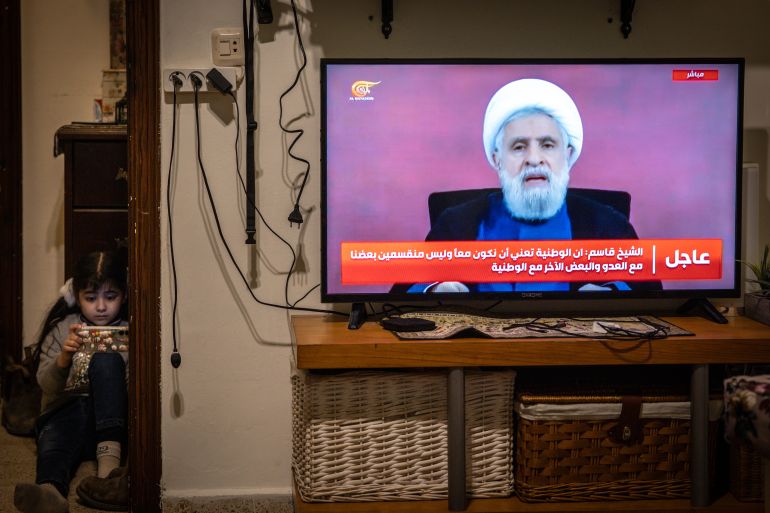
On April 13, 2026, Hezbollah chief Naim Qassem publicly rejected the ongoing Washington-mediated negotiations between Israel and Lebanon. In a speech before thousands of supporters, Qassem declared that any negotiations with a precondition of Hezbollah disarmament are "futile and not worth pursuing."
"Negotiating with an enemy that is raining fire on your country, while they demand you surrender your weapons -- that is capitulation, not peace."
-- Naim Qassem, Hezbollah Secretary-General, April 13, 2026 (via Al Jazeera)Qassem urged the Lebanese government to withdraw from the talks entirely and instead focus on a "historic heroic stance" -- rejecting all conditions set by Israel. He emphasized that Hezbollah would never accept disarmament while Israel continues its military campaign.
Washington Talks in Context
The Washington talks have been held over multiple rounds since late March 2026, with the United States serving as mediator between Israel and the Lebanese government. The stated objective is to achieve a ceasefire and restore stability in southern Lebanon.
However, Israel's position that any agreement must include Hezbollah disarmament -- or at minimum a Hezbollah withdrawal north of the Litani River -- has become the central sticking point. Hezbollah views this condition as a de facto surrender demand, not a legitimate negotiating framework.
The Lebanese side faces immense international pressure to continue participating, especially from France and Gulf Arab states, yet Hezbollah's domestic power within parliament and the cabinet makes defying the group's wishes exceedingly difficult.
Israel-Lebanon Escalation Timeline
US-Israel Operation Kills Khamenei
Joint US-Israeli operation kills Iranian Supreme Leader Khamenei, triggering a regional chain reaction. Hezbollah vows retaliation.
This event reshaped the Middle Eastern power balance, opening multiple conflict fronts.
Hezbollah Rockets Hit Northern Israel
Hezbollah fires hundreds of rockets and drones into northern Israel as retaliation. Tens of thousands of Israeli residents evacuate.
Israeli financial markets dropped sharply; the shekel weakened significantly against the USD.
Israel Launches Lebanon Campaign
Israel launches a large-scale military campaign in southern Lebanon including airstrikes, artillery, and limited ground operations. The UN calls for ceasefire.
Oil prices spiked as markets feared the conflict expanding across the broader region.
Washington Talks Begin
The US opens the first round of talks between Israel and Lebanon's government in Washington. Israel sets Hezbollah disarmament as a precondition. Hezbollah does not participate directly.
Talks progressed slowly due to the vast gap between the parties' positions.
Qassem Rejects Negotiations
Hezbollah chief Naim Qassem publicly rejects the negotiations, calling them "futile" and urging Lebanon's government to withdraw from the process.
Ceasefire hopes diminished sharply; short-term peace prospects grew bleaker.
Humanitarian Crisis
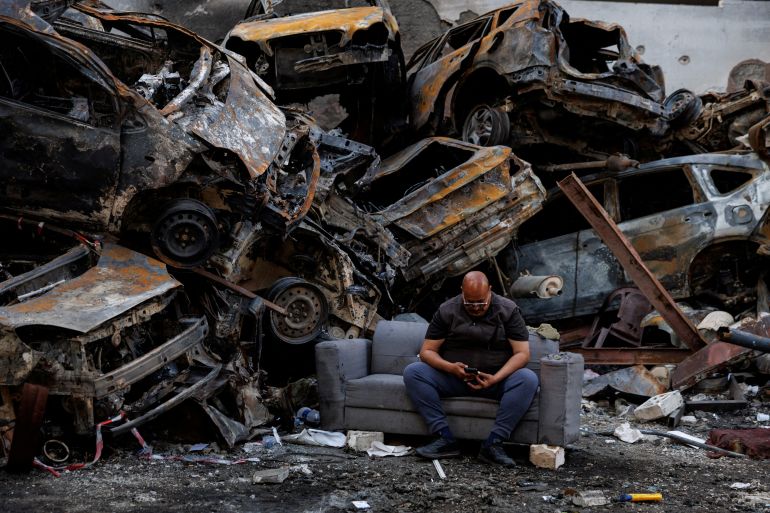
According to Al Jazeera reporting as of mid-April 2026, the conflict has claimed the lives of over 2,055 people in Lebanon, including 165 children and 87 medics. The wounded toll has surpassed 6,500.
Approximately 1.2 million people -- nearly a quarter of Lebanon's population -- have been forced to flee their homes. Infrastructure in southern Lebanon has been severely damaged, with dozens of hospitals, schools, and bridges damaged or completely destroyed.
Hezbollah's Strategic Position
Hezbollah views disarmament as a political and military death sentence. From their perspective, their arsenal is the sole guarantor against Israeli aggression and the foundation of their political power in Lebanon.
"We call for a historic heroic stance. No one has the right to demand we lay down our arms while the enemy continues to devastate our country."
-- Naim Qassem, speech on April 13, 2026 (via Al Jazeera)This position is also backed by Iran, Hezbollah's primary patron. Despite the Iranian leadership being eliminated, Iran's command structure has maintained support for Hezbollah as one of the primary fronts against the US-Israel alliance. For more on the broader conflict, see our coverage of the US-Iran military conflict.
Lebanon's Government Dilemma
Lebanon's government is caught between two opposing forces. On one side, international pressure from the US, France, and Gulf Arab states demands continued participation in talks. On the other, Hezbollah -- the country's most powerful armed force and a dominant political player -- demands withdrawal.
Hezbollah currently holds significant positions in Lebanon's parliament and cabinet. Any decision that goes against their wishes risks triggering an internal political crisis that could lead to a government collapse.
Meanwhile, Lebanon's economy -- already in freefall since 2019 -- faces enormous additional strain from the conflict. Peace is necessary to begin recovery, but the terms of peace are unacceptable to the country's most powerful political force. Read more in our analysis of the fragility of Lebanon ceasefires.
The Multi-Front Iran War
The Israel-Lebanon front is one of several active theaters in the broader US-Iran conflict that began on March 1, 2026:
For more on the military situation and naval strategy, see our coverage of the Hormuz Strait blockade.
Impact on Vietnam and Global Shipping
The conflict has direct impacts on Vietnam and Southeast Asian nations through several channels. Oil prices have risen due to concerns over the Hormuz Strait blockade -- a route carrying roughly 20% of global crude oil -- pushing energy import costs higher.
Houthi attacks on Red Sea commercial shipping have forced many vessels to reroute via the Cape of Good Hope, increasing Asia-Europe shipping costs by 30-40%. Vietnamese exporters, particularly in garment and seafood sectors, face direct impacts from higher freight costs.
Vietnamese garment exporters report freight costs to the EU have risen an average of 35% since March 2026, eroding already thin margins (ZestLab analysis based on industry data).
Outlook
Hezbollah's rejection of negotiations significantly diminishes hopes for a near-term ceasefire. Analysts assess that the conflict may continue to escalate before conditions for meaningful talks mature.
Three main scenarios are being tracked by observers:
Israel expands campaign, Hezbollah intensifies attacks, conflict extends for months.
Fighting intensity decreases but no formal ceasefire, a prolonged "no war, no peace" state.
A third party (France or China) proposes a new negotiating framework without preconditions of disarmament.
If the conflict persists, oil prices could rise an additional 15-25% from current levels, directly affecting living costs in Vietnam and energy-importing nations (ZestLab analysis).
References
- Al Jazeera -- Hezbollah leader urges Lebanon government to pull out of Israel talks (April 13, 2026)
Casualty and humanitarian figures based on Al Jazeera reporting as of mid-April 2026. Figures may change as updates become available.
Frequently Asked Questions
Common questions about the Israel-Lebanon conflict and Hezbollah's role.
Illustrative imagery. Photo: Chris McGrath/Getty, AP, Getty via Al Jazeera
More from this topic— US-Iran Conflict
Related Topics
Stay on top of trends
Bookmark this page and check back often for the latest updates and insights.